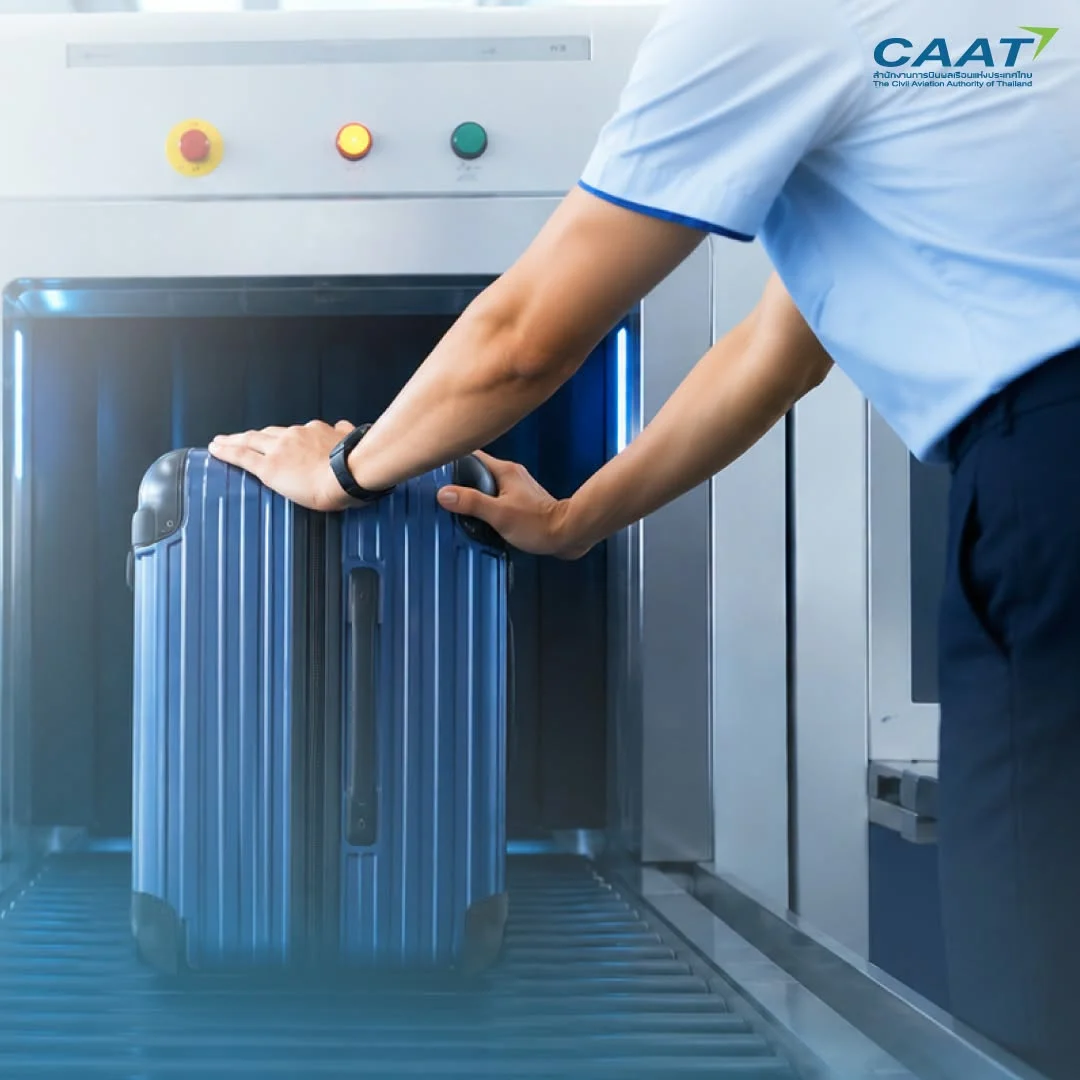
Thailand is set to overhaul its checked-baggage security procedures, giving airport screeners the authority to open and inspect luggage without the owner standing by. The Civil Aviation Authority of Thailand (CAAT) confirmed the new protocol takes effect on 16 October 2026, a move designed to tighten aviation security while trimming the delays that often occur when passengers must be located to unlock their own bags.
Under the revised regulation, security officers at Thai airports—including Bangkok Suvarnabhumi (BKK), Don Mueang (DMK), Phuket (HKT), and Chiang Mai (CNX)—may open checked luggage when X-ray or other screening flags suspicious contents. CAAT stressed that routine opening is not intended; the measure applies only when there are reasonable grounds to believe an item could threaten flight safety.
Aligning with global practice
The change brings Thailand in line with procedures already used in Singapore, Japan, South Korea, the Middle East, Europe, and the United States. CAAT said the new rules, first published in February 2026, give airports, airlines, and ground handlers time to train staff and update passenger communications before the October go-live.
“This is about efficiency and security,” a CAAT spokesperson said. “By allowing inspections to proceed without waiting for the passenger, we reduce the risk of flight delays while maintaining rigorous oversight.”
Inspections will take place in designated secure areas, with the entire process recorded and evidence retained. That audit trail will document who conducted the check, what was found, and what action was taken—ensuring accountability. Passengers will be notified after their bag has been opened, in line with prescribed procedures.
Operational impact for airlines and handlers
For carriers operating in and out of Thailand, the change could streamline baggage processing. Currently, when a bag triggers a secondary search, airline staff must page the passenger, wait for them to arrive at the screening area, and then have them open the luggage—a process that can hold up an aircraft. The new rule removes that bottleneck, allowing security teams to resolve issues without passenger involvement.
Thai Airways International, Bangkok Airways, and foreign carriers serving the kingdom will need to update their baggage-handling protocols and ensure passenger-facing staff can explain the new procedures. CAAT recommends that travellers use internationally recognised locks, such as TSA-approved ones, which security personnel can open with specialised tools without damaging the bag.
The authority also advises passengers to review prohibited-items lists before flying, noting that items legal in Thailand may be restricted elsewhere. “Carrying an item that violates the laws of a particular country could affect a passenger’s journey,” CAAT warned.
Passenger rights and recourse
Travellers who believe their baggage was damaged during an inspection can file a complaint through their airline or directly with CAAT. The authority emphasised that the new measure is not a blanket permission to open bags, but a targeted tool for cases where suspicion is justified.
The move comes as Thailand continues to invest in its aviation infrastructure and tourism appeal. Earlier this year, Plaza Premium Group opened its first lounges at Suvarnabhumi, and the kingdom is courting new visitor segments, including young affluent travellers from Vietnam. With passenger numbers climbing, efficient security screening is critical to maintaining smooth operations at Thai gateways.
CAAT’s regulation is part of a broader update to aviation security legislation, which the authority says is needed to accommodate growing traffic and improve screening effectiveness. The October implementation window gives all stakeholders—airports, airlines, ground handlers, and security vendors—time to adapt their systems and train personnel.
For travel professionals, the key takeaway is that Thailand is adopting a more streamlined, internationally standardised approach to baggage security. Agents and tour operators should brief clients on the new rules, especially those connecting through Thai hubs, to avoid confusion if a bag is opened without prior notice.