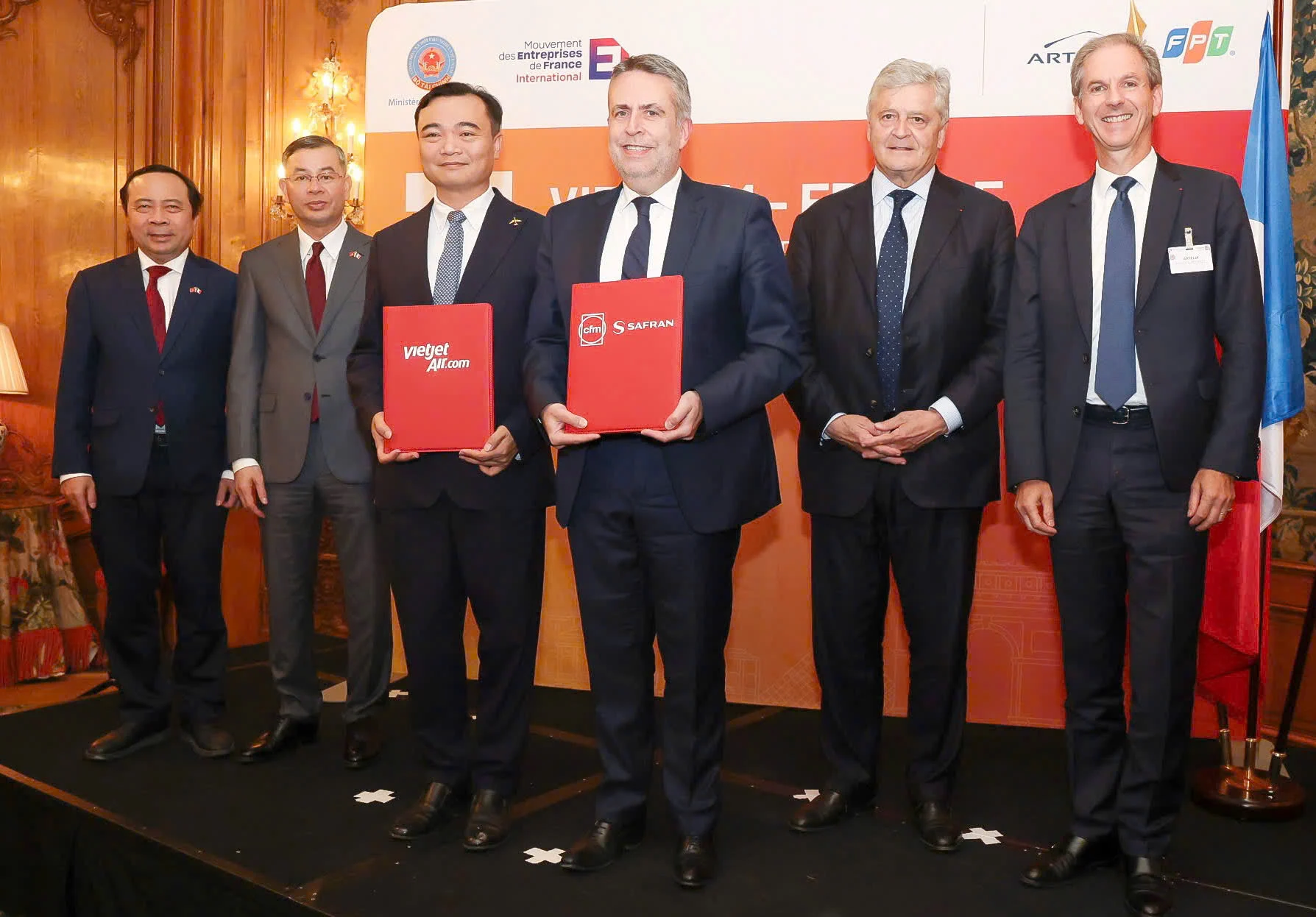
Vietjet and CFM International have taken a significant step toward establishing engine maintenance, repair, and overhaul (MRO) capabilities in Vietnam. The two companies signed a Letter of Intent (LOI) during Vietnamese General Secretary and President To Lam's official visit to France on 10 September 2026, signaling a strategic move to bolster the country's aerospace infrastructure.
The LOI outlines a feasibility study for Vietjet to develop its own engine MRO solution, with CFM providing advisory services on infrastructure, workforce development, and industry requirements. This collaboration aligns with Vietjet's ongoing fleet expansion and its ambition to strengthen Vietnam's position in the global aviation supply chain.
Strategic partnership deepens
CFM has been a key partner for Vietjet since 2014, powering the airline's Airbus A320ceo fleet. The partnership is set to expand further with Vietjet's recent order of 200 Boeing 737-8 aircraft, which will be equipped with CFM LEAP-1B engines. This new MRO initiative could position Vietjet to manage the growing maintenance needs of its next-generation fleet.
Gaël Meheust, President and CEO of CFM International, highlighted Vietnam's dynamic aviation market, stating, “CFM would bring its global experience to provide Vietjet with a comprehensive evaluation that supports the Vietnamese government’s vision for the continued development of the country’s aerospace industry.”
Vietjet CEO Nguyen Thanh Son emphasized the importance of technical expertise and skilled personnel in building a robust aviation ecosystem. He expressed hope that this initiative would lay the groundwork for advanced engine maintenance capabilities and elevate Vietnam's role in the global aviation value chain.
The move comes as Vietnam's aviation sector experiences rapid growth, with increasing passenger traffic and a rising number of international carriers serving the market. Developing local MRO capabilities could reduce turnaround times and costs for regional airlines, while also creating new opportunities for engineering talent in the country.
Industry observers note that Vietnam has been actively seeking to expand its aerospace services, and this partnership could serve as a catalyst for further investment in the sector. The country's strategic location in Southeast Asia makes it an attractive hub for MRO activities, potentially serving carriers across the region.
For Vietjet, the initiative is part of a broader strategy to enhance operational efficiency and support its expanding fleet. The airline has been aggressively growing its network, including new routes to Australia and the Middle East, and has also been promoting domestic travel through promotional campaigns like its recent 9.9 sale with zero-fare Eco tickets.
Vietnam's tourism industry has been on an upward trajectory, with a notable corporate travel boom lifting tourism revenue. Enhanced MRO capabilities could further support the aviation sector, ensuring that airlines can maintain their fleets efficiently and keep pace with growing demand.
The LOI marks a preliminary stage, and both companies will now conduct detailed assessments to determine the feasibility of establishing an engine MRO facility in Vietnam. If successful, this could position Vietnam as a key player in the global aviation maintenance market, attracting airlines from across the region and beyond.