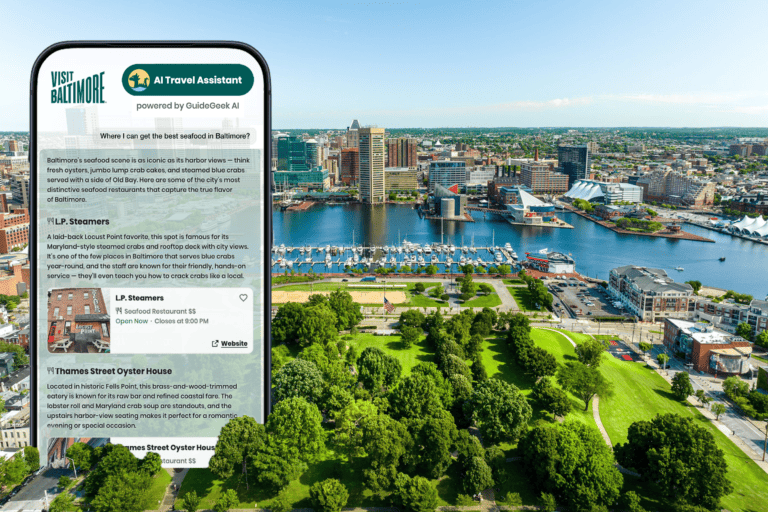
Visit Baltimore has introduced a new AI-powered travel assistant named Chessie, designed to help visitors navigate the city with personalized recommendations and real-time insights. Developed in collaboration with Matador Network's GuideGeek platform, Chessie aims to streamline the travel experience for both first-time and returning tourists.
How Chessie Works
Chessie leverages advanced AI to offer tailored suggestions for attractions, dining, and cultural experiences in Baltimore. Users can interact with the assistant via text or voice, receiving instant responses that adapt to their preferences and schedules. The tool is part of a broader trend in destination marketing, where AI is used to enhance visitor engagement and provide a more customized travel experience.
GuideGeek, the underlying platform, has already been deployed in destinations such as New Zealand, New York City, and Greece. Its success in those markets demonstrates the growing demand for AI-driven travel assistance that can handle complex queries and offer localized knowledge.
For travel professionals, Chessie represents a shift in how destination marketing organizations (DMOs) can engage with tourists. Instead of static brochures or generic websites, AI assistants like Chessie offer dynamic, conversational interactions that can adapt to user behavior. This not only improves the visitor experience but also provides DMOs with valuable data on traveler preferences and trends.
Baltimore joins a growing list of cities adopting AI tools to boost tourism. Similar initiatives have been launched in Xi'an, which deployed the world's first cultural tourism AI model, and Saudi Arabia, which introduced the TourismX AI platform to reshape its visitor economy. These developments highlight the increasing role of technology in destination management.
For hoteliers and tour operators in Baltimore, Chessie could serve as a new distribution channel for promoting their services. By integrating with the assistant, local businesses can reach visitors at the moment of decision-making, offering real-time deals or recommendations. This aligns with the broader trend of personalization in travel, where AI helps tailor experiences to individual preferences.
From a strategic perspective, the launch of Chessie positions Baltimore as a tech-forward destination, potentially attracting a younger, more digitally savvy demographic. It also sets a precedent for other U.S. cities looking to enhance their digital offerings without significant infrastructure investments.
As the travel industry continues to evolve, AI tools like Chessie are likely to become standard features for DMOs worldwide. The ability to provide instant, personalized assistance can differentiate a destination in a competitive market, making it easier for travelers to plan and enjoy their trips.
For travel agents and advisors, understanding how AI assistants work can help them better serve clients who use these tools. While AI cannot replace human expertise, it can complement it by handling routine queries and providing initial recommendations, freeing up agents to focus on more complex travel arrangements.
Visit Baltimore's Chessie is now live and available to all visitors. The organization plans to continue refining the tool based on user feedback, ensuring it remains a valuable resource for exploring Charm City.