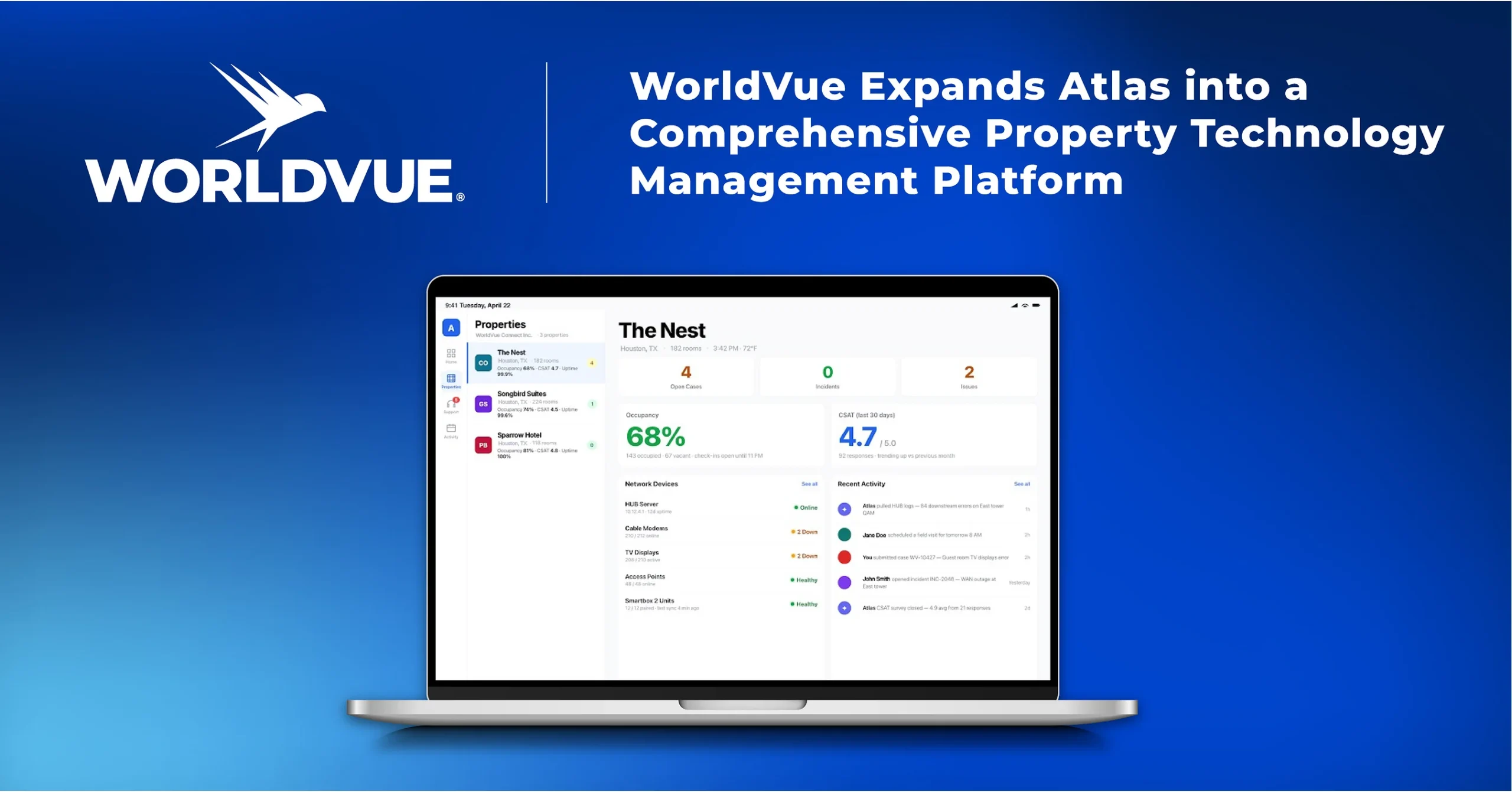
WorldVue has transformed its Atlas platform from an operational intelligence layer into a full-scale property technology management system, giving hotel owners and operators a single pane of glass over their entire tech stack. The move addresses a long-standing pain point for multi-property groups: fragmented information scattered across dozens of vendors, contracts, and support tickets.
With Atlas, hoteliers can now manage technology assets across multiple properties and brands, even when those services come from third-party providers. The platform aggregates data on what hardware and software is deployed, where it sits, and its lifecycle status, enabling more informed capital planning and reducing the risk of unexpected failures or compliance gaps.
New modules for smarter tech governance
The expanded Atlas introduces several dedicated modules designed to streamline back-office operations. These include capital budgeting, contract management, licence and subscription tracking, end-of-life alerts, compliance management, and portfolio-wide technology oversight. Together, they aim to replace spreadsheets and siloed emails with a centralized, auditable repository.
Mark Schaps, Executive Vice President and Chief Information Officer at WorldVue, said the goal is to give owners and operators a clear picture of their technology environment. “Our goal is to give owners and operators one place to understand what they have, where it is, what needs attention, and what's coming next,” he explained.
For property-level teams, Atlas now offers real-time visibility into field service activities. Authorized users can track technician arrival times, monitor work progress, and see when an issue is resolved. Niame Ba, Vice President of Operations at WorldVue, highlighted the importance of this transparency: “Property teams want visibility into when the technician is arriving, whether work has started, and when the issue is resolved.”
The platform also introduces MIA, an AI-powered phone agent that gathers initial information from callers before routing them to support staff. This reduces handle times and lets technicians focus on resolution rather than data entry.
WorldVue says the expanded Atlas is available to customers now, with additional capabilities planned for future releases. The company positions the platform as a strategic tool for hotel groups looking to optimize technology spend and improve operational resilience.
For hoteliers already juggling multiple systems, the move echoes broader trends in hospitality technology, where consolidation and integration are becoming key competitive advantages. As properties adopt more IoT devices, cloud services, and guest-facing tech, the need for centralized management grows.
WorldVue's expansion also aligns with the industry's push toward data-driven decision-making. By providing a comprehensive view of technology assets, Atlas helps owners identify underutilized subscriptions, plan replacements before failures occur, and negotiate better terms with vendors.
The company's focus on multi-vendor support is particularly notable, as many hotel groups operate mixed environments. Atlas's ability to manage third-party services alongside WorldVue's own offerings could make it a valuable addition to the tech stack of any large operator.
As the hospitality sector continues to recover and invest in digital transformation, tools like Atlas are likely to become standard. For travel professionals, the platform represents a practical solution to a complex operational challenge.