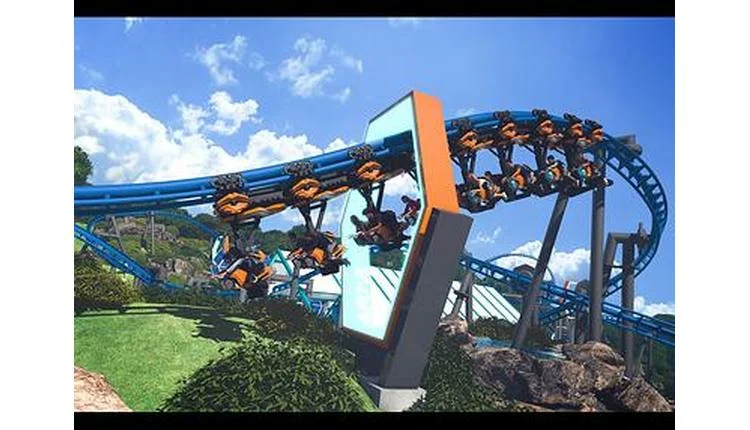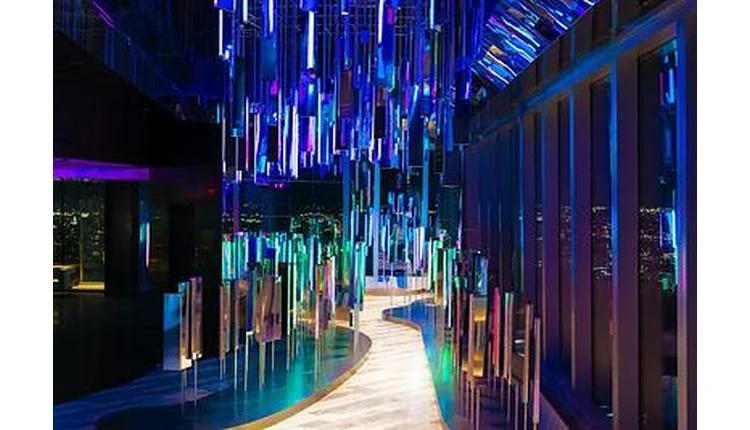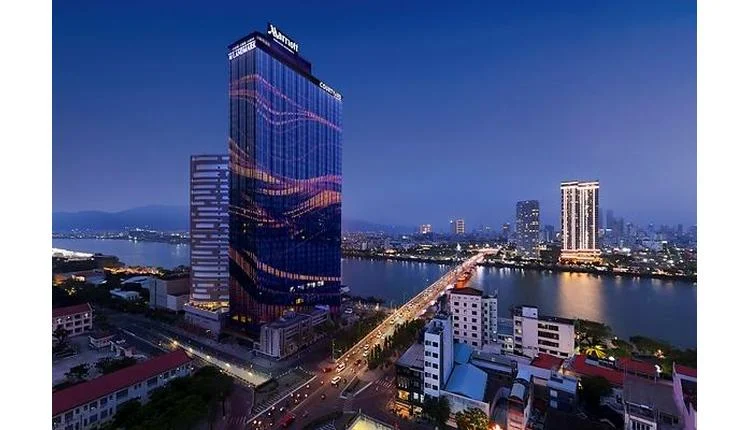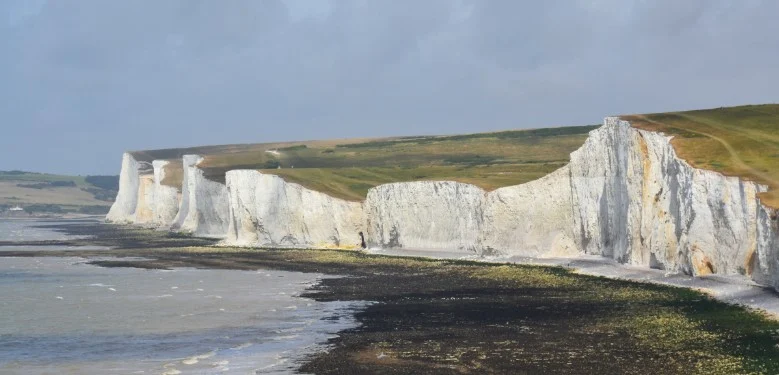
An AI-generated concept reimagining Britain’s Seven Sisters cliffs as a Chinese 5A-rated scenic area has sparked both amusement and introspection across the travel industry. The fictional transformation, which went viral on Chinese social media, depicts the iconic chalk cliffs in Eastbourne with concrete walkways, photo frames every 200 meters, an immersive nighttime light show, and an 800-meter commercial street — a stark contrast to the current natural, undeveloped landscape.
Emma, a British resident living near Eastbourne, found the idea humorous but expressed concern. "Many local residents would be deeply upset if the cliffs were ever developed that way," she said. The Seven Sisters are managed by the South Downs National Park, which deliberately keeps commercial facilities away from the core landscape. This approach mirrors that of most scenic areas in Europe, the US, Australia, and Japan, where preservation takes precedence over commercialization.
The viral images highlight a fundamental divergence in tourism management philosophies. While Western destinations often prioritize minimal intervention, Chinese scenic areas have increasingly embraced infrastructure-heavy development. This is not merely an aesthetic choice but a response to economic pressures. Scenic areas in China are often expected to drive local economic growth, sometimes taking on responsibilities far beyond tourism. Natural scenery alone rarely generates sufficient revenue, so managers introduce elevators, cable cars, and shuttle buses to extend visitor stays and create additional ticketed revenue streams.
Safety concerns also drive infrastructure expansion. Scenic-area managers face immense pressure to avoid liability after accidents, leading to the installation of guardrails, barriers, and other safety features even when regulations do not mandate them. "The problem is not safety measures themselves," noted one industry analyst, "but the tendency to turn every management challenge into a construction project."
This infrastructure arms race can erode the natural character of destinations, making them increasingly indistinguishable. Overseas attractions face similar challenges but often choose risk management over large-scale transformation. Norway’s Pulpit Rock, Ireland’s Cliffs of Moher, and Yosemite’s Half Dome all rely on warnings, access controls, and visitor limits rather than reshaping the landscape.
For Chinese scenic areas, the challenge is to redraw the boundary between infrastructure and nature. Facilities should serve visitors without becoming the main feature, allowing the scenery itself to remain the lasting memory. The debate echoes broader discussions in the industry about sustainable tourism development, as seen in UN Tourism's Best Tourism Villages initiative, which rewards destinations that balance development with preservation.
The viral AI experiment also underscores the growing role of technology in shaping travel perceptions. As Chinese travelers increasingly explore international destinations, their expectations of scenic areas may influence how overseas attractions market themselves. However, the contrast between the AI-generated fantasy and the reality of the Seven Sisters serves as a reminder that authenticity and natural beauty remain powerful draws.
Industry observers note that the debate is not about rejecting all infrastructure but about finding the right balance. Fluctuations in Chinese outbound travel have already prompted destinations to rethink their offerings, and the Seven Sisters example highlights the need for culturally sensitive approaches to tourism development.
As the travel industry evolves, the question of how to manage iconic landscapes will only grow more pressing. The AI-generated images may be fictional, but they offer a valuable lens through which to examine the future of scenic-area management worldwide.