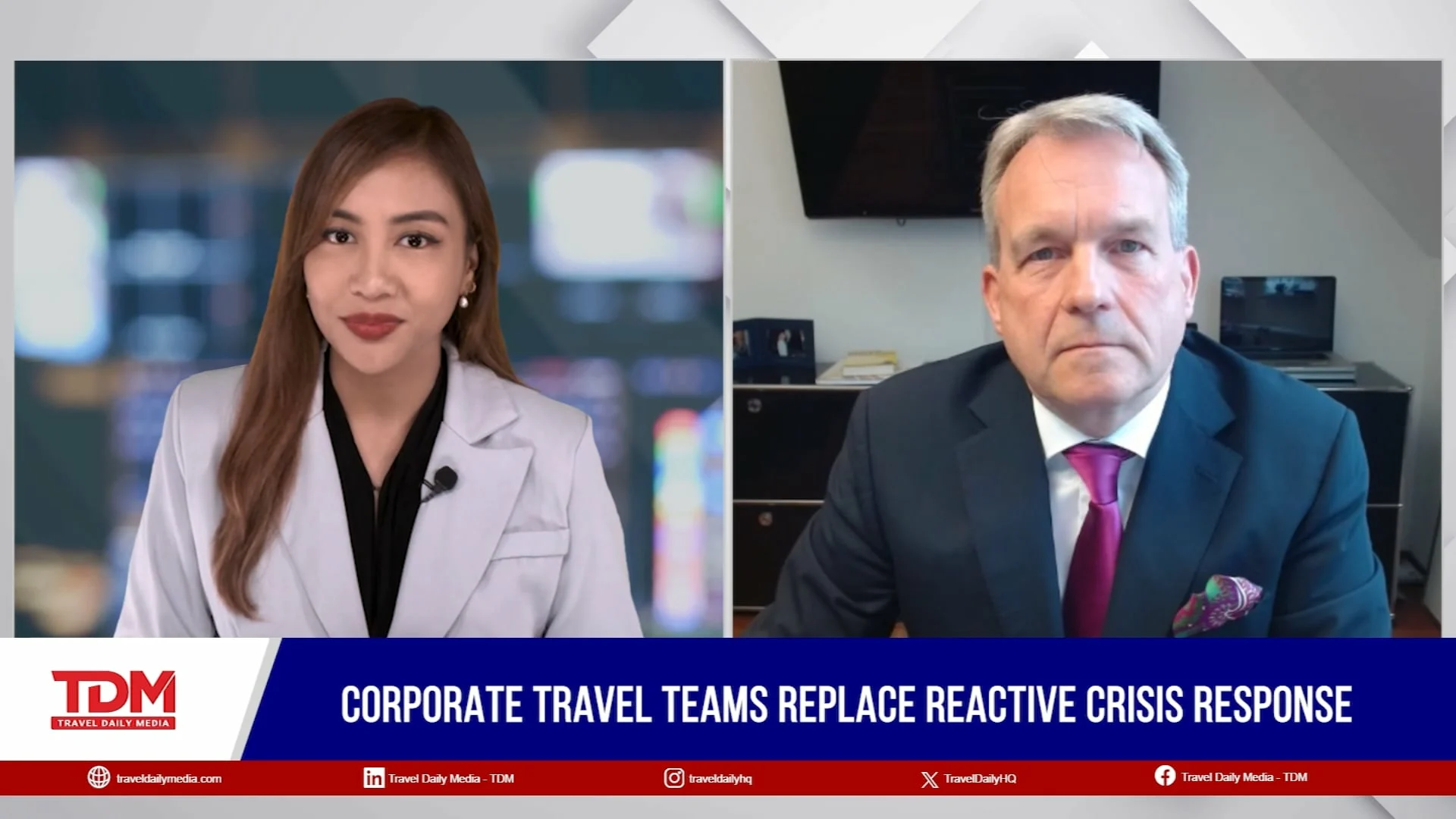
Corporate travel buyers are under intensifying pressure to safeguard employees against a growing spectrum of global disruptions, according to Stephan Baars, CEO of BCD. In an interview with TDM, Baars noted that travel managers are now evaluated not just on cost containment but on their ability to protect travelers during crises, as geopolitical instability, cyber threats, extreme weather, and supply chain failures reshape the risk landscape heading into 2026.
“If you see the geopolitical situation, the extreme weather, cyber data threats, and supply chain disruptions, that's a lot for travel buyers to handle,” Baars said. He argued that the complexity of managing corporate travel programs has increased significantly as companies try to balance lower travel costs with traveler safety, faster communication, and uninterrupted mobility across volatile operating conditions.
From Reactive to Proactive Risk Management
Baars explained that many organizations are shifting away from reactive crisis response systems toward continuous monitoring and coordinated incident management. This approach is designed to identify risks earlier and enable faster responses. “To meet the duty of care and protect an organization's most important assets, and I'm talking about the people here, is what risk management is all about,” he said.
The interview highlighted how companies are restructuring travel operations around integrated systems that combine traveler tracking, live incident monitoring, communication tools, and emergency coordination into a single operational process. Baars emphasized that fragmented systems and siloed workflows are becoming less effective as global incidents grow more unpredictable and interconnected. “Our experience is that eight out of 10 travel buyers today have integrated the systems, have stopped working in silos, and with that, are effective in their travel management risk system,” he said.
This shift mirrors broader trends in the travel industry, where technology vendors like Amadeus, Sabre, and Travelport are increasingly offering integrated risk management modules within their GDS platforms. Similarly, hotel chains such as Marriott and IHG have enhanced their duty-of-care protocols, while airlines like Delta and Emirates have invested in real-time traveler alerts. For corporate travel buyers, the move toward integrated systems is becoming a competitive necessity, particularly as luxury travel segments—such as those seen in Maldives luxury resorts diversifying their guest mix—face their own disruption challenges.
Automation and Human Judgment in Crisis Response
A central theme of the discussion was the balance between automation and human judgment during crisis situations. Baars noted that automated systems are increasingly used to monitor global events, process large volumes of data, identify emerging disruptions, and support faster response times. However, he argued that human judgment remains critical when assessing risks and deciding how companies should respond during emergencies. “It needs to be a balance, because human beings need to assess the situation and the information that we have received through automated processes and take the right actions,” Baars said.
He added that companies failing to modernize traveler protection systems risk slower emergency response, weaker traveler confidence, and greater operational disruption during global crises. For travel management companies like BCD, which competes with firms such as American Express Global Business Travel and CWT, the emphasis on integrated risk systems is a key differentiator. Baars’ comments come as the travel industry grapples with a range of disruptions, from the war in Ukraine to extreme weather events in Asia and Europe, underscoring the need for robust duty-of-care frameworks.
The interview also touched on the role of travel buyers in driving this transformation. Baars noted that buyers are increasingly demanding transparency and real-time data from suppliers, pushing airlines, hotels, and technology providers to enhance their risk management capabilities. As the industry evolves, the ability to balance automation with human insight will likely define the next generation of corporate travel programs.