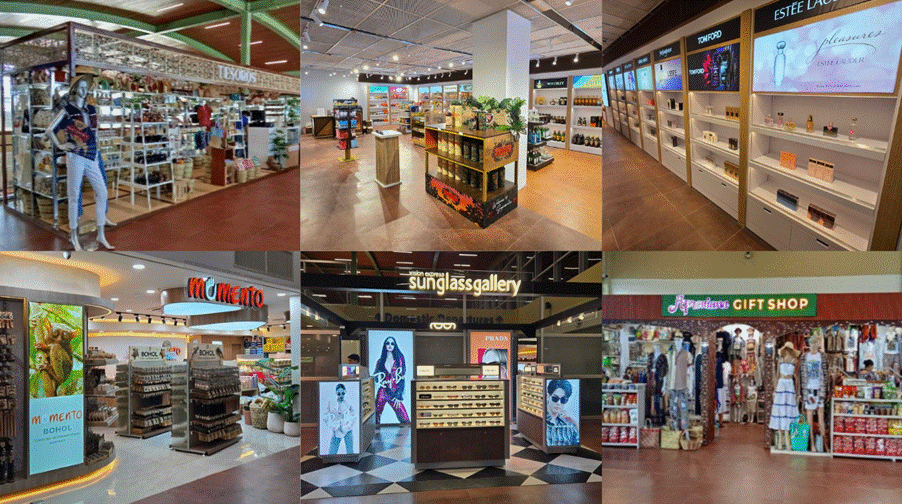
Bohol-Panglao International Airport (BPIA), operated by Aboitiz InfraCapital Bohol Airport Corporation (ABAC), has significantly broadened its commercial offerings, introducing a mix of international duty-free retail and locally sourced products. The new lineup includes Duty Free Philippines, Sunglass Gallery, and Momento, alongside a range of homegrown enterprises that highlight the province's craftsmanship and culinary heritage.
Since ABAC assumed management, BPIA has steadily expanded its tenant roster, giving passengers more choices in travel essentials, dining, and souvenirs. Aldwin C. Uy, General Manager of Bohol–Panglao International Airport, emphasized the strategic intent behind the retail diversification: “We want that experience to reflect the warmth, creativity, and identity of Bohol. By welcoming more retail concepts—particularly those showcasing locally made products—we’re creating an airport experience that is more convenient for passengers whilst providing meaningful opportunities for local businesses and artisans.”
A curated mix of global and local
The food and beverage sector now features quick-service options such as House of Fruitas, Jamaican Pattie Shop, and Pick Up Coffee, catering to travelers seeking fast, satisfying meals before departure. On the retail side, local brands like Tesoros (Filipino Treasures) and Island Souvenirs are promoting Boholano products under the Department of Trade and Industry’s One Town, One Product (OTOP) Programme, which supports micro-entrepreneurs and preserves regional artisanal traditions.
This blend of international duty-free shopping and authentic local retail reflects a broader trend in airport commercial strategy, where terminals are increasingly positioned as destinations in themselves. Airports worldwide are moving beyond basic concessions to create curated experiences that resonate with both transit passengers and leisure travelers. For BPIA, the goal is to make the airport a welcoming gateway that tells the story of Bohol from the moment visitors arrive.
The expansion also aligns with the airport's role as a key tourism hub. Since ABAC took over, BPIA has served over 2.16 million passengers, a figure that underscores its importance in connecting the island to domestic and international markets. As Bohol continues to attract visitors drawn to its famed Chocolate Hills, tarsiers, and dive sites, the airport's retail environment becomes a critical first and last impression.
For travel professionals, the development at BPIA offers a case study in how secondary airports can leverage local culture to enhance passenger experience and drive non-aeronautical revenue. The inclusion of OTOP products not only supports the local economy but also gives travelers a tangible connection to the destination, a factor that can influence overall satisfaction and repeat visits.
Airport retail experts note that such initiatives are becoming more common as operators seek to differentiate their terminals. Urban travel shifts to local experiences have already reshaped city tourism, and airports are following suit by integrating local flavors and products into their commercial mix.
BPIA's approach also echoes broader industry conversations about the role of airports in regional development. ACI World has called for modernized slot rules to boost competition, and while that focuses on capacity, the retail strategy at BPIA shows how airports can add value beyond mere throughput.
For airlines and tour operators serving Bohol, the enhanced retail environment may improve the overall passenger journey, potentially influencing route choices and customer loyalty. As the airport continues to evolve, its commercial strategy will likely remain a key component of its appeal to both travelers and business partners.
The move also highlights the growing importance of culinary travel, as dining options at airports become a deciding factor for some passengers. By offering local food brands, BPIA taps into this trend, giving travelers a taste of Bohol before they even leave the terminal.
With the retail expansion now in place, BPIA is poised to strengthen its position as a modern, culturally aware gateway in the Philippines. The airport's management has signaled that more enhancements are likely, as it continues to align its services with the needs of both passengers and the local community.