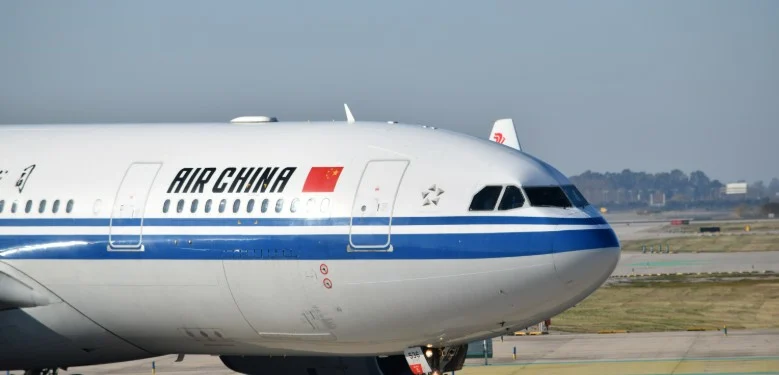
The release of interim results from China's A-share-listed carriers has clarified the financial landscape for the country's aviation sector. The first half of 2025 proved challenging, with most airlines either slipping into the red or seeing net profits contract. The three major state-owned carriers—Air China, China Southern Airlines, and China Eastern Airlines—collectively recorded losses exceeding RMB 8 billion (approximately USD 1.19 billion). In contrast, Spring Airlines, China's largest low-cost carrier, continued to lead the industry in profitability.
From First-Quarter Gains to Second-Quarter Losses
The first quarter of 2025 painted a rosier picture: all listed airlines reported profits with year-on-year growth, buoyed by lower oil prices and favorable foreign-exchange movements. However, the second quarter reversed that trend dramatically. A sharp surge in jet fuel prices, which climbed from around RMB 5,600 (USD 830) per ton in March to as high as RMB 9,800 (USD 1,460) per ton—an increase of roughly 75%—eroded the gains. Fuel remains the largest cost component for airlines, and several carriers noted in their interim reports that soaring fuel expenses had significantly inflated operating costs, wiping out much of the profits generated in the first quarter.
The impact was particularly severe for the Big Three, whose larger fleets and extensive route networks amplify their exposure to fuel price volatility. Their combined second-quarter losses exceeded RMB 10 billion (USD 1.487 billion), overshadowing the first-quarter profits. Smaller carriers, by contrast, demonstrated greater agility, allowing most to remain profitable. Still, Spring Airlines, Juneyao Airlines, and China Express Airlines all saw their first-half net profits decline sharply. Hainan Airlines Holding was the exception, posting a more than threefold year-on-year increase in net profit.
Spring Airlines' resilience underscores the advantages of its low-cost model. Operating a single aircraft type and relying heavily on direct sales, the carrier maintains a unit cost per available seat kilometer roughly 30% lower than that of the Big Three. As fuel prices surged, its disciplined cost control across other operational areas became a critical pillar supporting its performance.
The financial strain on China's major carriers comes amid broader industry dynamics. While international travel demand continues to recover, domestic competition remains intense, and fuel price volatility adds another layer of uncertainty. For travel professionals, the diverging fortunes of China's airlines highlight the importance of cost efficiency and strategic flexibility in navigating market fluctuations.
Looking ahead, airlines may need to revisit fuel hedging strategies and explore more efficient fleet utilization. The second-half outlook will depend on global oil price trends and the pace of demand recovery. For now, the Big Three face the challenge of restoring profitability while managing cost pressures, a scenario that echoes similar struggles seen in other markets. As Turkish Airlines expands its European multi-city options and Hong Kong Airlines begins twice-weekly Urumqi service, network decisions are increasingly shaped by fuel economics.
For travel agents and corporate buyers, these financial results may influence pricing and capacity decisions on key domestic and international routes. The ability of Spring Airlines to maintain profitability could also signal a shift in traveler preference toward low-cost options, particularly in price-sensitive segments. As the industry adapts, monitoring fuel prices and carrier strategies will be essential for stakeholders across the travel ecosystem.