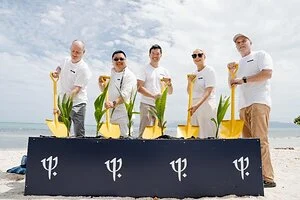
Club Med has officially broken ground on its first Exclusive Collection resort in Thailand, choosing the Gulf of Thailand island of Koh Samui for the flagship upscale property. The ceremony, held on 25 August 2026, was attended by senior executives from Club Med and Central Capital Group, the Thai conglomerate partnering on the development. Traditional rituals and the planting of native Samui coconut seedlings underscored the project's commitment to local culture and environmental stewardship.
Strategic expansion in Southeast Asia
The Koh Samui resort becomes the third Exclusive Collection property in the East and South Asia and Pacific region, following the success of similar properties in the area. It is part of Club Med's ambitious plan to double its global resort portfolio by 2030, a strategy that has already seen the opening of Club Med South Africa and the upcoming Club Med Borneo in Malaysia.
Rachael Harding, CEO of Southeast Asia and Pacific for Club Med, highlighted the speed of the project's development. “This closely follows the signing of the Hotel Management Agreement just earlier this year,” she said, noting the company's momentum in the region. The Koh Samui resort will join Club Med Phuket, which has been operating since 1985, as the brand's second Thai destination.
The move aligns with Thailand's broader push to attract high-end travellers. The Tourism Authority of Thailand has been actively courting affluent segments, including recent initiatives such as unifying its national tourism platform and partnering with luxury event organisers for Ultra Thailand 2027 in Bangkok. Club Med's entry into Koh Samui's luxury resort scene adds a new option for upscale leisure travellers and MICE groups seeking all-inclusive, premium experiences.
Club Med, founded in 1950, pioneered the all-inclusive holiday concept and now operates more than 60 Premium and Exclusive Collection Resorts worldwide. The Koh Samui project underscores the company's shift toward upscale development, a strategy that has seen recent additions like Taj's branded villa project in India, reflecting a broader industry trend toward high-end, experience-driven hospitality.
Industry observers note that the Exclusive Collection brand is designed to offer a more refined, adults-oriented experience, with enhanced dining, wellness, and accommodation options. The Koh Samui resort is expected to cater to discerning travellers from Asia-Pacific and beyond, leveraging the island's reputation for pristine beaches and vibrant nightlife.
Central Capital Group, a diversified Thai conglomerate, brings local expertise and land assets to the partnership. The collaboration is seen as a model for international hotel brands seeking to expand in Thailand's competitive resort market, where demand for luxury properties continues to grow.
Construction is expected to proceed over the next few years, with an opening date yet to be announced. Club Med's expansion in Thailand comes as the country's tourism sector rebounds strongly, with international arrivals surpassing pre-pandemic levels in key source markets. The new resort is poised to capture a share of this recovery, particularly among high-spending visitors from China, Europe, and the Middle East.
For travel professionals, the development signals Club Med's confidence in Thailand's long-term tourism prospects and its commitment to the premium segment. Agents and tour operators can anticipate a new product that combines the brand's all-inclusive heritage with the exclusivity and service levels of its top-tier collection.