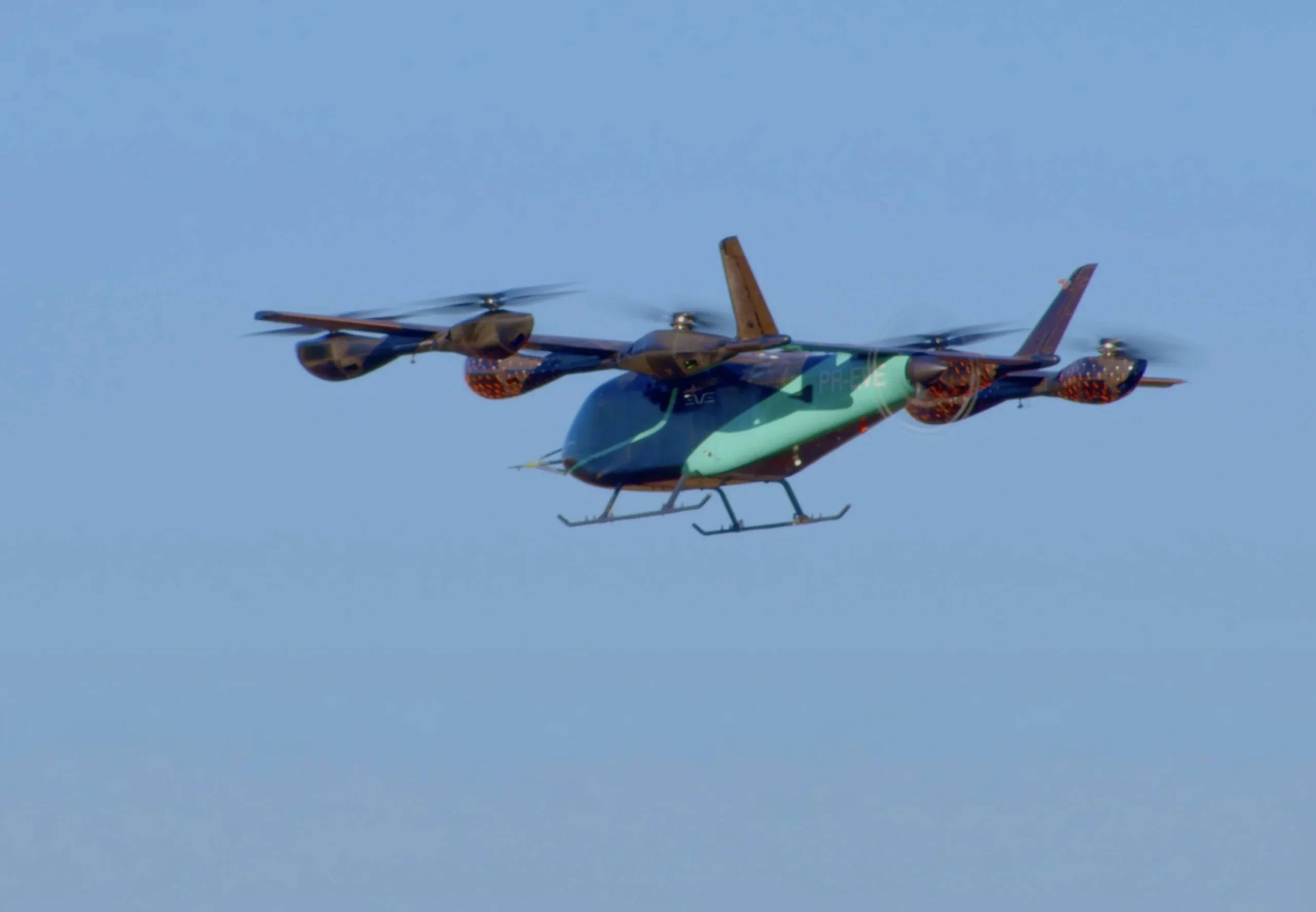
Eve Air Mobility has taken a significant step forward in the development of its electric vertical takeoff and landing (eVTOL) aircraft, completing the first partial transition flight on 3 August 2026. During the test, the aircraft activated its rear pusher propeller, shifting from vertical lift to wing-borne flight—a critical phase in eVTOL operations.
The flight lasted 3 minutes and 9 seconds, covering approximately 0.84 nautical miles and reaching a maximum altitude of 90 feet. The aircraft achieved a stabilised speed of 27 knots and a peak ground speed of 30 knots, with the pusher propeller operating at up to 1,200 RPM. This data will inform the company's ongoing envelope expansion as it moves toward higher speeds and more complex transition testing.
Validating the design
Johann Bordais, CEO of Eve Air Mobility, highlighted the importance of the milestone: "Successfully activating the pusher propulsion system in flight validates a key aspect of our aircraft design and brings us one step closer to delivering safe, efficient and scalable air mobility solutions." The transition phase is widely regarded as one of the most challenging aspects of eVTOL development, as it requires seamless control between vertical and forward flight modes.
Marcelo Basile, head of engineering at Eve, added: "The data collected will support continued envelope expansion as we advance toward higher speeds and more complex transition flight testing." The engineering team is now analysing the results to refine the aircraft's performance and prepare for the next series of flights.
Eve's transition flight-test campaign is part of a broader effort to validate system performance and expand the aircraft's capabilities. The company plans to increase the airspeed envelope in the coming weeks, with additional flights featuring pusher activation. This progress is crucial for Eve as it works toward certification and eventual commercial deployment.
Eve is not alone in the race to bring eVTOLs to market, but its approach—leveraging the resources of Embraer and its partners—positions it as a key player in the emerging urban air mobility sector. The company has already secured orders and letters of intent from customers across multiple regions, including Asia and Europe, and is developing a comprehensive ecosystem that includes not only the aircraft but also maintenance, training, and air traffic management solutions.
For travel industry professionals, the advancement of eVTOL technology holds promise for short-haul urban and regional connectivity, potentially complementing existing airline networks. As high-speed rail continues to outpace air travel on some routes, eVTOLs could offer a new mode of transport for congested metropolitan areas, reducing travel times and emissions.
Eve's progress also comes amid broader industry challenges, such as rising jet fuel costs that are forcing airlines to cut winter schedules. While eVTOLs are not yet a commercial reality, their potential to operate on electric power could eventually offer a hedge against fuel price volatility.
The company is also exploring partnerships with infrastructure providers and operators to ensure that vertiports and airspace integration are ready when the aircraft enters service. With a target of entry into service in the late 2020s, Eve is moving from concept to certification, and each successful test flight brings the industry closer to a new era of air mobility.