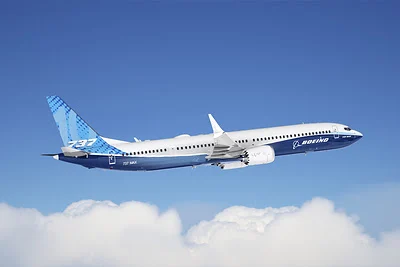
The U.S. Federal Aviation Administration has granted type certification to Boeing's 737-10, the largest member of the 737 MAX family, clearing the way for deliveries to commence in the coming months. The approval follows a rigorous certification campaign that included nearly 1,000 test flights and more than 2,000 flight hours, along with 1,000 hours of ground testing.
The 737-10 is designed to deliver the lowest per-seat operating costs of any single-aisle aircraft currently in service, a key selling point for airlines competing on dense short- and medium-haul routes. It can seat up to 230 passengers in a single-class configuration and offers a range of 3,100 nautical miles—365 nautical miles more than its closest competitor without the need for auxiliary fuel tanks. The aircraft also incorporates an enhanced Angle-of-Attack system, which will become standard across the entire 737 MAX family.
Stephanie Pope, president and CEO of Boeing Commercial Airplanes, emphasized the aircraft's commercial appeal: "The 737-10 offers greater capacity, longer range, and the best seat economics in its class—a platform that will create more value and opportunities for airlines around the world."
Certification under new safety rules
The 737-10 is the first commercial aircraft certified under the 2020 Aircraft Certification Safety and Accountability Act, which mandates enhanced safety documentation and human factors evaluations. This new framework, introduced in response to earlier 737 MAX issues, required Boeing to provide more detailed evidence of the aircraft's safety and operational readiness.
The certification process also involved close collaboration with FAA engineers and pilots, who conducted extensive flight testing to validate the aircraft's performance, handling, and systems. The result is a certification that meets the heightened standards set by the act, providing airlines and passengers with confidence in the aircraft's safety.
With more than 1,555 orders from over 30 customers worldwide, the 737-10 accounts for more than 30% of the current 737 MAX order book. This strong demand reflects the aircraft's appeal to carriers seeking to right-size capacity on high-density routes while maintaining efficiency.
Among the notable customers is Turkish Airlines, which recently finalized a 150-jet order for 737 MAX aircraft, including the 737-10. This deal underscores the confidence major carriers have in Boeing's largest MAX variant. For more on that order, see Turkish Airlines' 737 MAX commitment.
The certification also comes at a time when the aviation industry is seeing a broader recovery in fleet investments. Lessors like Avolon have expanded their portfolios with new Airbus and Boeing jets, signaling sustained demand for modern, fuel-efficient aircraft. Avolon's fleet expansion highlights the ongoing appetite for next-generation narrowbodies.
For airlines operating the 737-10, the aircraft's range and capacity open new route possibilities, particularly on transcontinental and regional international services. The enhanced Angle-of-Attack system, which provides more accurate stall protection, is expected to improve safety margins and reduce pilot workload, a feature that will be appreciated by carriers like LATAM Brasil, which is modernizing its regional fleet with Embraer E195-E2s—a different approach to similar market needs. LATAM's E195-E2 deliveries illustrate the competitive landscape in the single-aisle segment.
As Boeing prepares to hand over the first 737-10s to customers, the certification marks a significant milestone in the company's efforts to expand its single-aisle offerings and regain momentum in the narrowbody market. The aircraft's combination of capacity, range, and economics positions it as a strong contender against Airbus's A321neo, and airlines will be watching closely as the first deliveries begin.