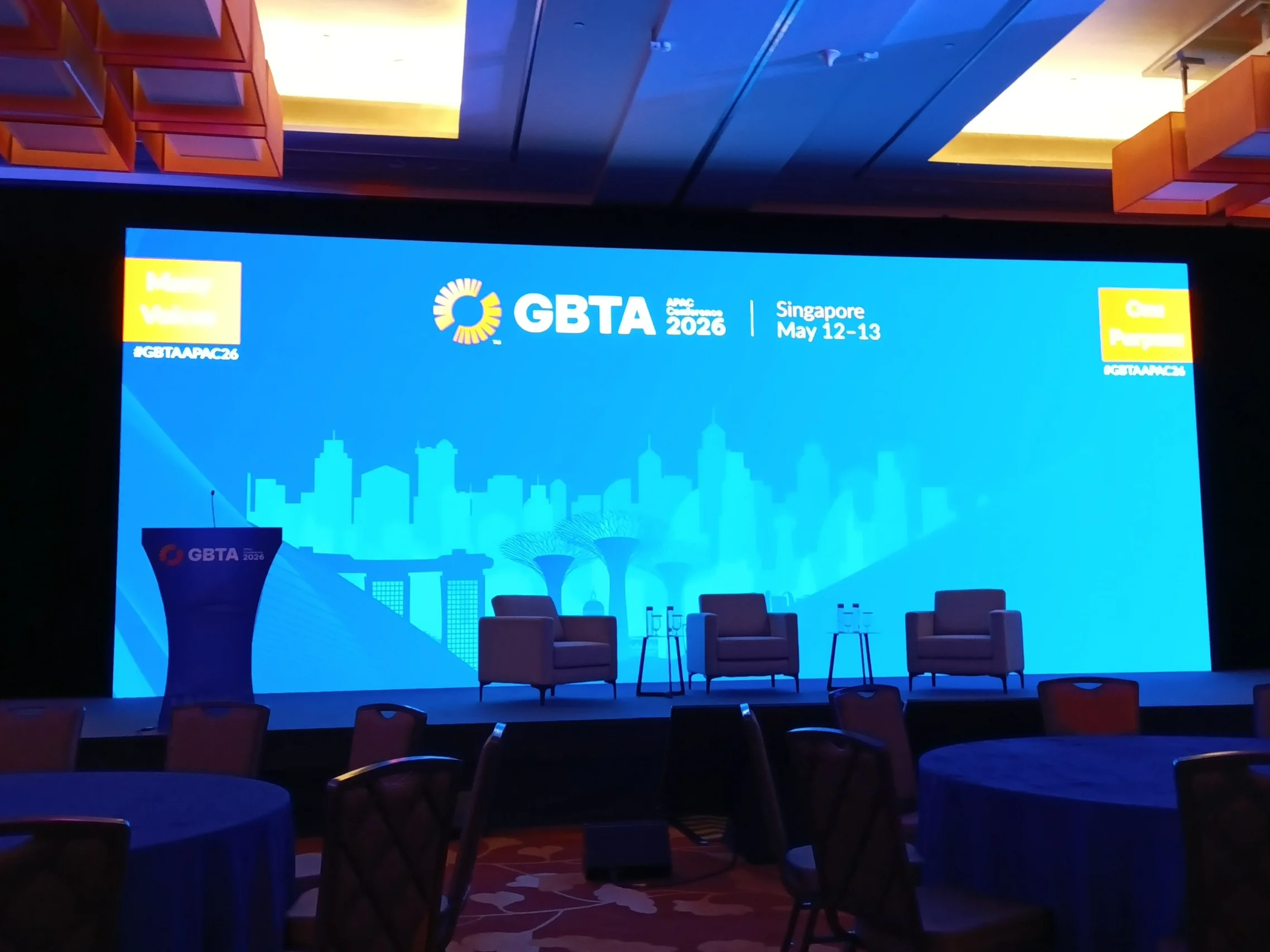
The first day of the Global Business Travel Association (GBTA) APAC Conference, held at the Sands Expo and Convention Centre in Singapore, delivered a clear message: the center of gravity for corporate travel is shifting toward Southeast Asia. With Western geopolitical tensions showing no signs of easing, the region is positioning itself as a resilient growth engine for the sector.
GBTA CEO Suzanne Neufang, in an exclusive interview, pointed to manufacturing as a key driver. “Southeast Asia’s manufacturing base is one of the largest industries for business travel,” she said. “We’re seeing a surge in facility investments, not just for corporate trips but also for the MICE sector, which has rebounded strongly post-pandemic.” This aligns with broader trends, as hoteliers in the region face margin pressures from fuel costs and labor shortages, as noted in our analysis of Southeast Asian hotel margins.
Investing in People: GBTA’s Three-Pronged Approach
GBTA emphasized that future-proofing the industry requires investment in talent. The association unveiled three targeted programs: GBTA WINIT, which advances women in leadership through mentorship and global community; GBTA Ladders, a team-based mentorship initiative equipping the next generation with skills to navigate a rapidly evolving landscape; and GBTA Accessibility, which provides toolkits to embed inclusive practices into travel programs. These initiatives aim to create clear career pathways in business travel, addressing a critical need for skilled professionals.
Rethinking KPIs for a Multi-Channel Era
A panel titled “The Big Idea” challenged attendees to abandon traditional corporate travel KPIs. In an AI-enabled, multi-channel environment, metrics like average response time are becoming obsolete. Panelists advocated for new indicators: service efficiency, overall traveler experience, personalized support, and process automation efficiency. Evgenia Kataeva of Thunes proposed a traveler wellbeing index to measure the mental and physical impact of travel. This shift reflects a broader move toward traveler-centricity, a theme echoed in the hospitality sector’s focus on bespoke luxury, as seen in the Maldives’ SO/ Maldives CEO Olivier Moies-Delval’s insights on conscious travel demand.
Bleisure and MICE as Strategic Enablers
The concept of bleisure—blending business with leisure—is gaining traction, particularly in cities like Singapore and Bangkok, which offer rich attractions for extending stays. Delegates noted that post-event extensions are becoming common, allowing travelers to recharge or spend time with family. Meanwhile, meetings and events (M&E) have evolved from a logistics function into a strategic business enabler. Several companies have rebranded their event departments to emphasize collaboration and business value, moving beyond compliance. This shift is critical as the MICE industry in Southeast Asia grows, supported by new facilities and infrastructure.
As Western geopolitical uncertainties persist, Southeast Asia’s appeal as a stable, growth-oriented hub for business travel is undeniable. For travel professionals—from airline executives at Singapore Airlines to hoteliers at Marriott International and tour operators—the region offers a compelling alternative. The GBTA APAC 2026 conference made it clear: the future of corporate travel lies in adapting to this pivot, investing in people, and redefining success metrics for a dynamic landscape.