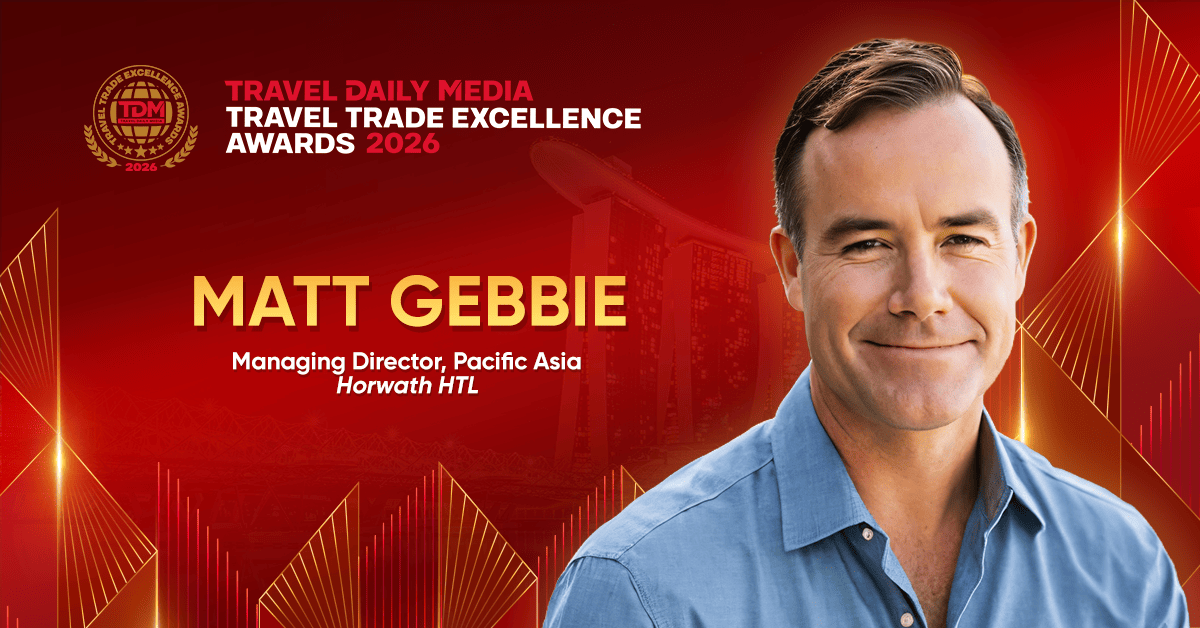
Asia Pacific's hospitality sector is entering a more demanding phase. Investors are more selective, development costs are climbing, and travellers have more choices than ever. For hotels and tourism projects, a strong concept on paper is no longer sufficient. Matt Gebbie, Managing Director, Pacific Asia at Horwath HTL, has observed these shifts over two decades. Since joining the firm in 2004, he has advised on more than 300 hospitality and tourism projects across Indonesia, China, Thailand, Vietnam, Malaysia, the Philippines, Maldives, South Korea, and Singapore. His work spans hotel development, tourism master planning, market feasibility, and asset strategy, serving investors, developers, and financial institutions.
Gebbie's background is unusually broad: more than a decade in operational roles across Australia, Canada, and the UK, plus five years as a solicitor specialising in commercial litigation and industrial relations. This mix of operational, legal, and advisory experience gives him a holistic view of what makes hospitality projects commercially viable and sustainable. As a judge for the TDM Travel Trade Excellence Awards 2026 - Asia, he shared his insights on the changing landscape, traveller expectations, technology, talent, and what separates genuine initiatives from those that merely sound good.
Investor sophistication and the rise of secondary destinations
Gebbie notes that owners are now more sophisticated and selective. "Whether it's feasibility, renovation, repositioning, or valuation projects, we are being pushed to test our demand forecasts, check our data sources, and make sure our facilities recommendations and cash flow forecasts hold up." Capital is harder to source, and construction costs keep rising, so branded residences have boomed as a financing tool. Mixed-use and lifestyle-led projects continue to grow in both resort and urban markets.
As primary markets fill up, secondary destinations are attracting attention for diversity and experiential travel. "Populations are growing, incomes are rising, and people take more trips each year," Gebbie says. Access and infrastructure remain decisive, especially when projects need both domestic and international visitors. Operators and owners are also negotiating harder on terms.
Traveller expectations: the middle is changing
For corporate road warriors and mass leisure travellers, little has changed: good access, transport, beds, showers, and food. The real shift is in the middle segment. "More travellers have more money, more time, and more interest in mixing it up," Gebbie explains. These travellers seek authenticity, local character, wellness, privacy, and space—and they are willing to pay for it. They expect creativity, a sense of place, and meaningful service. Developers now design around the guest experience from day one, rather than adding it as an afterthought. "Generic products lose out, and not just at the high end; add some creativity to products at all price points."
What makes a destination sustainable?
Gebbie argues that a destination lasts when it protects what drew visitors in the first place—whether that's nature, culture, community, or a diversity of attractions. "Good governance is essential. Regulation and enforcement let a destination keep control of its soul and its appeal. Be true. Manage the infrastructure, control the supply and look after the local community, so guests are greeted with smiles. It's really not rocket science."
Technology: support, not substitute
Technology is critical, but hospitality remains a people business. "The use of AI and technology should stay out of sight," Gebbie says. It helps with revenue management, energy use, staffing, and personalising the booking and pre/post-stay experience. Guests welcome tech when it makes life easier, but dislike it when it replaces hospitality. The goal for every operator is to use tech to free up teams to spend more time with guests. This aligns with recent industry moves, such as embedding hospitality tech in curricula to prepare future leaders.
Preparing for the next decade
Gebbie is blunt about the industry's priorities: "Hospitality is a people business, and the hospitality industry must ensure they attract and retain great people. The industry must train and pay people better." He also stresses that climate risk and energy costs must be taken seriously in design and operations—"Yesterday!" Owners and operators should align their interests earlier through honest dialogue, setting expectations, and working together. Franchise growth in Southeast Asia depends on skilled owners; operators can help by coaching them, and owners should choose the right operator and negotiate the management agreement with that handover in mind.
Substance over hype
As a judge for the TDM Travel Trade Excellence Awards 2026 - Asia, Gebbie looks for substance over talk. "Be genuine, follow through on the concept and don't cut corners. Spend that final 5-10%, because it really does matter. Create something original - always." This philosophy resonates with broader industry trends, such as nature-first modular concepts and new resort openings that prioritise authenticity. For travel professionals, Gebbie's message is clear: invest in people, protect the destination's soul, and let technology serve the human touch.