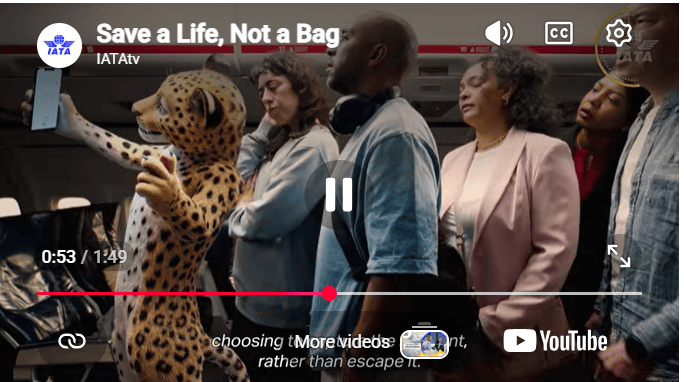
The International Air Transport Association (IATA) has rolled out a global awareness initiative, "Save a Life, Not a Bag", aimed at curbing a risky behavior observed during aircraft evacuations: passengers retrieving cabin baggage instead of exiting immediately. The campaign, backed by the European Union Aviation Safety Agency (EASA) and the U.S. Federal Aviation Administration (FAA), seeks to embed a simple but critical rule into passenger conduct.
Willie Walsh, IATA's Director General, underscored the stakes: "Taking bags during an evacuation is not a minor issue. Every second matters." The campaign responds to a surge in online videos showing passengers collecting luggage or even taking photos while evacuating, a trend that safety experts say could turn survivable incidents into tragedies.
Passenger Knowledge Gaps Exposed
IATA-commissioned research reveals a disconnect between passenger confidence and actual preparedness. While 80% of surveyed travelers claimed familiarity with emergency procedures, only 61% correctly identified that they should leave all personal items behind. More concerning, 33% had witnessed others retrieving baggage during evacuations, and 22% admitted they might do the same.
Florian Guillermet, EASA Executive Director, emphasized the collective responsibility: "Rapid evacuation in an emergency situation saves lives. For this to work, all passengers must play their part." The campaign encourages travelers to keep essential items—such as passports and medication—on their person and to pay close attention to safety demonstrations.
The initiative provides digital assets for airlines and industry partners to promote the message across airports and onboard. IATA hopes that by reinforcing these behaviors, carriers like Emirates, Delta Air Lines, and Singapore Airlines can ensure faster, safer evacuations. The campaign aligns with broader industry efforts to improve cabin safety, including updates to crew training and passenger briefings.
For travel professionals, the campaign serves as a reminder that passenger education is a shared responsibility. Airlines, tour operators, and travel agents can integrate these safety messages into pre-flight communications and booking confirmations. As the industry continues to recover and grow, maintaining a culture of safety remains paramount.
Related reading: IATA's 'Save a Life, Not a Bag' Campaign Targets Evacuation Safety Gaps and Mastercard Report: Muslim Sports Tourism to Hit $21B by 2030, Urges Industry Action.