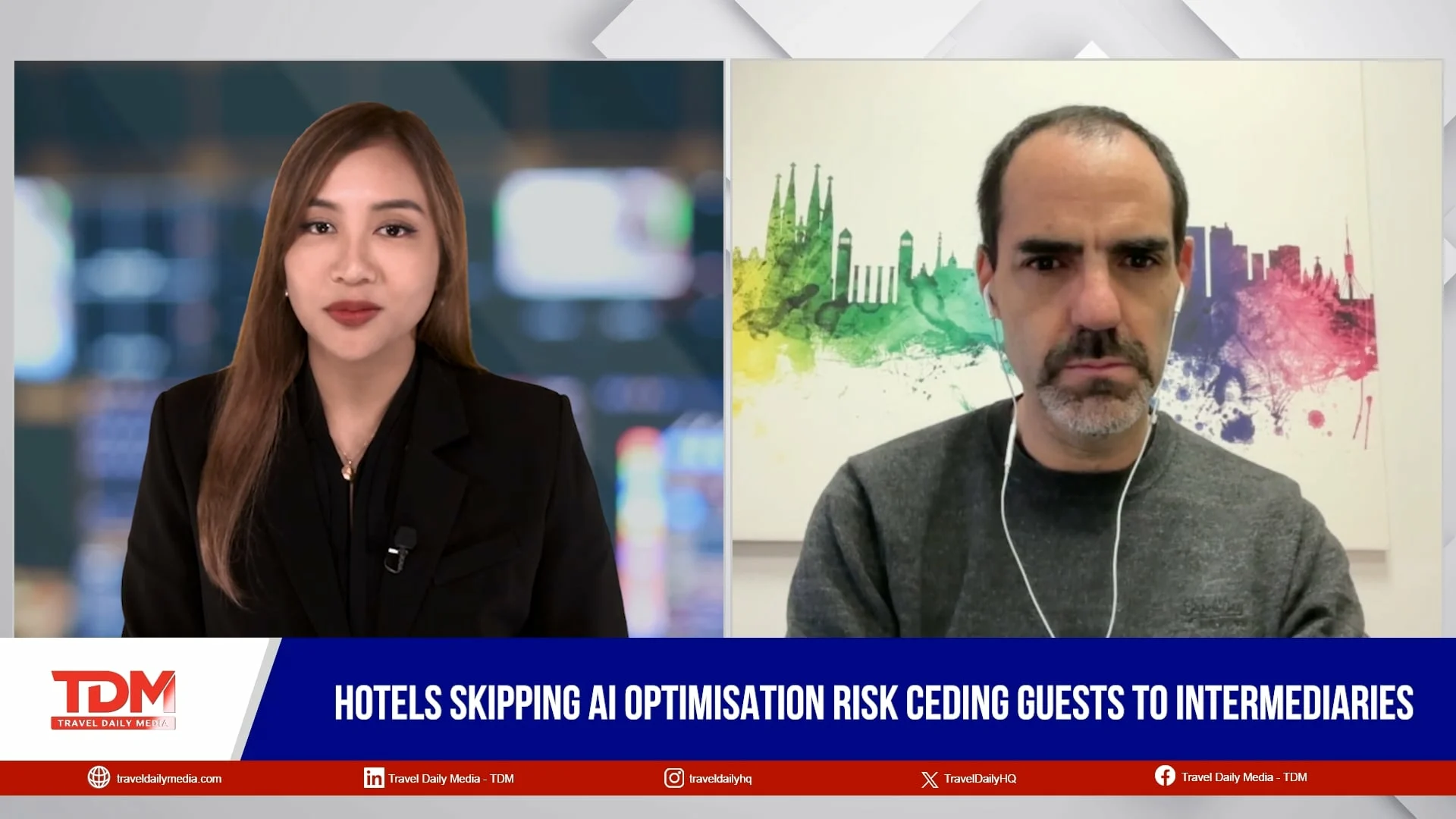
Artificial intelligence is reshaping how travelers discover hotels, pushing operators to adapt their distribution strategies as booking demand moves earlier in the journey, according to Juanjo Rodriguez, Head of Direct Booking and Innovation at Lighthouse.
Platforms such as ChatGPT now count roughly 900 million users globally, with 50 million of those searching for travel each month. That creates a new demand source alongside traditional channels like Google and online travel agencies. Rodriguez argues hotels must capture travelers before they even know where or when they want to book.
Behavioral Shift in Search
The change is as much behavioral as technical. Traditional search assumed users knew exactly what they wanted. AI, by contrast, enables a proper conversation where the goal is to learn. That places AI at the very beginning of the marketing funnel, when preferences are still forming.
Hotels now need to ensure their properties appear in AI-generated recommendations, not just in search rankings. Rodriguez says this means structuring content so AI systems can read and reference hotel descriptions, pricing, and availability accurately. Without that structure, properties risk invisibility in AI-driven recommendations.
Yet relying too heavily on any single platform remains risky. “You have to maintain a variety of healthy channels in order to have a healthy distribution mix,” Rodriguez said. While AI expands reach, it could also create another powerful intermediary if a few platforms dominate discovery.
To adapt, hotels are testing new optimization methods. “You have GEO for the AI space,” Rodriguez said, referring to Generative Engine Optimization, which improves visibility in AI responses. Technical standards such as MCP (Model Context Protocol) allow hotel systems to connect directly with AI platforms, supporting real-time pricing and booking links.
Rodriguez emphasized that early adoption is critical. “If you are early and you learn during the process, you end up in a much better position,” he said, adding that “the cost … is very small.”
For travel professionals, the implications extend beyond hotels. Airlines, cruise lines, and tour operators face similar pressures as AI reshapes how travelers research and book. Payment platforms and bank rewards also influence how travelers complete reservations, as highlighted in our coverage of hidden bank fees squeezing travel margins. Meanwhile, the surge in solo travel—up 230% over a decade—further underscores the need for personalized AI-driven recommendations, as detailed in our report on solo travel trends.
Rodriguez’s advice is clear: hotels that invest early in AI optimization will be better positioned as the technology matures. Those that wait risk losing ground to competitors who have already mastered the new discovery landscape.