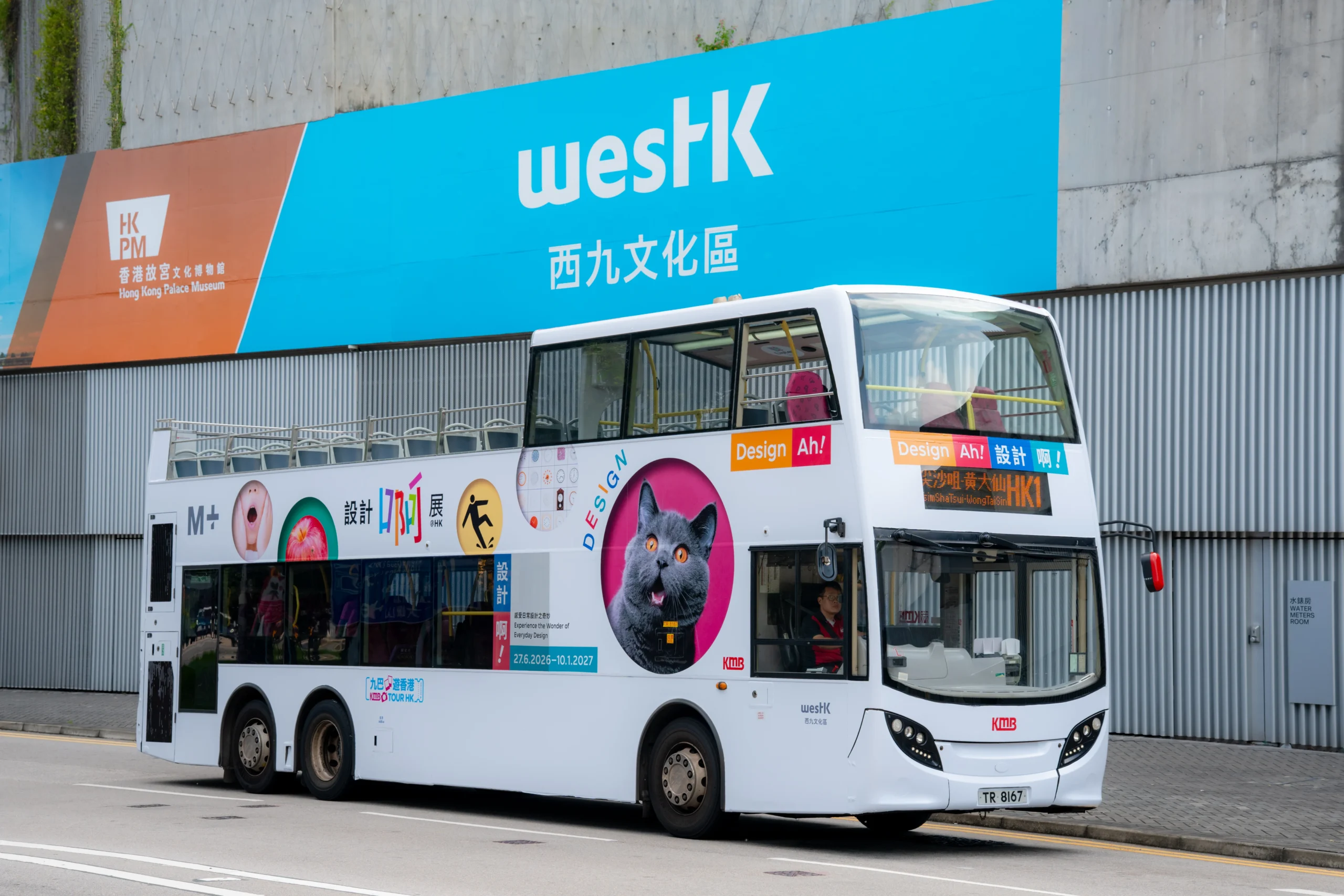
Hong Kong's M+ museum and The Kowloon Motor Bus Company (KMB) have taken the Design Ah! exhibition beyond the gallery walls, transforming three open-top buses into mobile design showcases. The specially wrapped vehicles now operate on the KMB Tour HK 'CITY CHARM' HK1 route, offering passengers a rolling introduction to everyday design as they traverse Kowloon's streets.
The collaboration extends the museum's popular exhibition, Design Ah! Experience the Wonder of Everyday Design, which remains on display at the M+ Main Hall Gallery until 10 January 2027. By bringing the exhibition onto the road, M+ and KMB aim to make design thinking accessible to a broader audience, including both residents and international visitors.
Design on the move
The three open-top buses feature bold graphics inspired by the exhibition's themes, celebrating simple actions like walking, eating, and commuting. Passengers can tune into a bespoke audio guide that points out design details at various stops along the route, including M+, Shanghai Street, and the Temple Street Night Market. The audio commentary is available in multiple languages, catering to the city's diverse tourism market.
KMB's HK1 route is a dedicated sightseeing loop that showcases Hong Kong's vibrant neighbourhoods and iconic skyline. The design-themed buses operate on both daytime and nighttime tours, allowing visitors to experience the city's urban landscape from a new perspective. The initiative is part of a broader trend in destination marketing, where cultural institutions partner with transport operators to create immersive travel experiences.
For travel professionals, this collaboration highlights the growing importance of integrating art and culture into urban mobility. Similar initiatives have been seen in other cities, such as the folklore-inspired design at Mondrian Seoul Itaewon, which also blends local heritage with contemporary hospitality. The M+ and KMB partnership offers a model for how destinations can leverage public transport to enhance cultural tourism.
The exhibition itself includes interactive installations and audiovisual environments that encourage visitors to engage with design in new ways. One notable feature is the Dessin Ah! station, where visitors can sketch a classic KMB double-decker bus model and see their drawing transformed into a 360-degree animation. This hands-on approach is designed to appeal to families and younger audiences, a key demographic for both the museum and the city's tourism sector.
KMB, one of Hong Kong's largest bus operators, has a long history of integrating design into its fleet. The company's iconic red double-deckers are a familiar sight across the city, and this collaboration adds a new layer of cultural significance. The buses are expected to be a draw for tourists seeking unique photo opportunities, as well as for design enthusiasts following the exhibition's themes.
The partnership also underscores the potential for cross-sector collaborations in the travel industry. As destinations seek to differentiate themselves, partnerships between cultural institutions and transport providers can create memorable experiences that encourage longer stays and repeat visits. For example, Explora Journeys' recent itinerary adjustments reflect a similar focus on delivering unique, culturally rich experiences to travellers.
M+ has been a catalyst for cultural tourism in Hong Kong since its opening in 2021. The museum's location in the West Kowloon Cultural District makes it a natural anchor for visitors exploring the city's art scene. The bus collaboration extends that reach, turning the journey itself into part of the cultural experience.
For travel agents and tour operators, the design buses offer a new selling point for Hong Kong packages. The audio guide and visual elements provide added value for clients interested in design, architecture, and urban culture. The initiative also aligns with the city's efforts to attract a broader range of visitors, from leisure travellers to business delegates attending MICE events.
The buses will remain in service until November 2026, giving the travel trade ample time to incorporate this unique offering into itineraries. As Hong Kong continues to rebuild its tourism sector, such collaborations between public transport and cultural institutions are likely to play an increasingly important role in shaping the visitor experience.