Malta is repositioning itself as a premium Mediterranean destination, and a recent hosted itinerary for international journalists offered a clear view of how the archipelago is blending its 8,500-year heritage with contemporary luxury. The three-day program, organized by Visit Malta, took in Valletta's fortified grandeur, the historic Three Cities, and a string of Michelin-recognized restaurants, all while highlighting the island's seamless arrival experience and warm hospitality.
Valletta: A Grand Arrival and a Seamless Welcome
The journey began at Malta International Airport, where immigration and customs were cleared in roughly five minutes—a detail that resonates with travel professionals who know the value of a smooth first impression. A private chauffeur then transferred the group to The Phoenicia Malta, a five-star property located just outside the capital's ancient gates. The hotel's manicured gardens and harbour views set the tone for a stay that balances old-world charm with modern comfort.
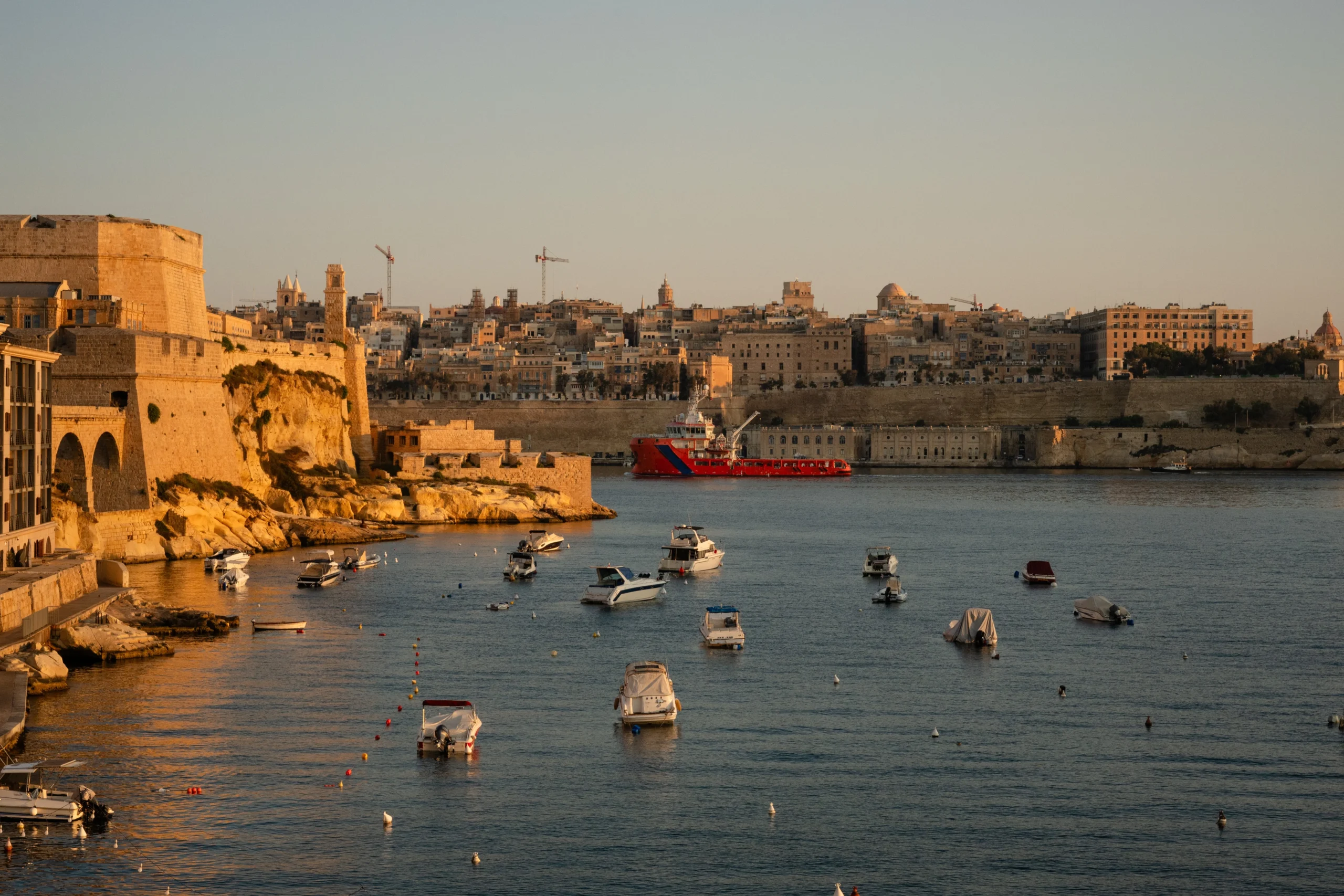
Valletta itself is a UNESCO World Heritage site, and its grid of limestone-paved streets is lined with gallariji—the enclosed wooden balconies that catch the Mediterranean light in warm gold and amber. The city's architectural fabric is a draw for luxury travellers seeking culture beyond the beach, and Visit Malta's marketing team, including Monica (Xiaolong) Wu, Senior Marketing Manager, and Yasmine Scorfna, Marketing Manager, were on hand to guide the group through the city's layered narrative.
Marsaxlokk and the Three Cities: Living History and Local Flavour
An evening excursion to the fishing village of Marsaxlokk introduced the group to the island's maritime traditions. Traditional luzzu boats, painted in vivid reds, blues, and yellows with the Eye of Osiris on their bows, bobbed in the harbour as dinner was served at La Capanna, a seafood restaurant that prides itself on boat-to-table freshness. The menu featured raw carpaccio, shellfish pasta, and whole grilled sea bass, paired with a local Girgentina white wine—a reminder that Maltese gastronomy is deeply tied to its coastal identity.
The following morning, licensed tourist guides Priscilla Civelli and Jeffrey Powell, both digital marketing managers at Visit Malta, led the group through the Three Cities—Birgu (Vittoriosa), Senglea (Isla), and Cospicua (Bormla). These fortified harbour towns predate Valletta and served as the island's maritime shield. A highlight was an exclusive tour of the Inquisitor's Palace in Birgu, one of the few such edifices open to the public. Walking through its vaulted corridors, tribunal room, and intact prison cells—where centuries-old graffiti remains etched into the limestone—offered a poignant connection to Malta's complex past.
From the palace, a private dgħajsa crossing brought the group to Valletta's Upper Barrakka Gardens in time for the 12:00 PM ceremonial cannon salute at the Saluting Battery. The tradition, performed by uniformed artillerymen, is a living piece of Malta's heritage that continues to draw visitors.
Michelin-Recognized Dining and Archival Treasures
Lunch at One80 St. Christopher Street, a Michelin-recommended venue in Valletta, showcased creative Mediterranean sharing plates built on hyper-local ingredients. The afternoon included a private visit to the Notarial Archives of Malta, a repository holding over six centuries of primary historical records dating back to 1465. Master conservationists demonstrated manuscript restoration, and the group examined original documents, including corsairing contracts of the Knights of St. John and Il-Kantiċi (The Cantilena), the earliest known written text in the Maltese language, penned around 1470 by Pietru Caxaro.
The day concluded at The Chophouse, another Michelin Guide-listed restaurant across Marsamxett Harbour. Dry-aged prime cuts were paired with selections from a floor-to-ceiling glass wine vault, all with views of Valletta's illuminated skyline.
Coastal Wonders and Prehistoric Mysteries
The final day began at the Blue Grotto on Malta's southern coast. A traditional frejgatina boat carried the group through a 30-meter natural sea arch, where morning sunlight reflects off the white sandy seabed to create the grotto's signature blue glow. The experience is a reminder that Malta's appeal extends beyond its cities to its dramatic coastline.
Malta's tourism strategy is increasingly focused on attracting high-value travellers who seek cultural depth and culinary excellence. The island's compact size—roughly 316 square kilometres—makes it an ideal destination for multi-day itineraries that combine history, gastronomy, and coastal scenery. For travel professionals, Malta offers a compelling product that stands out in the crowded Mediterranean market.
Visit Malta's efforts align with broader industry trends, as seen at the recent WTTC Summit in Malta, where discussions centred on value, technology, and resilience. The island is also expanding its reach into Asian markets, as highlighted by the three-year tourism pact with Trip.com Group. These initiatives underscore Malta's commitment to diversifying its visitor base and enhancing its luxury offerings.
For hoteliers and tour operators, Malta's blend of heritage and modernity offers a template for destination marketing that resonates with discerning travellers. The island's investment in seamless arrivals, exclusive experiences, and Michelin-level dining positions it as a serious contender in the luxury travel segment.