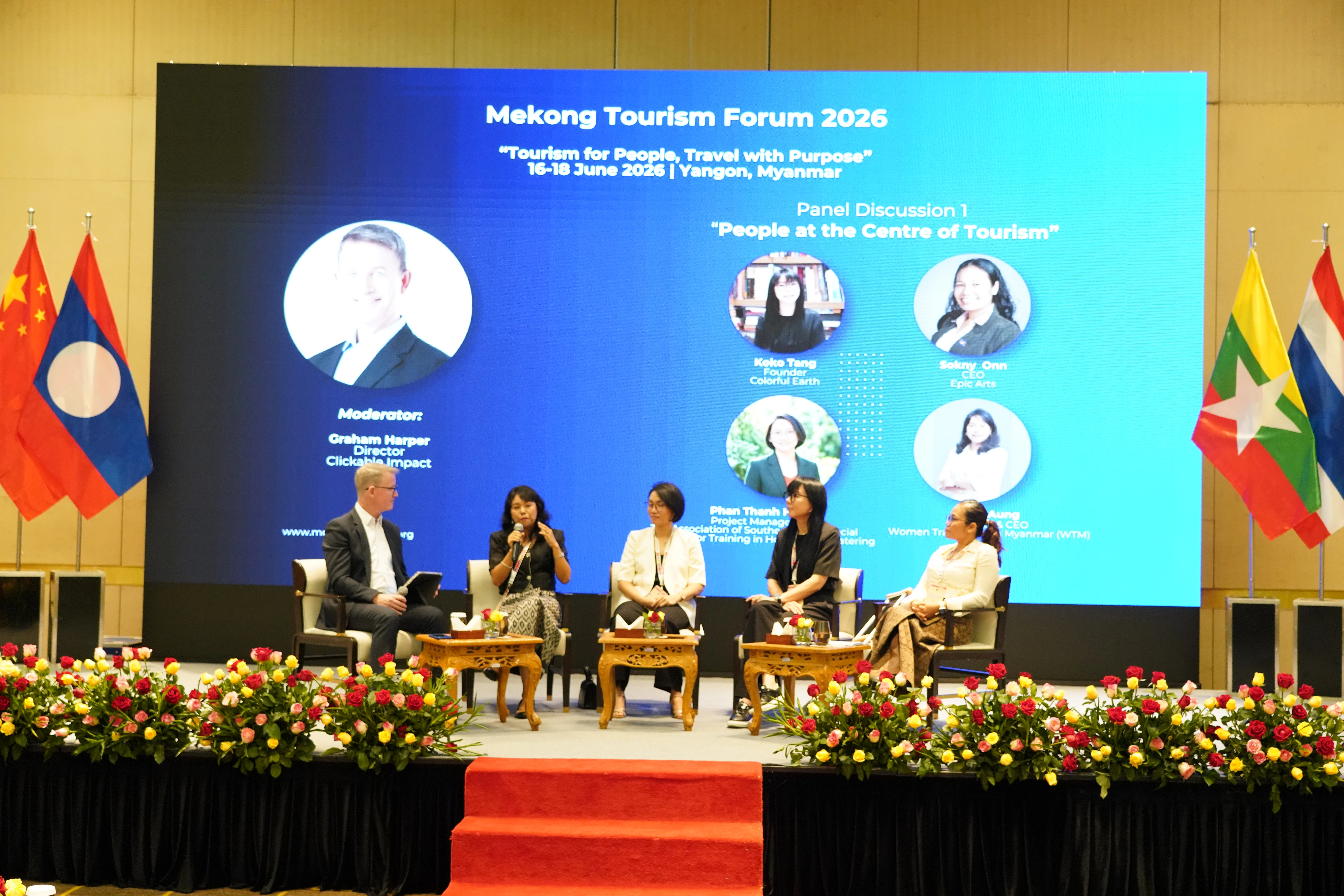
Tourism conferences often echo with the same set of terms: sustainable, responsible, community-based, people-centred. But at the Mekong Tourism Forum 2026, a session titled "People at the Centre of Tourism" cut through the jargon to deliver a clear, actionable message: tourism can be a genuine engine for change when the right people are empowered.
Moderated by Graham Harper, Director of Clickable Impact, the discussion featured four women whose daily work is reshaping communities across Myanmar, Cambodia, China, and Southeast Asia. Their insights, drawn from real-world programmes, offered travel professionals a blueprint for moving beyond rhetoric.
Women as Economic Drivers
Thiri Aung, CEO and Founder of Women Transforming Myanmar, leads a network of over 5,000 women entrepreneurs across Myanmar. Her organisation provides business development, mentoring, leadership training, and access to markets and finance. She challenged delegates to think beyond participation. "Women need access to markets, finance, skills, and professional networks," she said. "They need a seat at the table where decisions are made." Her core message was simple but powerful: "Invest in women, when women thrive, communities thrive." For hoteliers and tour operators in the Mekong region, this translates into stronger local supply chains and more resilient destinations.
From Jobs to Careers
Ha Phan, representing ASSET-H&C (Association of Southeast Asian Social Enterprises for Training in Hospitality & Catering), addressed the workforce challenges facing tourism. ASSET-H&C operates a network of vocational training centres and social enterprises across Southeast Asia, supporting young people from disadvantaged backgrounds with hospitality education, English language training, digital literacy, and career guidance. "I often say that a job placement is an outcome, but a career pathway is an impact," Ha said. She emphasised that workforce development is not charity but an investment in service quality and destination competitiveness. For airlines like Bangkok Airways or hotel groups such as Minor Hotels, this approach directly improves guest experiences and reduces turnover.
Inclusion as a Right
Sokny Onn, CEO of Epic Arts in Kampot, Cambodia, delivered a powerful message on disability inclusion. Epic Arts runs Epic Arts Café, Epic Creations, and Epic Arts Dance, where people with disabilities are artists, performers, entrepreneurs, and leaders. "Disability inclusion is a right, not a favour. It is not charity," Sokny said. She urged the industry to build accessible spaces and fair employment from the start. "Inclusive tourism is not only about making places accessible for people with disabilities to visit," she explained. "It is also about creating pathways for them to work, create, lead, and be recognised as equal contributors." Her closing remark resonated: "When people with disabilities lead, tourism becomes more than an industry. It becomes a platform for dignity, equality, and change."
Whose Voice Counts?
Koko Tang, Founder of Colorful Earth and Head of Global Impact Measurement at the World Sustainable Hospitality Alliance, shifted the focus to governance. She asked: "Who gets a voice?" Her work measures how tourism benefits local communities, not just in economic terms but in decision-making power. For destinations like Luang Prabang or Siem Reap, this means ensuring that local residents—not just international investors—shape tourism development. The session underscored that Mekong tourism must shift from arrival numbers to community value, as AirAsia MOVE's Chattan has also argued.
The panelists collectively demonstrated that people-centred tourism is not a soft concept but a strategic imperative. For travel professionals—from airline executives at Thai Airways to hoteliers at Accor and tour operators like Intrepid Travel—the lesson is clear: invest in women, build career pathways, embed inclusion, and listen to local voices. As the Mekong region continues to recover and grow, these principles will define which destinations thrive and which merely survive.