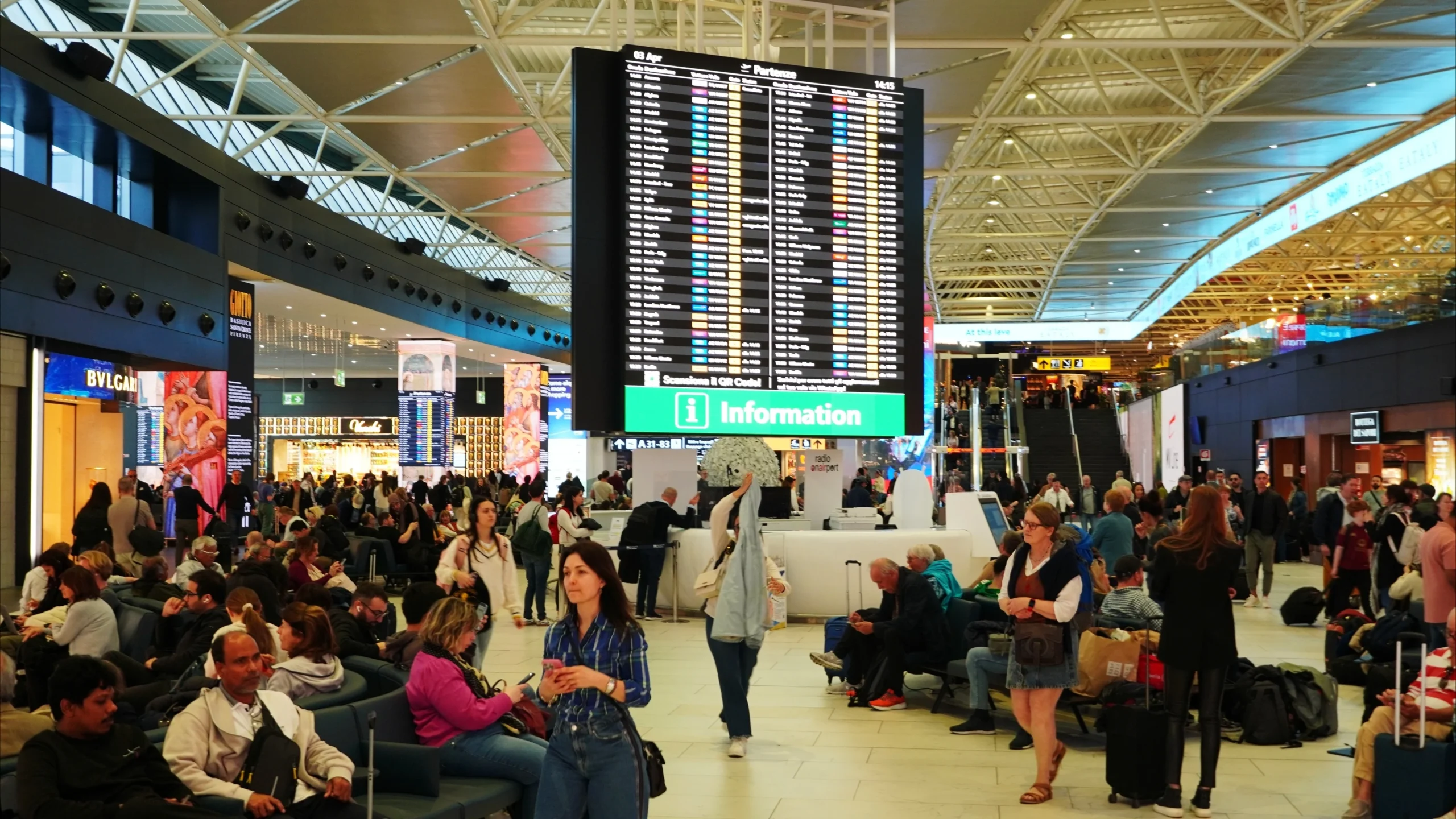
Global tourism is entering a more turbulent phase as geopolitical tensions, elevated energy prices and rising travel costs dampen demand. The downgrade of UN Tourism's 2026 growth forecast to 1%–2%, from the 3%–4% projected in January, reflects a sector that remains resilient but increasingly vulnerable to external shocks.
The September edition of the UN Tourism World Tourism Barometer cites the wider Middle East conflict, higher oil prices and persistent inflation as key factors. The forecast predates the October attacks on Riyadh's King Khalid International Airport, which has since reopened, but the incident underscores the fragility of international connectivity.
First-half arrivals show sharp slowdown
An estimated 690 million tourists travelled internationally between January and June 2026, just three million more than the same period last year, according to UN Tourism. That translates to a meagre 0.4% year-on-year growth. The slowdown was most pronounced in the second quarter, with arrivals declining 1% year-on-year after a 2% rise in Q1. June arrivals fell 3%.
UN Tourism attributes the weaker performance to geopolitical tensions, higher travel costs and air transport disruption, while also noting that the timing of Easter skewed quarterly comparisons.
Regional results were uneven. Africa led with 4% growth, followed by Europe at 3% and the Americas at 2%. Asia-Pacific managed just 1%, while the Middle East suffered a 22% decline in arrivals during the first half.
Aviation disruption adds to industry risks
The Middle East's sharp decline reflects the direct impact of conflict on destinations and the broader consequences for aviation and traveller confidence. Disruption to major air routes can ripple far beyond the region, especially for itineraries relying on connecting flights through hubs like Dubai, Doha or Istanbul. Flight suspensions and rerouting complicate airline operations, inflate costs and create uncertainty for tour operators and corporate travel managers.
The October attacks on Riyadh's King Khalid International Airport highlighted the vulnerability of regional aviation to geopolitical shocks. Although the airport has reopened, airlines' subsequent service adjustments—such as Emirates and Qatar Airways revising schedules—demonstrate how quickly connectivity can be disrupted. The scale and duration of remaining disruption will depend on individual airline decisions.
Economic consequences extend beyond flight cancellations. Higher oil prices raise airline operating expenses, while inflation increases costs for accommodation, transport and other tourism services. Carriers may respond with fare adjustments or fuel surcharges, potentially making international travel less affordable. For hotels, tour operators and destination marketers, the combination of higher costs and unpredictable connectivity complicates capacity planning, pricing and forward bookings.
Asia-Pacific recovery remains uneven
Asia-Pacific recorded just 1% growth in international arrivals during the first half, with arrivals still 11% below 2019 levels. North-East Asia grew 3%, but South Asia fell 5% and South-East Asia declined 1% compared with the first half of 2025. In June, South-East Asia saw a 5% drop, which UN Tourism links to weaker demand from Asian markets, geopolitical tensions, disruption to air travel through the Middle East and higher travel costs.
For destinations across Southeast Asia, the figures underscore the need to maintain competitive pricing, strengthen air connectivity and diversify source markets. Higher international fares could pressure demand, particularly among price-sensitive travellers who can postpone trips or choose closer alternatives. Destinations dependent on specific source markets or connecting routes are especially exposed.
Despite the challenges, the region's overall growth indicates demand has not weakened uniformly, creating opportunities for businesses that can adapt to shifting travel patterns. Monitoring booking trends by source market, route capacity and traveller spending will be critical.
Industry confidence cautiously positive
Despite the weaker growth outlook, UN Tourism's latest confidence survey suggests expectations are mixed rather than uniformly negative. Among tourism experts surveyed, 45% expected September–December performance to be better or much better than the same period in 2025, while 34% anticipated similar conditions and 21% expected worsening. The resulting confidence score was 113 on a scale of 0 to 200, where 100 represents unchanged performance.
The full-year outlook will hinge on the duration of the Middle East conflict and its effects on oil prices and inflation. For travel businesses, the key is to remain agile—managing costs, diversifying markets and closely monitoring demand signals. As geopolitical turmoil continues to strain global hubs, resilience and adaptability will be the defining traits of successful operators.