Richard Barrow, one of Thailand's most followed independent travel commentators, has turned a routine rail journey into a blueprint for slow travel in the country's southern rainforests. His recent overnight trip from Bangkok to Surat Thani, followed by a transfer to Lost Horizon Resort in Khao Sok, is being watched closely by tour operators and destination marketers looking to extend itineraries beyond traditional beach stops.
Barrow, whose Facebook page now counts more than 30,000 followers, has long championed rail tourism. His latest dispatch reinforces a message he has repeated across his Thai Train Guide: the railway station should not be the end of the story. "As part of my ongoing work promoting rail tourism, I'm particularly interested in showing how train journeys can connect naturally with destinations around Thailand rather than ending at the railway station," he wrote.
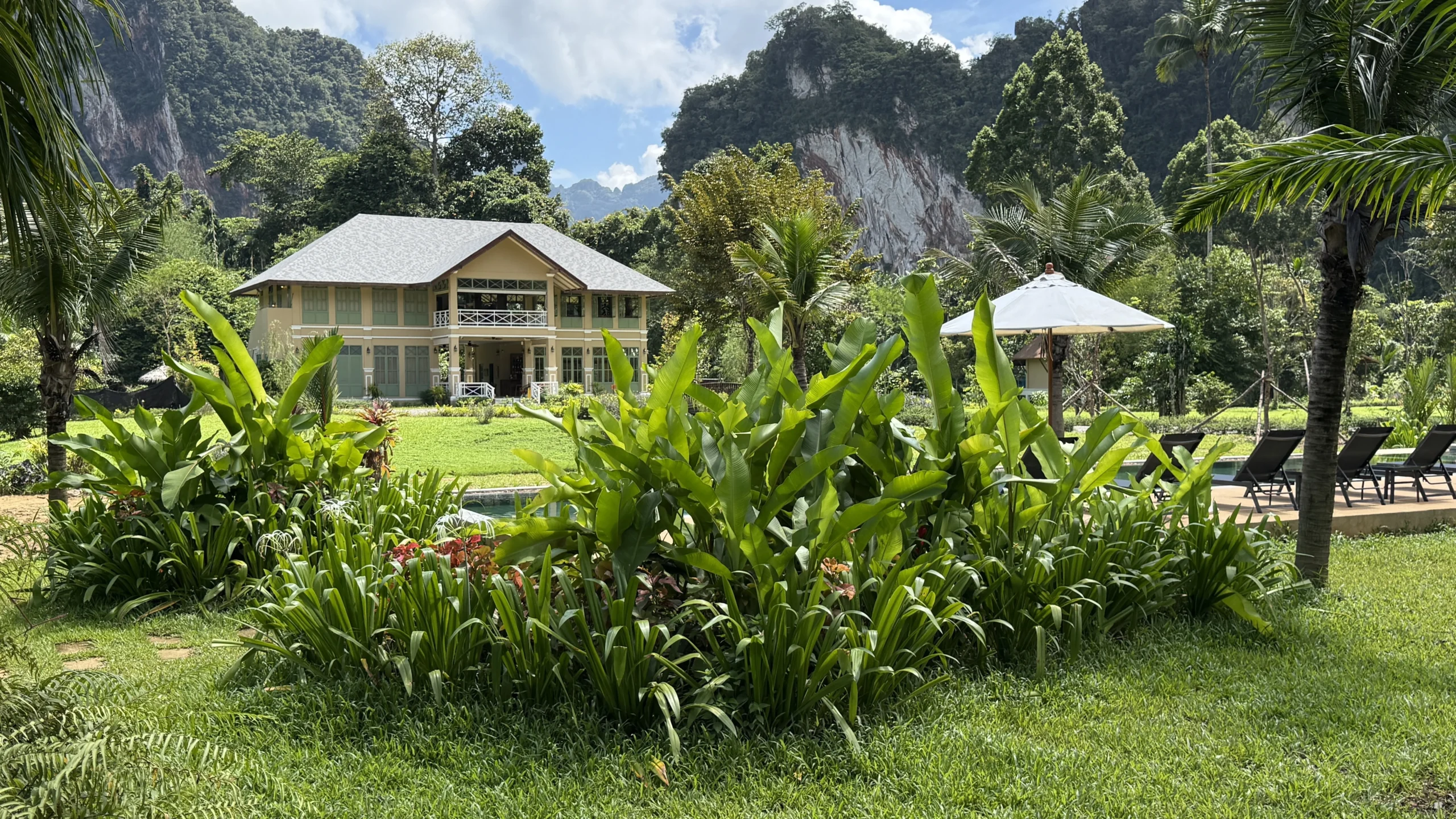
Lost Horizon Resort, which arranged the pickup from Surat Thani station, sits in a secluded pocket of Khao Sok National Park, bordered by a towering limestone cliff and the Khlong Sok River. The property's bungalows and villas are scattered across the grounds, giving it the feel of a small village rather than a conventional hotel complex. "At times it feels more like walking around a small village than staying in a conventional resort," Barrow noted.
Slow travel in practice: rafting and cycling
Barrow's first full day began with a bamboo raft trip down the Khlong Sok River. The pace was deliberately unhurried. "The raft moves slowly with the current, so it wasn't really about adventure or speed," he said. "It was more about sitting back and taking in the rainforest around you." Along the way, he spotted monkeys, a snake, and heard gibbons calling from deeper in the forest. The guide stopped mid-journey to brew fresh coffee over a small fire, served in traditional bamboo cups.
Later, Barrow swapped the raft for a bicycle and pedaled through surrounding plantations of rubber, oil palm, durian, and rattan. "I've seen plenty of rattan furniture over the years, but it was interesting to see the plant itself growing and learn more about how it is used," he wrote. The two activities, he concluded, "were both a good way of slowing down and getting a better feel for the landscape around Khao Sok."
For travel professionals, the appeal is clear: Khao Sok offers a nature-based extension to the classic Bangkok-to-south itinerary, and rail connections make it accessible without adding a domestic flight. The resort's direct pickup from Surat Thani station simplifies logistics for independent travelers and small groups.
Barrow's trip also underscores a broader trend in experiential travel. "What I enjoyed most was the chance to slow down," he said. "Travelling there by overnight train and then spending a few days at Lost Horizon fitted perfectly with the idea of slow travel. There was no pressure to rush from one attraction to another. Sometimes the journey and the time you spend getting to know a place are just as important as the destination itself."
While Barrow did not visit Cheow Lan Lake on this trip—he has been twice before—he recommends it for first-time visitors. The reservoir, also known as Ratchaprapha Dam, is a signature Khao Sok attraction, but his latest journey highlights the destination's quieter side: rivers, rainforest, farming communities, and local food.
October, part of Khao Sok's rainy season, is not the peak travel window, but Barrow's dispatches suggest it has its own appeal. The rain keeps the forest lush, rivers full, and mist clinging to the limestone cliffs. For operators, this could be a chance to promote shoulder-season packages that lean into the region's green season rather than avoiding it.
Barrow's journey is a reminder that rail tourism can be a powerful tool for dispersing visitors beyond crowded hubs. As Thailand continues to develop its rail network, the model of pairing overnight trains with nature-based resorts could be replicated in other regions. For now, Lost Horizon and Khao Sok are reaping the benefits of a well-told story.
For agents and tour operators looking to build similar slow travel packages, the key takeaway is the seamless connection between train and resort. The one-hour drive from Surat Thani station into the park is a manageable transfer, and the resort's willingness to coordinate pickups removes a common friction point. As Barrow's experience shows, the journey itself can be the highlight.