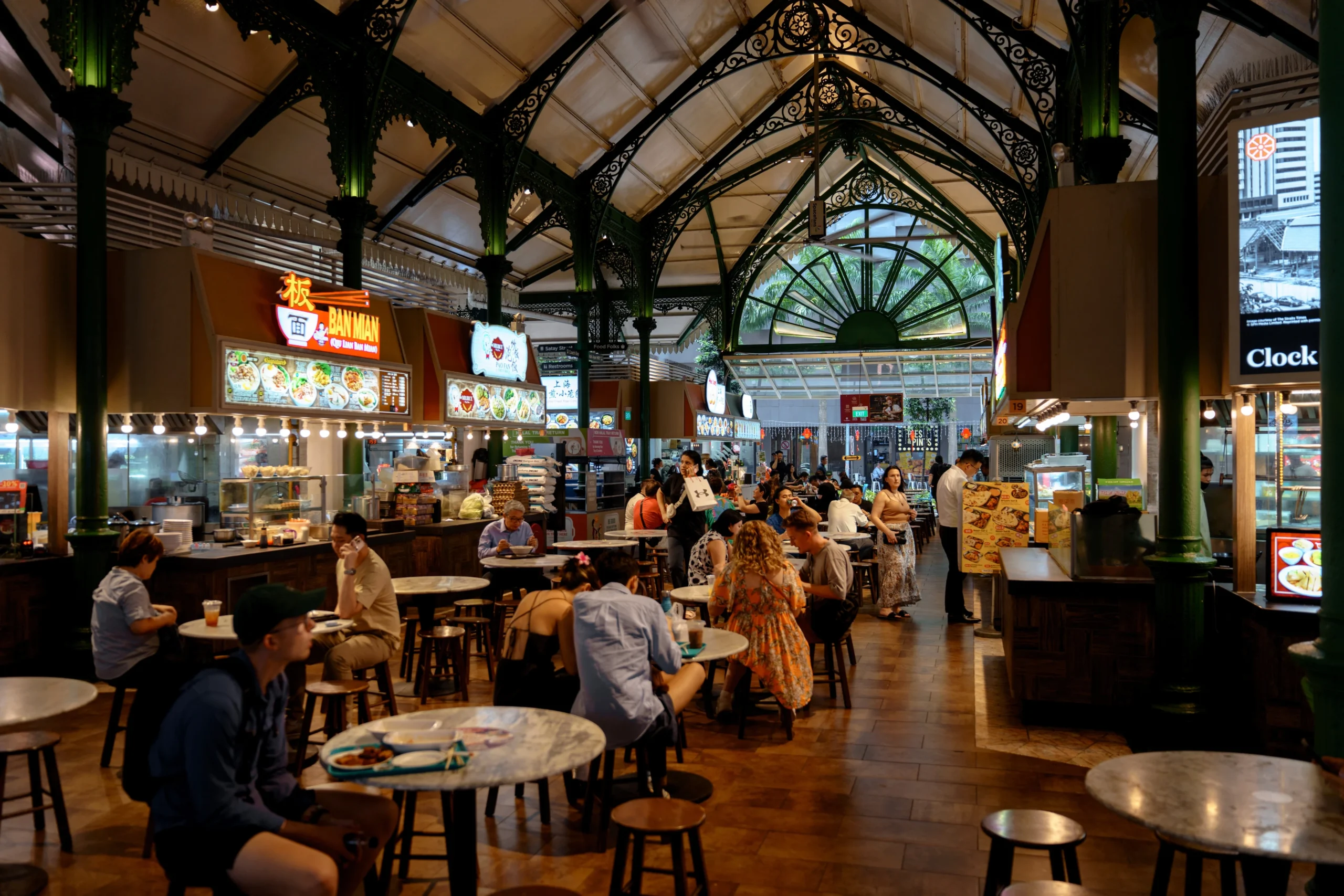
Six years after UNESCO added Singapore's hawker culture to its Representative List of the Intangible Cultural Heritage of Humanity, the city-state is pouring resources into keeping the tradition alive. But a new academic study suggests that bricks, mortar and training programmes alone may not be enough to secure the trade's future.
Recognition meets economic reality
In The Preservation Paradox: Singapore's Hawker Centres as a Case Study in Cultural Food Policy, published by the Hunter College New York City Food Policy Center in April 2026, researcher Jenny Dorsey examined whose interests preservation policies actually serve. A professional chef and Fulbright–National Geographic fellow, Dorsey conducted two years of fieldwork, including interviews with 21 hawkers between October 2024 and July 2025.
The findings expose a stark contradiction: hawkers are celebrated as guardians of national culture, yet they lack the labour flexibility and financial protections needed to make their work sustainable. Several interviewees warned the industry could face near-total collapse within a decade if conditions do not improve.
Dorsey distinguishes between preserving the form of hawker centres—the open-air layouts, compact stalls, communal tables and familiar atmosphere—and protecting their function as providers of affordable meals, accessible entrepreneurship and welcoming community spaces. Her research argues that safeguarding one without the other risks hollowing out the very culture UNESCO recognition was meant to honour.
The study documents rising ingredient and operating costs, uneven rental structures, labour shortages and fragile outcomes from some training initiatives. Of the 566 participants who completed the Hawkers' Development Programme, only 16 stalls remained operational as of 2025. The central lesson is clear: cultural preservation cannot succeed unless the people carrying that culture can earn a living and pass their knowledge forward.
Singapore invests in the next generation
Singapore has not stood still. In March 2025, the Ministry of Sustainability and the Environment announced plans to invest up to S$1 billion in upgrading existing hawker centres and building five new ones. Eligible stalls also received S$600 in one-time rental support during Singapore's 60th anniversary year.
The response extended beyond infrastructure. To discourage unrealistic tender bids, the National Environment Agency began publishing median assessed market rents for centres with vacant stalls and announced an online tool to help prospective operators understand the costs of running a hawker business before submitting a bid.
Manpower and productivity were also addressed. From January 2025, eligible stallholders were permitted to employ Long-Term Visit Pass holders as stall assistants. More than S$3.4 million had been disbursed by the end of 2024 to help hawkers adopt equipment and digital tools such as ordering and kitchen-management systems. Centralised dishwashing, automated tray-return systems and shared operating arrangements were among the measures available to reduce the physical and staffing demands of the trade.
Singapore continued supporting new entrants through its Incubation Stall Programme, Hawkers' Development Programme and Hawkers Succession Scheme. By the end of 2024, more than 100 aspiring hawkers had completed apprenticeships under experienced mentors.
The Ministry's wider message, reinforced during a November 2024 parliamentary debate, was that safeguarding hawker culture is a shared responsibility involving government, businesses, communities and consumers. Policy can create better operating conditions, but diners must also accept that preserving affordable food cannot mean expecting hawkers to absorb every increase in ingredients, labour and utilities.
A tradition under pressure
Yet hidden within this story is a troubling reality. Hawking was once viewed as a respected profession and a family lineage to inherit and continue. Today, its appeal appears to be waning. Without meaningful change, there is a real threat that many of the skills associated with Singapore's hawkers could disappear.
Providing nutritious, affordable food has always been central to the hawker trade and to Singaporean life. Increasing ingredient costs, however, create a serious challenge. So does age. Younger generations may be unwilling or unable to accept the long hours now required to make a hawker business profitable.
Could UNESCO recognition provide a timely lifeline? Could it offer the impetus to protect, preserve and reshape this culinary art form in ways its founders could never have imagined? The answer is yes—but recognition must become action.
Tourism can help, but communities must lead
UNESCO status creates an opportunity to attract travellers seeking immersive, authentic and culturally rich experiences. Many are willing to pay a fairer price and want their spending to benefit local communities. They recognise the value of the custodians who protect local traditions. Singapore's broader tourism strategy, which has shifted toward yield and quality over sheer arrivals, aligns with this approach. As the city-state courts higher-spending visitors, hawker centres can serve as a genuine cultural draw—provided they remain viable for the people who run them.
For travel professionals, the hawker story is a reminder that cultural tourism is only sustainable when the host community benefits. Hotels and tour operators can play a role by directing guests to hawker centres and promoting them as authentic experiences, rather than as mere photo opportunities. The shift toward yield in Singapore's tourism strategy suggests that quality experiences, not just volume, are the future.
As Singapore continues to invest in its hawker heritage, the industry will be watching to see whether these efforts translate into a sustainable livelihood for the next generation of hawkers. The answer will determine whether UNESCO recognition becomes a lasting legacy or a hollow honour.