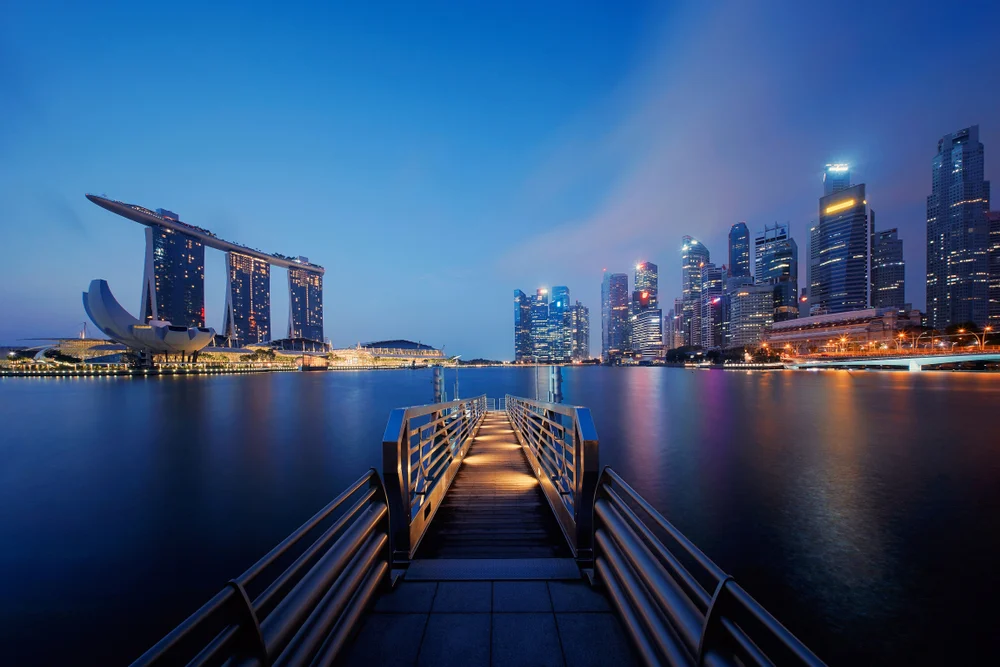
Singapore entered 2026 on a high note, but the first half of the year has delivered a more nuanced picture. International arrivals softened slightly, yet visitor spending remained resilient—reinforcing the city-state's deliberate pivot toward high-value tourism rather than sheer volume.
According to Singapore Tourism Board (STB) data, the country welcomed 8.19 million international visitors in the first six months of 2026, a 1.7% decline from the same period last year. June arrivals fell 4.9% year on year to 1.18 million. However, tourism receipts for Q1 reached S$8.6 billion, up 5.8% from S$8.1 billion a year earlier, as reported by The Business Times. Sightseeing, entertainment, and gaming spending surged 22.8% to S$2 billion, while shopping receipts climbed 7% to S$1.4 billion.
The divergence between arrivals and spending is a strategic signal. Singapore is not abandoning visitor growth, but it is placing greater emphasis on what travellers spend once they land. This shift follows a record 2025, when the city-state hosted 16.9 million visitors and generated S$32.8 billion in receipts, according to Channel NewsAsia—a high base that makes volume growth harder to sustain.
Asia remains the core demand engine
Asia continues to underpin Singapore's visitor economy, supported by extensive short-haul air links and its status as an aviation, cruise, and business hub. Mainland China, Indonesia, Malaysia, Australia, and India remain the leading source markets. STB has signalled that diversification is a priority, with new air links planned or established to Palembang and Belitung in Indonesia, and Dalian in China. The goal is not just route expansion but capturing more intra-Asian travel as the region's middle class spends more on leisure, entertainment, and business trips.
That puts Singapore in increasingly intense competition across Asia-Pacific. Japan is enjoying strong inbound demand, Thailand is chasing higher receipts, and destinations from Vietnam to South Korea are investing heavily in airports, hotels, and attractions. Singapore cannot compete on scale; its advantage lies in connectivity, a concentrated tourism infrastructure, and the ability to combine leisure, business, cruise, retail, and entertainment within a compact market.
Tourism 2040 sets a higher value target
The strategy is now formalised through STB's Tourism 2040 roadmap, which targets annual tourism receipts of S$47 billion to S$50 billion by 2040. The plan focuses on three pillars: cultivating future demand, creating a more attractive destination, and developing a future-ready tourism sector. It acknowledges Singapore's constraints—limited land and labour—making endless volume growth impractical.
The government is backing this with an additional S$740 million for the Tourism Development Fund over five years. STB chief executive Melissa Ow, speaking at the Tourism Industry Conference in May, said market diversification would remain a priority alongside investment in new experiences and technology. For travel businesses, the implications are clear: hotels, attractions, tour operators, and destination management companies will face greater pressure to improve yield, develop differentiated products, and convince repeat visitors to return.
MICE and cruise drive higher-value growth
Business events are already demonstrating the value of this approach. MICE tourism receipts jumped more than 35% to S$2.3 billion in 2025, up from S$1.7 billion a year earlier. Singapore is evaluating a new downtown MICE hub at Straits View, alongside an integrated cruise and ferry terminal that could support three cruise berths and up to ten ferry berths. These developments aim to protect Singapore's position as regional competition for events and cruise traffic intensifies.
Cruise is becoming particularly significant. Disney Cruise Line's Singapore homeport adds a major draw, while STB and Princess Cruises announced a three-year partnership in May covering deployments from 2027 to 2030, expected to bring more than 150,000 passengers through Singapore. The commercial opportunity extends beyond cruise fares: fly-cruise passengers generate demand for hotels, transfers, restaurants, and pre- and post-cruise stays—spending Singapore is well placed to capture thanks to Changi Airport's regional network.
Entertainment moves into the tourism mainstream
Singapore is also making entertainment a deliberate part of its visitor strategy. Major concerts and the Formula 1 Singapore Grand Prix have already shown how event-led travel can lift airline demand, room rates, and visitor spending. The next step is turning those occasional surges into a consistent pipeline. In May, STB signed a three-year partnership with Universal Music Singapore, using international artists and exclusive fan experiences to generate travel demand. This follows collaborations with artists including Billie Eilish, OneRepublic, and Nick Jonas.
There is also a push to spread spending beyond the established tourism circuit. An STB and Grab campaign launched in August targets Southeast Asian travellers, encouraging them to explore neighbourhoods beyond Marina Bay and Orchard Road. As regional rivals like Vietnam's MICE push and Cambodia's value-focused approach gain momentum, Singapore's strategy is clear: compete on quality, not quantity. The city-state's ability to blend business, leisure, and entertainment within a compact, well-connected hub remains its strongest asset.