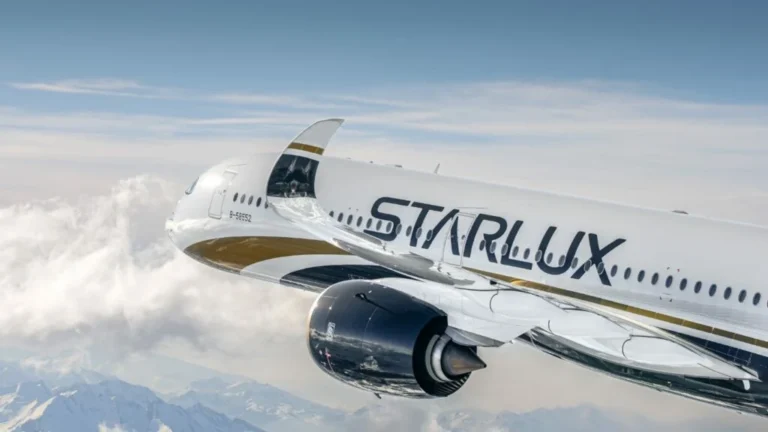
Starlux Airlines, the Taipei-based carrier known for its premium cabin product and Skytrax five-star rating, has confirmed plans to launch direct flights between Sydney and Taipei in 2027, with a same-plane continuation to Auckland. The move establishes Sydney as Starlux's first Australian gateway and introduces a new triangular routing linking Taiwan, Australia, and New Zealand.
While exact flight frequencies and departure times remain under development, the airline has stated that the route will be operated by widebody aircraft featuring its signature cabin design, which industry reviewers have compared to a boutique hotel experience rather than a standard long-haul product. Starlux's fleet includes Airbus A350-900 and A330-900neo aircraft, both configured with business, premium economy, and economy cabins.
Market Context and Competitive Landscape
The Sydney–Taipei corridor has seen steady growth, with passenger numbers rising 18% in 2025 to nearly 194,000 travelers, according to Sydney Airport data. Until now, the route has been served primarily by China Airlines and EVA Air, with Qantas operating seasonal services. Starlux's entry introduces a third premium carrier on the sector, intensifying competition for corporate and leisure traffic alike.
Taipei Taoyuan International Airport functions as a connecting hub for onward travel to Japan, Southeast Asia, Europe, and North America, offering Sydneysiders one-stop access to multiple regions without backtracking via Hong Kong or Singapore. Starlux already serves Los Angeles, San Francisco, Seattle, and several European points from Taipei, making the Sydney addition a logical extension of its long-haul network.
The Auckland leg adds a further dimension, positioning Starlux to capture traffic between New Zealand and Taiwan, as well as connecting passengers from New Zealand to North America and Europe via Taipei. Currently, Air New Zealand and China Airlines operate on the Auckland–Taipei route, with EVA Air also present.
Starlux's Premium Positioning
Founded in 2020 by former EVA Air chairman Chang Kuo-wei, Starlux has rapidly built a reputation for high-quality service. The airline earned a Skytrax five-star rating in 2024 and again in 2025, placing it alongside carriers such as Singapore Airlines, Qatar Airways, and ANA. Its brand promise, "Born with luxury. Shining like stars," is reflected in cabin lighting designed to reduce jet lag, curated meal options from Taiwanese chefs, and a loyalty program that offers reciprocal benefits with Alaska Airlines and other partners.
For travel agents and corporate booking platforms, Starlux is available through major GDS systems including Amadeus, Sabre, and Travelport, and offers interline agreements with several Asian and North American carriers. The airline's premium economy product, in particular, has been well received by business travelers seeking a mid-tier option between economy and business class.
Industry observers note that Starlux's entry into Australia comes at a time when capacity on the Tasman and North Asian routes is tightening. Qantas and Virgin Australia have reduced some long-haul frequencies, while Chinese carriers have been adding capacity. Starlux's premium focus may appeal to corporate travel managers and high-end leisure clients who prioritize service quality over lowest fare.
For Sydney Airport, the new service reinforces its role as a key Asia-Pacific hub, complementing existing routes to Taipei, Hong Kong, Shanghai, and Tokyo. The airport has invested in upgraded lounges and digital check-in facilities to accommodate premium carriers.
Starlux has not yet announced a specific launch date within 2027, but industry sources expect the airline to begin ticket sales approximately 12 months before the inaugural flight. Travel professionals should monitor GDS availability and fare filings for early booking opportunities.
In related news, Xiamen Airlines to Host 83rd IATA AGM in 2027, Spotlighting China's Aviation Growth, highlighting the region's expanding aviation footprint. Meanwhile, Air Astana Opens Astana-Guangzhou Route, Boosts China Network to 51 Weekly Flights demonstrates the growing connectivity between Central Asia and China.