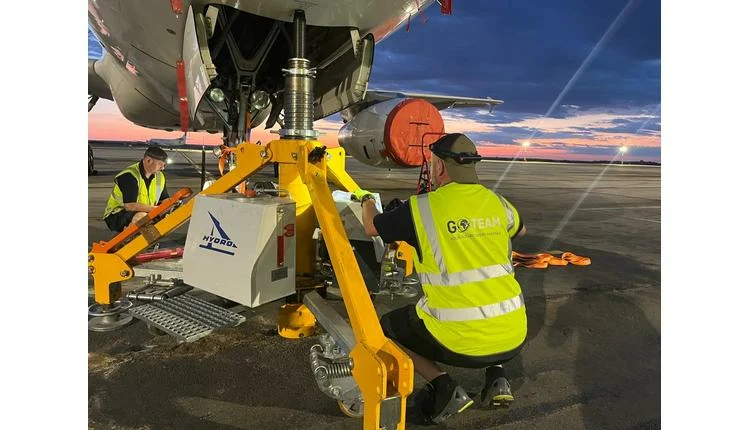
Storm Aviation, a UK-based MRO provider and part of the FL Technics Group, has been appointed as the central coordination hub for all Aircraft on Ground (AOG) recovery operations across the group. The move consolidates the company’s established GO Team into a single point of contact for operators, aiming to streamline what has historically been a fragmented process.
The expanded role leverages FL Technics Group’s global infrastructure, which includes more than 100 line maintenance stations and seven base maintenance hangars in locations such as Vilnius, Lithuania; London Gatwick, UK; and Jakarta, Indonesia. This network gives Storm Aviation the ability to dispatch engineers, tooling, and approvals rapidly to any AOG incident, regardless of geography.
Single Point of Contact for Operators
Under the new model, an operator’s single request to Storm Aviation’s GO Team triggers the entire recovery process—from initial assessment and resource mobilisation to logistics management. This eliminates the need for airlines to chase multiple contacts across different time zones, a common pain point in time-critical AOG situations.
Thomas Buckley, CEO of Storm Aviation, stated: “Operators no longer have to chase multiple contacts across time zones. They have a single point of contact through our GO Team.” The company brings 30 years of experience in time-critical aircraft recoveries, which it now integrates with the broader group’s resources.
Saulius Bajarunas, COO of FL Technics Group, added: “Our role is to put the best capability of the group—our engineers, tooling, approvals, and global footprint—behind every recovery the GO Team coordinates.” This integration is expected to reduce aircraft downtime and provide greater certainty for airlines and lessors.
Broader Implications for the MRO Sector
The announcement comes as the aviation industry continues to grapple with supply chain disruptions and labour shortages that have extended AOG recovery times. By centralising coordination, Storm Aviation aims to offer faster mobilisation and more predictable outcomes for operators. The move also positions FL Technics Group as a more competitive player in the global MRO market, particularly against larger networks such as Lufthansa Technik and AFI KLM E&M.
For travel professionals—including airline executives, tour operators, and travel-tech vendors—this development signals a shift toward more integrated, technology-enabled recovery solutions. As aircraft utilisation remains high post-pandemic, any reduction in downtime directly impacts route reliability and passenger experience. For example, an airline operating a daily London–New York JFK service could see significant operational savings from a faster AOG resolution.
Storm Aviation’s expanded role also highlights the growing importance of regional MRO hubs. The FL Technics Group’s hangars in Lithuania and Indonesia serve as strategic bases for covering European and Asia-Pacific markets, respectively. This geographic spread is particularly relevant for carriers flying long-haul routes that may require recovery support far from their home base.
In related industry news, Saudia Group’s on-time performance leadership underscores how operational efficiency remains a key differentiator for airlines. Similarly, Four Seasons Yachts’ fleet expansion reflects the broader trend of luxury travel providers investing in reliability and service consistency.
As the MRO landscape evolves, Storm Aviation’s centralised AOG model may become a template for other groups seeking to improve response times and reduce complexity for operators. The company’s ability to combine local expertise with global scale will be closely watched by industry stakeholders.