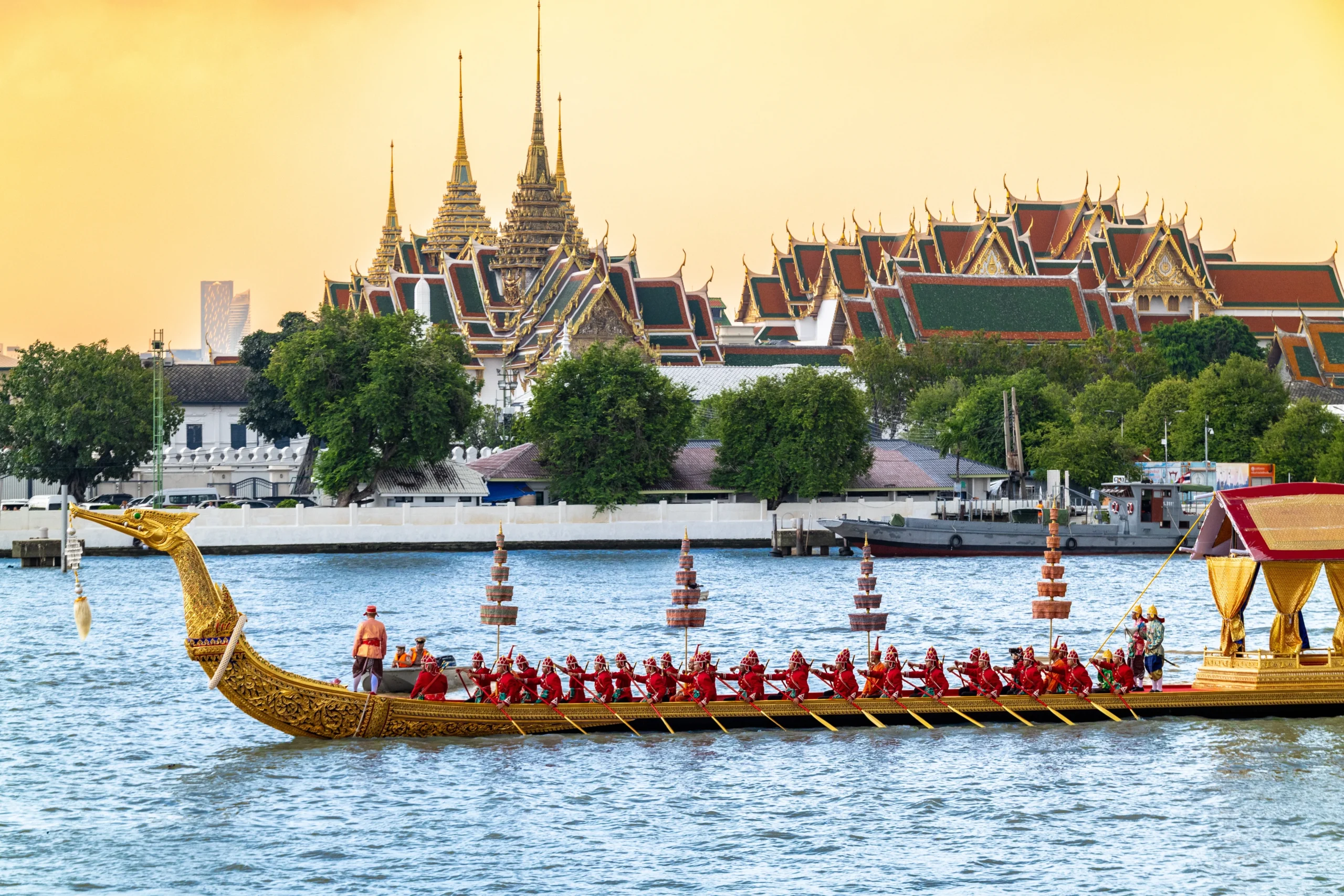
On the afternoon of 6 November 2026, the Chao Phraya River in Bangkok will host one of Thailand's most spectacular cultural events: the Royal Barge Procession. Fifty-two elaborately decorated royal barges will move in formation along the waterway, a ceremony reserved for significant royal occasions and deeply rooted in centuries of tradition.
The procession will accompany His Majesty the King as he presents royal Kathin robes to monks at Wat Arun Ratchawararam, the Temple of Dawn. The ceremony also honours Her Majesty Queen Suthida's 48th birthday anniversary, adding a layer of royal significance to the event.
For Thailand's tourism industry, the procession is a chance to showcase Bangkok beyond its familiar temples and shopping districts. It combines royal history, Buddhist ritual and riverside landmarks, offering international visitors a rare cultural experience. Unlike annual festivals, the Royal Barge Procession is held only for major royal milestones, making it a limited-time draw for destination marketers and tour operators.
A tradition shaped by centuries
Thailand's royal water processions trace back to the Sukhothai, Ayutthaya and Rattanakosin periods. In the Ayutthaya era, waterways were vital for transport, trade and royal journeys, and ceremonial fleets became a powerful symbol of royal authority. After Bangkok became the capital in 1782, successive reigns maintained and restored the barges, preserving the specialist skills needed to build and operate them.
The 2026 procession will feature 52 barges manned by approximately 2,200 Royal Thai Navy personnel. The fleet will stretch about 1,280 metres along the river and span roughly 90 metres across, arranged in five columns and three lines. At the heart are four principal vessels: Suphannahong, Anantanakkharat, Narai Song Suban King Rama IX and Anekkachatphuchong.
Suphannahong, meaning Golden Swan, is the most recognisable, with its gilded swan figurehead and intricate carvings. Built during the reign of King Chulalongkorn (Rama V) and completed in 1911 under King Vajiravudh (Rama VI), it received the World Ship Trust Maritime Heritage Award in 1992. Anantanakkharat features a multi-headed naga figurehead, while Narai Song Suban King Rama IX depicts the deity Narayana on Garuda, and Anekkachatphuchong is distinguished by its numerous naga figures.
These vessels showcase traditional carving, gilding and decorative techniques passed down through generations. Their designs draw on religious symbolism and Thai mythology, making the fleet a living expression of artistic heritage. For tour operators, the procession offers a chance to enrich cultural itineraries with guided interpretation of the ceremony and the landmarks along its route.
A river journey rooted in Buddhist tradition
The procession's purpose is tied to the Buddhist Kathin ceremony, a merit-making ritual held after the end of Buddhist Lent. The royal Kathin gives the event its religious significance, connecting the monarchy with Buddhist institutions and longstanding customs that remain central to Thai cultural life.
The barges will travel from Wasukri Pier towards Wat Arun, passing landmarks including Phra Sumen Fort, Somdet Phra Pinklao Bridge, Siriraj Hospital, the Grand Palace and the Royal Thai Navy Auditorium. The route places the procession within Bangkok's historic riverside landscape, where temples, bridges and traditional neighbourhoods reflect the city's development along the waterway.
For travel professionals, the event underscores the growing appeal of cultural heritage tourism in Thailand. As the country continues to attract international visitors, the Royal Barge Procession offers a distinctive product that can be packaged into premium experiences. Hotels along the Chao Phraya, such as those in the heritage-focused programmes seen in Bangkok, can leverage the spectacle for special packages. Meanwhile, the Tourism Authority of Thailand is promoting the event as a key highlight for 2026, and the Royal Thai Navy has released details on fleet preparations.
The procession also aligns with broader trends in cultural travel, where curators are stepping out of museums to shape immersive experiences. For destination marketers, the event is a chance to position Bangkok as a city where ancient traditions remain vibrant, complementing modern attractions. As one industry observer noted, "The Royal Barge Procession is not just a parade; it's a moving museum of Thai craftsmanship and royal history."
With its rarity and grandeur, the 2026 procession is set to be a major draw for cultural tourists and a significant moment for Thailand's tourism calendar. Operators and agents should prepare early to capitalise on the limited availability of prime viewing spots along the river.