For decades, the Middle East's transport narrative has been dominated by aviation, with airports like Dubai International (DXB) and Hamad International (DOH) serving as global hubs. But a quieter shift is underway: rail is emerging as a credible alternative for intercity and even cross-border travel. The UAE's Etihad Rail and Saudi Arabia's Haramain High-Speed Railway are leading this charge, and the implications for travel professionals are significant.
Etihad Rail's early success signals a new travel option
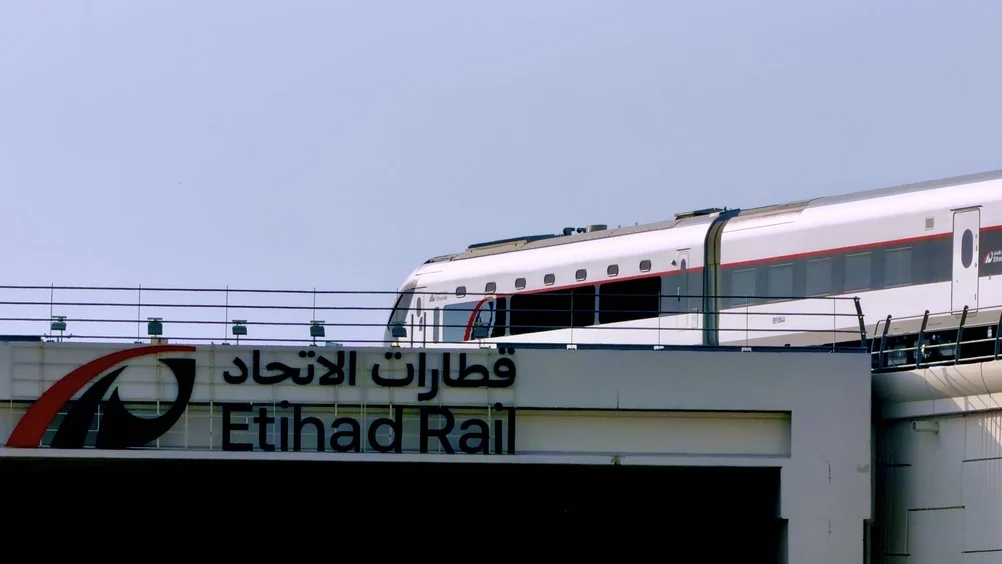
Etihad Rail's passenger service, which launched on 30 June, has already sold more than 70,000 tickets in its first month. Advance bookings are running nearly two weeks out, indicating that the service is moving beyond novelty and into regular travel planning. The initial route connecting Abu Dhabi and Fujairah has proven popular, with over 10,000 tickets sold before the first departure and all three inaugural services fully booked. Trains carry up to 400 passengers and complete the 105-minute journey, with introductory fares starting at AED55.
This response is notable in a region built around private cars and short-haul flights. Rail offers a predictable alternative that avoids highway congestion, airport security lines, and the expense of renting a car at the destination. For business travelers, the ability to work during the journey—with guaranteed seating, Wi-Fi, and power outlets—adds to the appeal.
A tourism corridor takes shape
The Abu Dhabi–Fujairah route connects two distinct economic zones: Abu Dhabi, the commercial and cultural capital, and Fujairah, known for its beaches, mountains, and diving spots. This pairing makes day trips and weekend breaks practical, and Fujairah's tourism authorities expect the service to boost domestic holidays and family visits. The emirate could also attract new hotel and resort investment as passenger numbers grow.
For tour operators and destination management companies, this creates a new sales channel. Rail fares can be bundled with resort stays, attraction tickets, or guided experiences, making shorter trips and multi-emirate itineraries easier to sell. The success of such packages will depend on first-and-last-mile connectivity. Etihad Rail has partnered with Abu Dhabi Mobility to integrate bus and taxi services, but transport specialists interviewed by The National have identified station access as a key operational challenge.
Saudi Arabia's rail precedent
Saudi Arabia has already demonstrated the viability of passenger rail. The Haramain High-Speed Railway, which links Makkah, Madinah, Jeddah, King Abdulaziz International Airport, and King Abdullah Economic City, has become integral to pilgrimage travel. During the 2026 Hajj season, Saudi Arabia Railways operated over 5,300 journeys with more than 2.21 million seats, deploying 35 electric trains on the 453-kilometre route.
The Haramain line shows where rail is most competitive: high-density corridors connecting airports, cities, and major visitor destinations. It also helps manage seasonal peaks that would otherwise strain roads and domestic aviation. As Saudi Arabia's tourism strategy expands beyond pilgrimage, rail is becoming a tool for distributing visitors across the kingdom, particularly as new hospitality and entertainment projects come online. This aligns with the broader data-driven push by the Saudi Tourism Authority to attract and manage visitor flows.
Cross-border rail: the next frontier
The bigger prize lies in cross-border connectivity. The UAE and Oman are developing Hafeet Rail, a 238-kilometre network linking the two countries through Al Ain, Al Buraimi, and Sohar. Construction reached 40 per cent completion in April, with work progressing across the Al Ain region, Al Buraimi, Sohar, and Wadi Al Jizzi. While the project is primarily freight-focused, its passenger potential is substantial. A functioning UAE–Oman service would give tour operators a credible alternative to flights and long road transfers, enabling twin-country programmes around Abu Dhabi, Al Ain, Sohar, and onward to other Omani destinations.
Hafeet Rail also provides a working section of the long-discussed GCC railway, which has faced delays and coordination challenges among six national systems. For hotels and destination marketers, this could eventually create a Gulf version of the multi-country rail itinerary, though distances are longer and urban density lower than in Europe. Stations must be integrated with car-oriented destinations to succeed.
Rail enters the corporate travel mix
Business travel is another growth area. On journeys of two to three hours, rail can compete with air when airport transfers, check-in, and security are factored in. Travel management companies will need to incorporate rail inventory into booking platforms, approval systems, and duty-of-care programmes. Hotels near stations may see demand shift, and meeting planners could draw delegates from a wider domestic catchment without adding flights.
The UAE network is still in its infancy. Dubai's Jumeirah Golf Estates station and Al Dhaid in Sharjah are scheduled to open on 30 September, with 10 stations expected by the end of March 2027. These openings will test whether rail can win regular commuters and support sustained demand. As the network expands, it could also complement stabilizing Middle East travel demand and offer an alternative to short-haul flights.
For travel professionals, the message is clear: rail is becoming a viable component of Middle East travel. Whether it's packaging a Fujairah resort stay, building a Saudi multi-city itinerary, or planning a UAE–Oman cross-border trip, rail offers new opportunities to differentiate products and meet evolving traveler expectations. The region's transport story is no longer written solely in airport terminals.