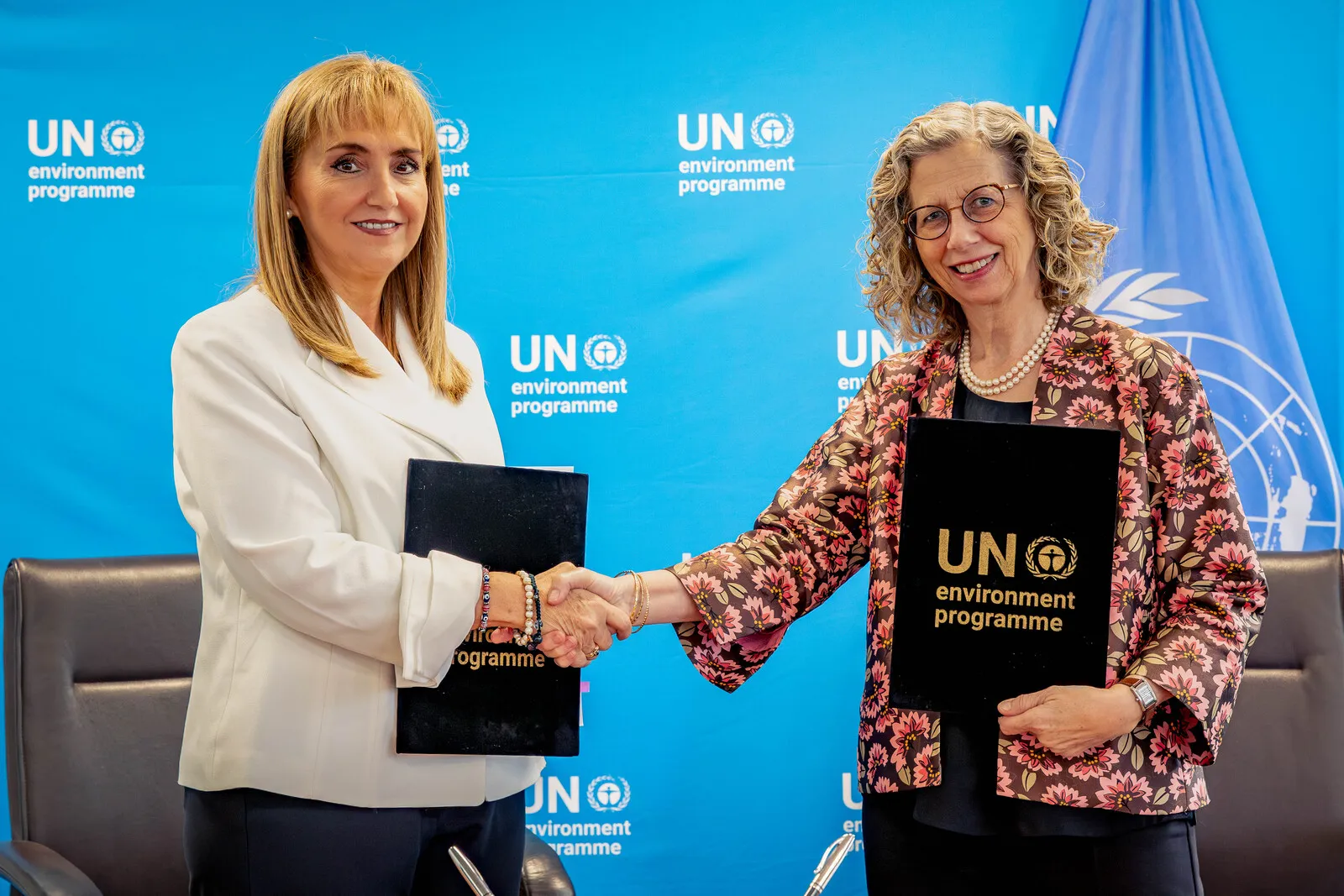
The World Travel & Tourism Council (WTTC) and the United Nations Environment Programme (UNEP) have formalized a strategic alliance through a Memorandum of Understanding (MoU) aimed at accelerating sustainability across the global travel and tourism sector. The agreement, signed by WTTC President and CEO Gloria Guevara and UNEP leadership, combines UNEP's environmental expertise with WTTC's extensive industry network to foster a more circular, resilient, and nature-positive future.
Under the MoU, which runs through June 2028, the two organizations will collaborate on implementing circular economy principles, conserving biodiversity, and reducing plastic pollution. A key component is the voluntary participation of WTTC members—including airlines such as Emirates, Delta Air Lines, and Singapore Airlines; hotel groups like Accor, Marriott International, and Hilton; cruise lines including Carnival Corporation and Royal Caribbean Group; and tour operators such as TUI Group—in UNEP's sustainability programmes, particularly those targeting plastics and food waste.
The partnership outlines a joint work programme with agreed priorities, ensuring regular coordination and effective implementation. Focus areas include promoting nature-positive tourism, advancing circular economy solutions, and reducing food waste. The collaboration will also enhance industry engagement in water stewardship, energy sustainability, and ocean conservation—critical issues for destinations from the Maldives to the Mediterranean.
Industry Leadership and Practical Action
Gloria Guevara, President and CEO of WTTC, stated: "Travel & Tourism is one of the world's most effective forces for sustainable development. Through this partnership with UNEP, we are bringing together global leadership, industry expertise and practical action to help businesses accelerate environmental action, reduce waste, protect biodiversity and create lasting positive impact for destinations and communities."
The MoU builds on existing efforts by both organizations. WTTC has long advocated for sustainable tourism through its Hotel Sustainability Basics programme and its work with destinations like Costa Rica and Portugal. UNEP, meanwhile, has driven initiatives such as the Global Tourism Plastics Initiative and the One Planet Network. This partnership formalizes and deepens that collaboration, providing a structured framework for joint action.
For travel professionals, the agreement offers tangible opportunities. Airlines can align with UNEP's sustainable aviation fuel (SAF) guidelines; hoteliers can adopt circular economy practices to reduce single-use plastics; cruise lines can improve waste management at sea; and tour operators can integrate nature-positive principles into itineraries. The partnership also supports alignment with international frameworks like the Paris Agreement and the UN Sustainable Development Goals.
In a related development, Accor's 800-property pipeline in China demonstrates how major hotel groups are embedding sustainability into expansion strategies. Similarly, Air Mauritius's expanded London Gatwick service highlights how airlines are partnering with tourism boards to promote sustainable travel.
The partnership will involve strategic dialogue, technical exchanges, and initiatives to deliver practical impacts for businesses and communities worldwide. Regular progress reviews will ensure accountability and adaptation to emerging environmental challenges.
As the travel industry continues its post-pandemic recovery, this WTTC-UNEP collaboration signals a shift from voluntary pledges to structured, measurable action. For executives across aviation, hospitality, cruise, and tourism, the message is clear: sustainability is no longer optional but a core business imperative.