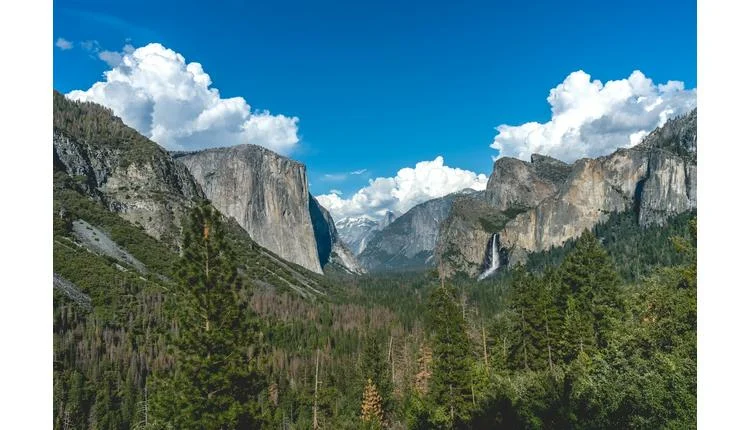
A new study from ACE.com has used AI facial analysis on Instagram photos to rank the happiest US national parks, with Minnesota's Voyageurs National Park taking the top spot. The research, released during National Park Month, assessed visitor happiness across all 63 national parks, offering a data-driven look at how natural settings influence emotional well-being.
Voyageurs National Park achieved a perfect happiness score of 100 and a smile score of 99.7, resulting in a near-perfect Happy National Park Score of 99.84. This remote water-based park, known for its interconnected lakes and boreal forests, edged out more famous destinations.
Rocky Mountain National Park in Colorado and Theodore Roosevelt National Park in North Dakota followed closely, securing second and third places with scores of 99.79 and 99.75, respectively. Rocky Mountain is renowned for its alpine landscapes and abundant wildlife, while Theodore Roosevelt is celebrated for its rugged terrain and conservation legacy.
Remote parks lead, crowded parks lag
The analysis revealed a clear pattern: less crowded, remote parks tend to score higher in happiness metrics. In contrast, Great Smoky Mountains National Park, the most visited park with over 11.5 million annual visitors, ranked only 27th. Capitol Reef National Park in Utah was identified as the least happy, with a score of 86.88.
This inverse relationship between visitor volume and happiness scores suggests that solitude and natural beauty play a significant role in visitor satisfaction. For travel professionals, this insight could inform how destinations market their offerings, particularly for those seeking to attract travelers looking for quieter, more immersive experiences.
The study's methodology—using AI to analyze facial expressions in social media photos—represents an innovative approach to measuring visitor satisfaction. It offers a scalable way to gauge emotional responses across large numbers of visitors, complementing traditional surveys and on-site feedback.
As national parks continue to attract millions of visitors annually, understanding these emotional connections can enhance visitor experiences and support conservation efforts. For tour operators and travel agents, this data could help tailor itineraries that prioritize well-being, especially for clients seeking restorative travel.
For the broader travel industry, the findings underscore the growing importance of wellness and nature-based tourism. Destinations that emphasize solitude and pristine environments may appeal to a segment of travelers looking to escape crowded hotspots, a trend that has gained momentum in recent years.
While the study focuses on US parks, its implications extend globally. Similar AI-driven analysis could be applied to other natural attractions, offering a new tool for destination management organizations to measure and improve visitor experiences.
As the travel industry continues to recover and evolve, data-driven insights like these will be crucial for aligning offerings with traveler preferences. Whether it's promoting lesser-known parks or designing wellness-focused packages, the happiest parks list provides a fresh perspective on what makes a destination truly memorable.