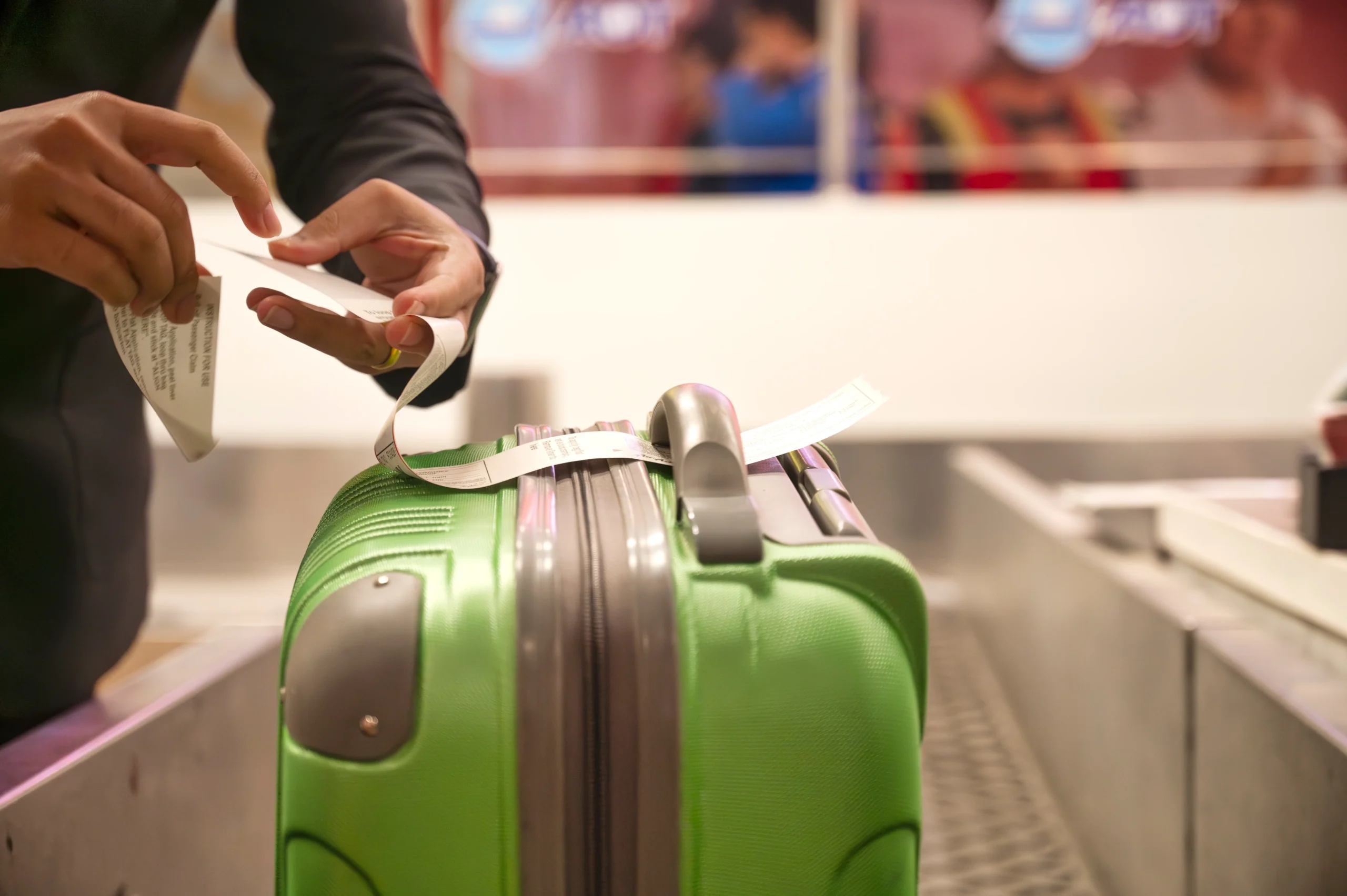
The latest US Department of Transportation Air Travel Consumer Report, released in August, places American Airlines at the top of an unwelcome ranking: the carrier mishandled more checked bags than any other US airline during the first half of 2026. According to the data, American recorded 251,976 mishandled bags, translating to a rate of 0.73 per 100 enplaned passengers.
Envoy Air, a regional partner operating under the American Eagle brand, followed closely with a mishandling rate of 0.72 per 100 bags. United Airlines came third at 0.66 per 100. At the other end of the spectrum, Allegiant Air posted the best performance among US carriers, with just 0.12 mishandled bags per 100 passengers — a stark illustration of the variability in baggage handling across the industry.
The report, analysed by Global Work & Travel, shows that more than one million bags were mishandled by US airlines in the first half of 2026. Yet there is a silver lining: the overall mishandling rate fell from 0.52 per 100 bags in H1 2025 to 0.49 in the same period this year, indicating that operational improvements are beginning to take hold despite the high-profile failures.
Operational pressures persist
Baggage is not the only area of concern. The DOT data also reveals a rise in flight cancellations, with 85,998 scheduled operations cancelled in H1 2026, up from 1.57% of flights in the same period last year. This uptick suggests that airlines are still grappling with staffing, weather, and airspace constraints — factors that directly impact both baggage flow and schedule reliability.
Travel expert Jürgen Himmelmann advises passengers to prepare for the worst even as they hope for the best. "Take a clear photo of your suitcase and another of what's inside it," he suggests, underscoring the value of documentation in the event of a claim. He adds, "Knowing what you'd do if your suitcase didn't arrive or your flight was cancelled is just as important as planning what you're going to do when you get there."
For travel professionals, the data serves as a reminder that baggage handling remains a critical component of the passenger experience. Airlines that invest in robust tracking technology and streamlined transfer processes — particularly at hubs like Dallas/Fort Worth, Chicago O'Hare, and Charlotte — can differentiate themselves in a competitive market.
American Airlines, for its part, has been expanding its network with new European routes for summer 2027, including Reykjavík, Vienna, and Porto. While such growth signals confidence, the carrier will need to ensure its ground operations keep pace to avoid further reputational damage.
The industry is also watching innovations in baggage handling, such as remote baggage check services that Thailand will allow from October 2026. These developments could reshape how airlines and airports manage luggage, potentially reducing mishandling rates across the board.
As US carriers continue to recover from pandemic-era disruptions, the DOT report offers a clear benchmark. Allegiant's low rate demonstrates that with the right processes, mishandling can be minimised. The challenge for American and others is to close the gap — not just for regulatory compliance, but for passenger loyalty in an era where service reliability is a key differentiator.