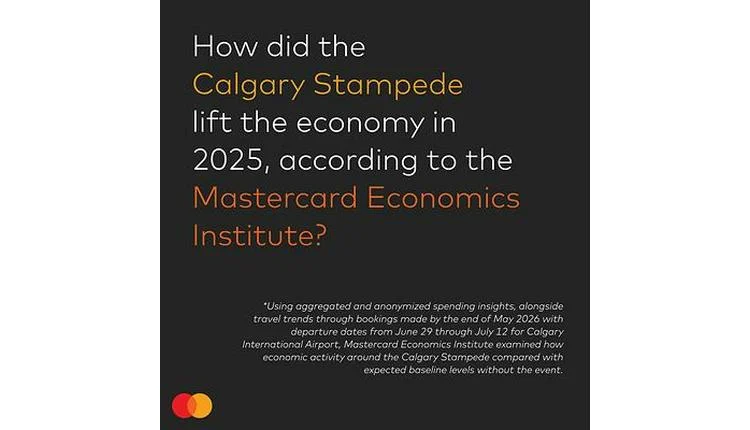
New data from the Mastercard Economics Institute (MEI) reveals that the Calgary Stampede, the city’s signature summer event, drove an 18% uplift in spending at local merchants during the 5–14 July 2025 edition. The analysis, based on aggregated and anonymised transaction data, shows that the rodeo and festival’s economic impact extends well beyond the ten-day programme.
Restaurants were the standout beneficiary, recording a 29% increase in spending compared to baseline periods. Retail outlets also saw a pre-event spike as both residents and out-of-town visitors stocked up on supplies and merchandise. Accommodation demand peaked early, particularly in downtown Calgary, where hoteliers such as Marriott International and Hilton reported near-full occupancy during the opening weekend.
Strategic Planning for Hospitality and Retail
Benjamin Jacob, Senior Vice President of Services at Mastercard Canada, stressed the importance of readiness for local businesses. “Success during Stampede is not just about being busy; it is about being ready,” he said. The MEI data underscores that businesses that plan inventory, staffing, and marketing around the event’s timing can capture disproportionate gains.
The Calgary Chamber of Commerce estimates the 2025 Stampede generated approximately $664 million (US$664 million) in total economic activity. Melanie McDonald, Vice President of Strategic Initiatives at the chamber, noted the event’s role in projecting Calgary onto a global stage. “The Stampede showcases our city to international audiences, driving both tourism and business investment,” she said.
International Travel Bookings on the Rise
Travel booking data through May 2026 indicates growing international interest. Year-over-year increases were recorded from the United States, Belgium, the Netherlands, Great Britain, and Australia. Airlines serving Calgary International Airport (YYC)—including WestJet, Air Canada, and Delta Air Lines—have added capacity on routes from these markets during the Stampede period.
The findings align with broader trends in event-driven travel, where major festivals and conferences act as catalysts for destination marketing. For travel professionals—whether tour operators like G Adventures, cruise lines such as Holland America Line that offer pre- or post-cruise packages, or MICE planners—the Stampede represents a predictable demand spike that can be leveraged for package deals and group bookings.
Mastercard’s data also reveals sector-specific variations: spending patterns differ by location (downtown vs. suburban) and timing (pre-event vs. during vs. post-event). This granularity helps businesses and municipal planners allocate resources more efficiently. The Calgary Stampede’s economic impact report, now in its second decade, continues to inform strategies for both public and private stakeholders.
For travel-tech vendors, the event offers a case study in using anonymised transaction data to predict demand. Similar analytics are increasingly used by hotel revenue managers and airline network planners to optimise pricing and capacity. As the travel industry recovers and grows, events like the Stampede provide a reliable anchor for seasonal planning.