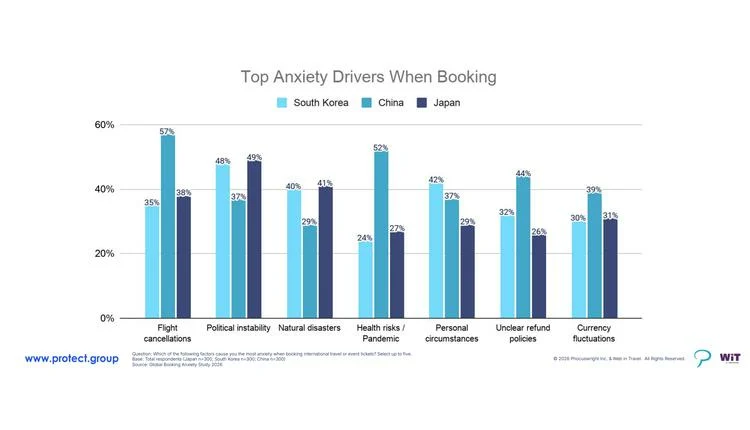
New research from Protect Group, Web in Travel, and Phocuswright reveals a structural shift in booking behavior across Northeast Asia, driven by rising geopolitical instability and regulatory changes. The study shows that 67% of Chinese travelers now prioritize flexible or refundable booking options, a trend that is reshaping how airlines, hoteliers, and tour operators approach their sales strategies.
In China, awareness of refund protection has reached 73%, while purchase intent has climbed to 88%. South Korea follows closely with 75% awareness, while Japan lags at 62%, indicating potential for growth. The demand for refund protection is closely tied to travelers' perceptions of risk, with 50% of respondents having experienced recent disruptions such as cancellations or delays.
Flexibility as a Competitive Necessity
Stephen Joyce, Global Strategy Lead at Protect Group, noted: "When travellers have personally experienced cancellations, disruptions, or ongoing uncertainty, flexibility stops being a convenience and becomes essential." This sentiment underscores the growing importance of products that offer peace of mind, presenting travel brands with an opportunity to build trust and drive conversions.
The study also found that nearly 30% of travelers across the region are postponing bookings, opting to book closer to their travel dates to minimize risk. In China, this trend is particularly pronounced, with almost half of travelers delaying bookings. This shift is affecting travel businesses, highlighting the need for reassurance and protection during the booking process.
As uncertainty continues to shape travel decisions, Refund Protect, Protect Group's flagship product, offers a 100% refund of the booking value, enhancing consumer confidence and satisfaction. This development reflects a structural change in travel behavior, anticipated to intensify with ongoing global volatility.
For travel professionals, this data reinforces the importance of offering flexible booking options. Airlines such as China Southern and Air China, hotel groups like Jin Jiang and Marriott, and online travel agencies including Trip.com Group and Fliggy are already adapting their policies. The trend also aligns with recent reports of Fliggy launching tech-focused inbound tours as China bookings surge 237%.
Similarly, the shift toward value-first bookings is echoed in other markets. Thomas Cook reports a surge in value-first bookings and package holiday demand, suggesting that flexibility and value are becoming intertwined priorities for travelers globally.
For hoteliers, the message is clear: properties that offer flexible cancellation policies and refundable rates are better positioned to capture demand from anxious Chinese travelers. This is particularly relevant as Western travelers drive Japan hotel ADR to record high while Chinese demand slips, highlighting the need for targeted strategies.
The research also points to an opportunity for travel-tech vendors to develop solutions that integrate refund protection into booking platforms. As travelers increasingly prioritize safety and flexibility, brands that can offer seamless protection products will likely see higher conversion rates and customer loyalty.