Dubai has recorded a sharp increase in job applications from international professionals following the June ceasefire agreement between the United States and Iran. The deVere Group, a global financial advisory and asset management firm with significant operations in the emirate, reported that applications for its Dubai-based roles rose by almost 30% over the past month.
Nigel Green, CEO of deVere Group, noted that demand for positions in Dubai remained robust even during the three-month conflict that began in February, when Iran launched attacks against US and allied interests. The crisis raised fears of prolonged instability across the Gulf region, yet Dubai’s economy and business environment continued to function. “Applications to join our Dubai business have increased by almost 30% in just one month,” Green said. “This represented one of the biggest tests of confidence the region has faced in modern times. Dubai passed that test with flying colours.”
Ceasefire Restores Confidence in Gulf’s Economic Outlook
The ceasefire, signed on 17 June, established a 60-day diplomatic framework aimed at ending hostilities and negotiating a longer-term settlement. The agreement has helped restore confidence among internationally mobile professionals, who view Dubai as a stable long-term opportunity despite the region’s recent geopolitical turbulence. Green emphasised that the surge in applications reflects growing trust in the Gulf’s economic future.
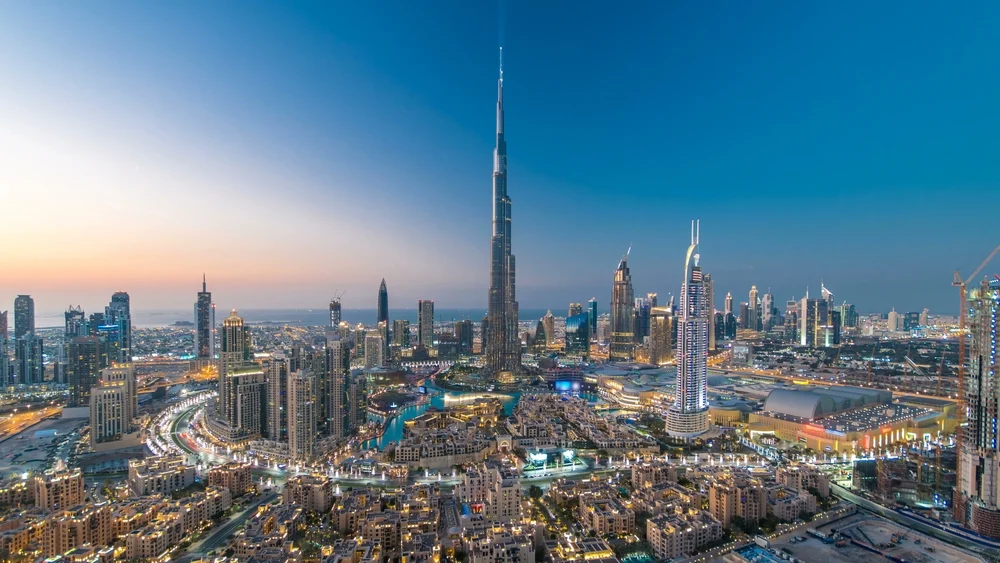
Dubai’s population has now surpassed four million, and the emirate continues to attract talent from sectors including aviation, hospitality, finance, and technology. The city’s resilience during the conflict has reinforced its reputation as a safe haven for career-driven professionals. “Dubai continues to attract professionals seeking economic opportunity, political stability, and career progression,” Green added. “Its unique advantages are difficult to replicate elsewhere.”
The trend aligns with broader travel industry developments in the region. Emirates, the Dubai-based carrier, recently reported a surge in its unaccompanied minors service, with 3,500 young solo travelers during the summer peak. The airline also outlined travel tips for passengers transiting through Dubai Airport during the busy period. Meanwhile, Riyadh Air launched daily Dubai-Riyadh flights on its Boeing 787-9 Dreamliner, further strengthening air connectivity between the two Gulf hubs.
For travel professionals, the job application surge signals renewed confidence in Dubai as a destination for talent and investment. The city’s ability to maintain business continuity during a major geopolitical crisis has been noted by industry observers. The upcoming Arabian Travel Market (ATM) 2026 is expected to spotlight Dubai’s crisis resilience and air connectivity recovery, providing a platform for stakeholders to discuss the region’s economic outlook.
Green concluded that the ceasefire has removed a key source of uncertainty for professionals considering relocation to the Gulf. “The demand remained strong even amidst geopolitical uncertainty,” he said. “Now, with the ceasefire in place, we expect even more interest from top-tier talent.”