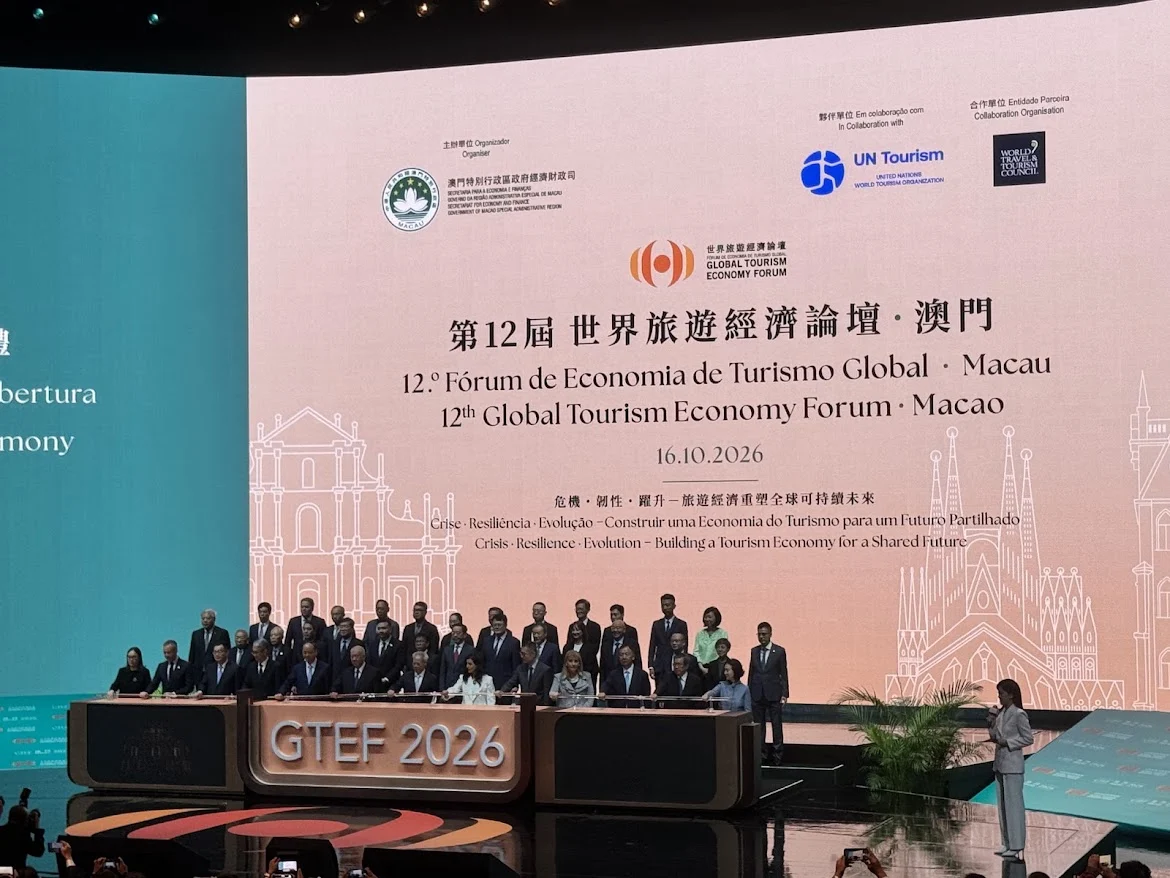
The 12th Global Tourism Economy Forum (GTEF) concluded on October 16 in Macao, drawing approximately 1,300 delegates from more than 20 countries. The event, which also attracted 8.6 million online viewers, centered on economic resilience, cultural integration, and sustainable travel models. Over 28 sessions, 75 global leaders discussed strategies for navigating macroeconomic uncertainty, while the forum facilitated around 50 bilateral meetings and more than 1,000 business-to-business matchings, including 90+ connections during dedicated Spain Business Matching sessions.
Green travel takes center stage
A key theme was the shift from sustainability as a compliance issue to a commercial opportunity. Pansy Ho, GTEF vice-chair and secretary-general, told delegates: "One message today is clear: going green is not a burden, but a scalable opportunity that resonates with young travelers and keeps value within local communities." She urged the industry to adopt regenerative models, saying: "Rather than just fixing existing damage, gathering in Hainan invites us to return to our original aspiration, our chuxin, and embrace Green and Blue Tourism. Can we make it a model for trace-free, preservation-first tourism, [one that enhances] nature without destroying its soul, rather than disrupting it only to repair it later?"
This call aligns with broader industry trends, as seen in Asia-Pacific's role in driving global travel spending, where sustainability is increasingly a factor in investment decisions.
Macao's Tourism+ strategy and regional synergies
The forum underscored Macao's position as a World Centre of Tourism and Leisure, leveraging its dual role as a bridge between mainland China and international markets. Maria Helena de Senna Fernandes, director of the Macao Government Tourism Office (MGTO) and GTEF vice-chair, highlighted the platform's strategic value: "Macao not just leverages its unique advantages brought by the support of the Motherland and its connectivity to the world, but also shares its own experiences in attaining urban progress, joining hands with partners from worldwide to navigate new paths towards a more innovative and sustainable horizon for the tourism economy."
Delegates explored Macao's Tourism+ strategy through post-forum inspection tours, including visits to the UNESCO-listed Historic Centre of Macao, cultural exhibitions, and healthcare facilities such as the Macao Union Medical Center and the Hengqin Traditional Chinese Medicine Culture Experience Hall. These visits illustrated the sector's integration with wellness and cultural tourism, a trend also gaining traction in other markets, such as Thailand's wellness hub ambitions.
Hainan to host GTEF 2027
In a strategic expansion, organizers announced that Hainan Province will host the 13th GTEF in 2027. MGTO and the Department of Tourism, Culture, Radio, Television and Sports of Hainan Province signed a Memorandum of Understanding to deepen regional cooperation. The alliance aims to align the development strategies of the Guangdong-Hong Kong-Macao Greater Bay Area and the Hainan Free Trade Port, fostering resource sharing and cross-border synergy.
Bateer, executive vice-governor of the Hainan Provincial People's Government, expressed optimism: "Hainan looks forward to leveraging Macao's role as a bridge connecting with the world to deepen cooperation with global partners... and promote collaborative development between Hainan as an International Tourism and Consumption Center and Macao as a World Centre of Tourism and Leisure."
The move reflects a broader push for regional integration in Asia, similar to efforts seen in China's growing business travel spending, which underscores the importance of such cross-border initiatives.
As the forum closed, industry leaders left with a clear mandate: to embed sustainability into core business strategies, not as a burden but as a driver of growth. With Hainan set to take the baton in 2027, the focus will shift to how the province can translate these ambitions into tangible outcomes, particularly in the realm of green and blue tourism.