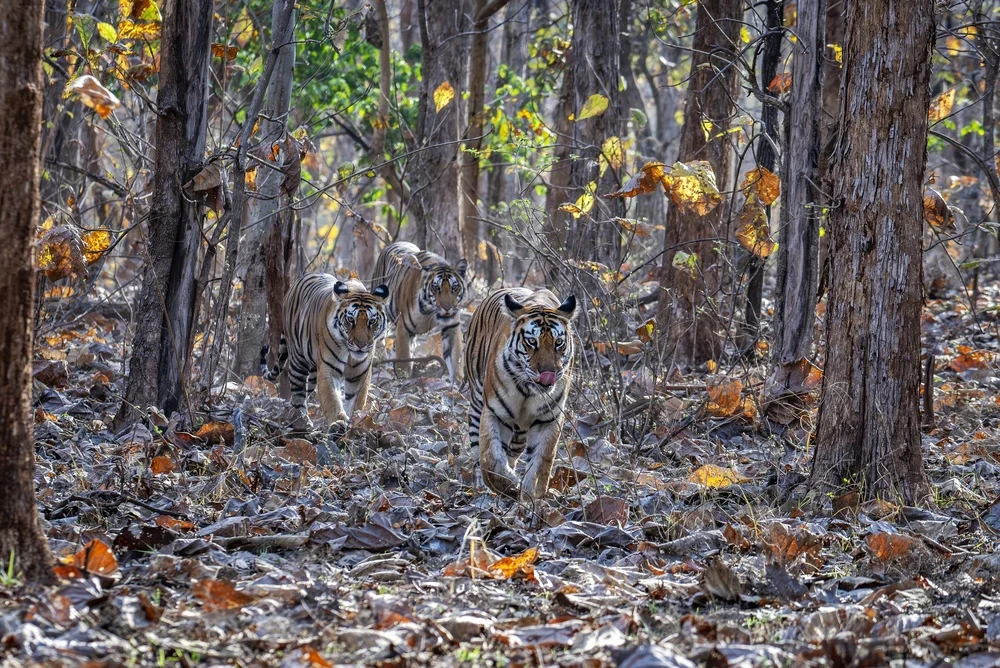
India's tiger safari circuit is set to gain a new destination as Chhattisgarh's Indravati Tiger Reserve prepares to welcome tourists from November 1, 2026. The reserve, which has been closed to visitors for decades due to insurgency and accessibility challenges, is now being readied for safari operations, according to a report in Hindustan Times.
The reopening comes at a time when international demand for tiger safaris remains heavily concentrated in a handful of established parks such as Ranthambore, Corbett, Bandhavgarh and Kanha. Indravati's addition could help diversify the wildlife tourism map and ease pressure on these popular reserves.
A significant new wildlife destination
Indravati is not a minor addition. The National Tiger Conservation Authority (NTCA) lists the reserve at 2,799.07 square kilometres, including 1,258.37 sq km of core tiger habitat and a 1,540.70 sq km buffer zone. The reserve is also home to the endangered wild buffalo, adding to its conservation appeal.
The reopening follows a notable recovery in India's tiger population. The latest NTCA assessment, Status of Tigers 2022, estimates 3,682 tigers in the country, with a minimum of 3,167 recorded through camera traps. This conservation success has strengthened India's position in the international wildlife tourism market.
For inbound operators, however, the safari business remains anchored in reserves with established infrastructure—accommodation, transport links, trained naturalists and reliable safari operations. Indravati will need to build these from a low base.
Current safari hotspots and demand
Ranthambore National Park in Rajasthan remains the most internationally recognisable tiger destination, often combined with the Golden Triangle circuit of Delhi, Agra and Jaipur. Central India offers a deeper safari circuit, with Bandhavgarh and Kanha as anchors, supplemented by Pench, Satpura and Panna.
Overseas demand is substantial. According to NDTV, citing Madhya Pradesh forest department data, Bandhavgarh attracted 32,528 foreign tourists in 2024-25, up from 25,894 the previous year. Kanha drew 23,059 overseas visitors, Panna 15,201, Pench 13,127 and Satpura 10,038.
Corbett Tiger Reserve in Uttarakhand, India's oldest national park and a Project Tiger original, offers relatively easy access from Delhi. Tadoba-Andhari has raised Maharashtra's profile among serious wildlife travellers, while Bandipur and Nagarhole provide a tiger-and-elephant circuit in southern India. Kaziranga in Assam remains a major anchor for Northeast India, primarily for its rhino population.
Operational considerations for the trade
Wildlife tourism cannot expand like conventional sightseeing. Safari permits are restricted, core areas are regulated, and popular zones often sell out well in advance. For international operators with fixed itineraries and long booking windows, securing permits has become a critical operational task.
The accommodation market around leading reserves has evolved to meet demand, with options ranging from simple lodges to high-end camps where guiding quality is as important as the room. Indravati will need to attract similar investment to become a viable product.
India's broader inbound recovery provides context. The Ministry of Tourism reported 9.95 million Foreign Tourist Arrivals in 2024, with the US, UK, Australia and Canada as key long-haul source markets. However, no national figure tracks how many visitors come specifically for tiger safaris, and the ministry does not maintain destination-level breakdowns. Reserve-level data remain the best indicator of international wildlife demand.
Indravati enters the market from a different starting point. It lacks the tourism infrastructure and international recognition of its more famous counterparts. Operators will be watching practicalities closely: road access, accommodation, safari capacity, guide training, security and operational consistency. Opening a reserve is one thing; making it workable within an international itinerary is another.
For the travel trade, the reopening of Indravati represents a potential new product that could relieve pressure on existing reserves and offer fresh experiences for wildlife enthusiasts. But its success will depend on the development of supporting infrastructure and the ability to market it effectively to international audiences.