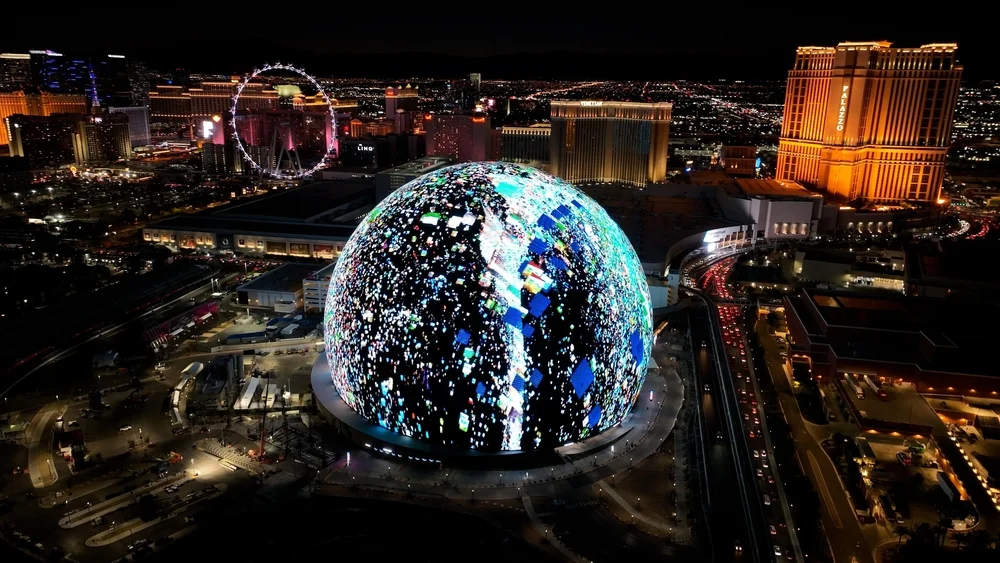
Las Vegas is leaning on the $2.3 billion Sphere to offset a sharp downturn in overall tourism. The venue, which opened in September 2023, has quickly become a cornerstone of the city's entertainment strategy, drawing visitors with its immersive productions and iconic LED exterior. According to Sphere Entertainment, The Wizard of Oz at Sphere has attracted more than 3.6 million guests and generated over $450 million in ticket sales since its August 2025 debut.
The timing is critical. The Las Vegas Convention and Visitors Authority (LVCVA) reported 38.5 million visitors in 2025, a 7.5% decline from the previous year—the steepest non-pandemic annual drop since 1970, as Reuters noted in February. Leisure travel has been hit hardest, with higher costs and softer discretionary spending affecting hotels, airlines, and other tourism businesses. In this environment, destination-specific attractions are more important than ever.
Beyond the box office: Sphere's economic ripple
Sphere's impact extends far beyond ticket sales. The Exosphere—the building's programmable LED exterior—has become a visual landmark, visible from much of the Strip and a constant backdrop for visitor photos and social media. The LVCVA has even used Sphere for destination storytelling, such as the New Year's Eve 2024 countdown, which was broadcast across the Exosphere to position both Las Vegas and Sphere as global icons.
Inside, the venue offers a unique proposition: a giant interior screen, spatial audio, haptic effects, and other technologies that make audiences part of the show. This is not a traditional concert or film screening; it's an attraction that exists only in Las Vegas. The Wizard of Oz has proven that travelers are willing to pay for such an experience, with attendance climbing from two million tickets in January 2026 to 3.6 million by June, and revenue jumping from $260 million to over $450 million in the same period.
The economic footprint is substantial. A visitor coming for a Sphere show needs a hotel room, meals, transport, and often other activities. The LVCVA estimates that 21% of visitors attended a show in 2025, and the city's average hotel occupancy reached 80.3% across roughly 150,300 rooms. International visitors made up 12% of the base, and the venue gives them another high-profile reason to spend.
Sphere also helps diversify Las Vegas's tourism model beyond gaming. Travelers who aren't interested in casinos can build a trip around music, immersive entertainment, dining, and sport. This broader appeal is increasingly vital as the city's economy becomes more varied.
Residencies by artists like U2, Phish, and the Eagles have created a different kind of demand—one that encourages longer stays and repeat visits. The 2026 calendar continues to bring established acts, and the venue's success is prompting other destinations to consider similar investments. However, Las Vegas's challenge remains: it cannot control airfare costs or global travel sentiment, but it can keep adding experiences that give travelers a reason to choose the city.
For travel professionals, Sphere represents a case study in how a single attraction can drive destination demand. Its success is not just about the venue itself but about the ecosystem it supports—hotels, restaurants, and other attractions. As Las Vegas navigates a softer tourism market, Sphere is proving to be a resilient asset.