Luxury cruise operators are absorbing significant cost increases as the U.S.-Iran conflict forces them to abandon traditional Gulf, Red Sea, and Suez Canal routings. With world cruises and extended voyages planned 12 to 24 months ahead, the need to reroute around Africa adds days at sea, boosts fuel consumption, and requires complete reprogramming of port calls, shore excursions, and provisioning.
The financial impact is most pronounced in the premium segment, where itineraries are carefully sequenced across continents. Removing the Middle East or Suez from a world cruise forces operators to renegotiate berths and logistics across thousands of extra nautical miles. Cancelling or shortening high-value sailings carries its own commercial penalty, so most are choosing to move ships.
Rerouting around Africa
Oceania Cruises provides a clear example. Its 2026 world cruise aboard the Oceania Vista has been altered to avoid the Middle East and Red Sea. Instead of returning to Europe via Suez, the ship will cross the Indian Ocean, round the Cape of Good Hope, and continue through the Canary Islands before heading to Northern Europe and across the Atlantic. The 180-day programme spans more than 100 destinations.
Such a change is not a minor tweak. Routing around Africa alters the economics of a voyage, affecting fuel, crew scheduling, port fees, and provisioning. Luxury operators have an advantage: their smaller ships can access a wider range of ports, giving itinerary planners more flexibility to build commercially viable alternatives.
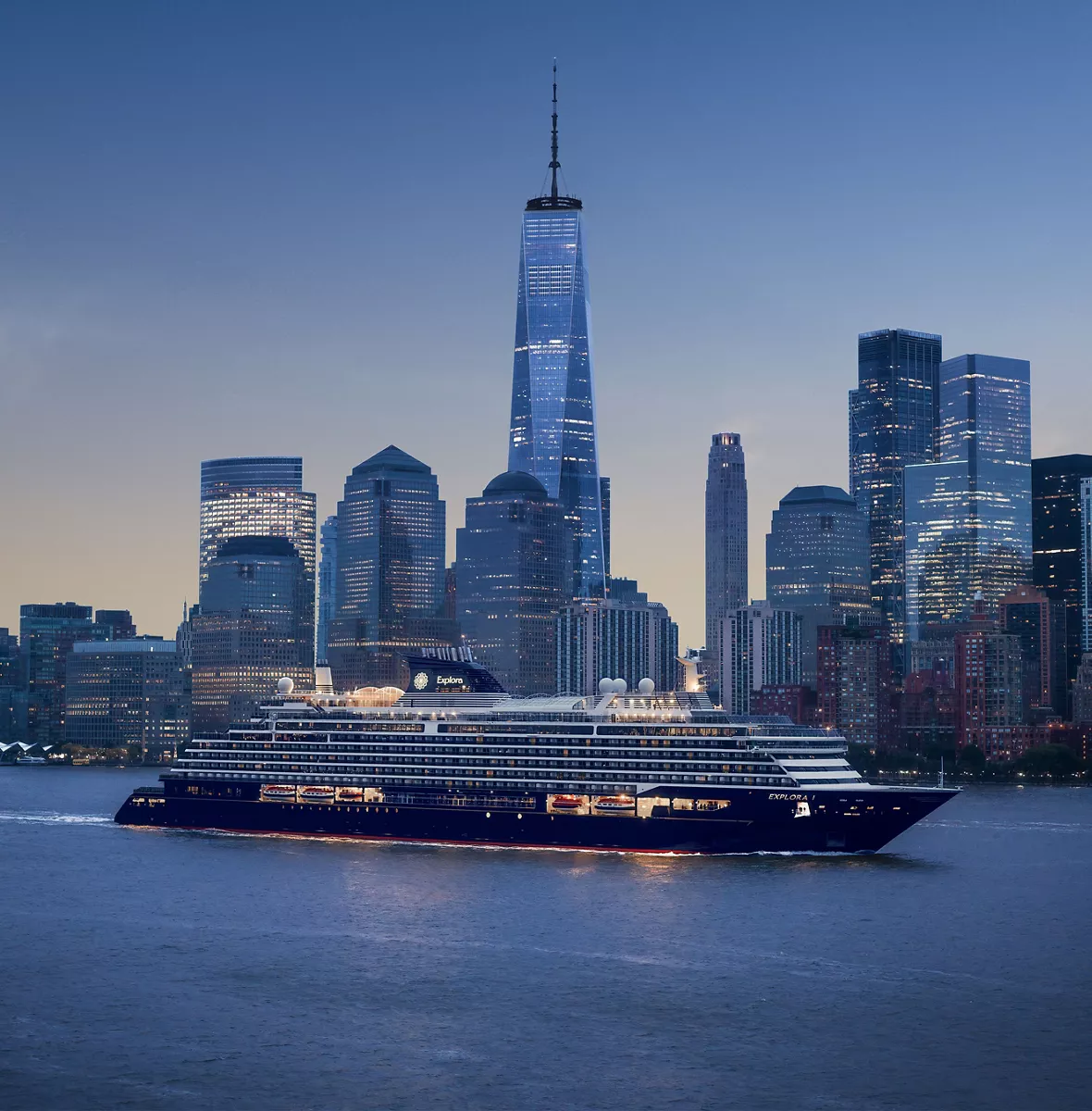
Explora Journeys has also shifted emphasis away from the Gulf and Red Sea. Its winter 2026-27 programme highlights the Caribbean, Central America, the Amazon, the Pacific coasts of the Americas, and the Mediterranean.
Africa is gaining strategic importance as the Suez route becomes harder to operate. The Cape route adds sailing time and cost but opens calls in South Africa, Namibia, and Atlantic islands that can be woven into longer luxury and expedition voyages. For premium operators, the challenge is selling a diversion as a coherent journey, not a disruption.
Cost pressures and market growth
The rerouting comes at a time when cruise demand is robust. The Cruise Lines International Association's 2026 State of the Cruise Industry report shows global passenger volume hit a record 37.2 million in 2025, with nearly 90% of cruisers intending to sail again. Luxury cruising is among the fastest-growing segments, with the global luxury fleet expanding from 28 ships in 2010 to 98 in 2025. By 2029, an estimated 1.7 million travellers will take a luxury cruise, about 4% of the projected 42.1 million market.
Travel advisers surveyed by CLIA identified luxury cruising as their strongest growth segment in 2025. That growth makes redeployment more attractive than withdrawing capacity, provided the alternative itinerary retains enough appeal to justify premium pricing.
For travel advisers, the stakes are high. Clients buying five-figure world cruises are not just paying for nights aboard; the ports are a core part of the value. Replacing Gulf or Red Sea calls with African and Atlantic stops can fundamentally change what was sold.
Additional operational risks
Geopolitics is not the only concern. Gastrointestinal outbreaks continue to affect cruise ships, adding another layer of risk. The U.S. Centers for Disease Control and Prevention has recorded several outbreaks in 2026, including on premium and luxury vessels. Regent Seven Seas' Seven Seas Mariner experienced an E. coli outbreak on a January-February sailing, and Oceania's Insignia reported gastrointestinal illness affecting 19 of 633 passengers (3%) and three crew in April, with E. coli identified as the cause.
Norovirus remains the most common cause of cruise-ship outbreaks, but cruise ships account for only about 1% of U.S. norovirus outbreaks. Still, for luxury lines, even a contained outbreak can damage reputation and affect future bookings.
As the industry navigates these challenges, the shift to African routings is likely to persist. Operators are investing in alternative ports and shore experiences to maintain the allure of long-haul voyages. The result is upward pressure on fares, as the added costs of fuel, logistics, and itinerary redesign are passed on to travellers.
For related coverage, see mixed July traffic for Asia Pacific airlines and how luxury retreats are blending tradition with tech.