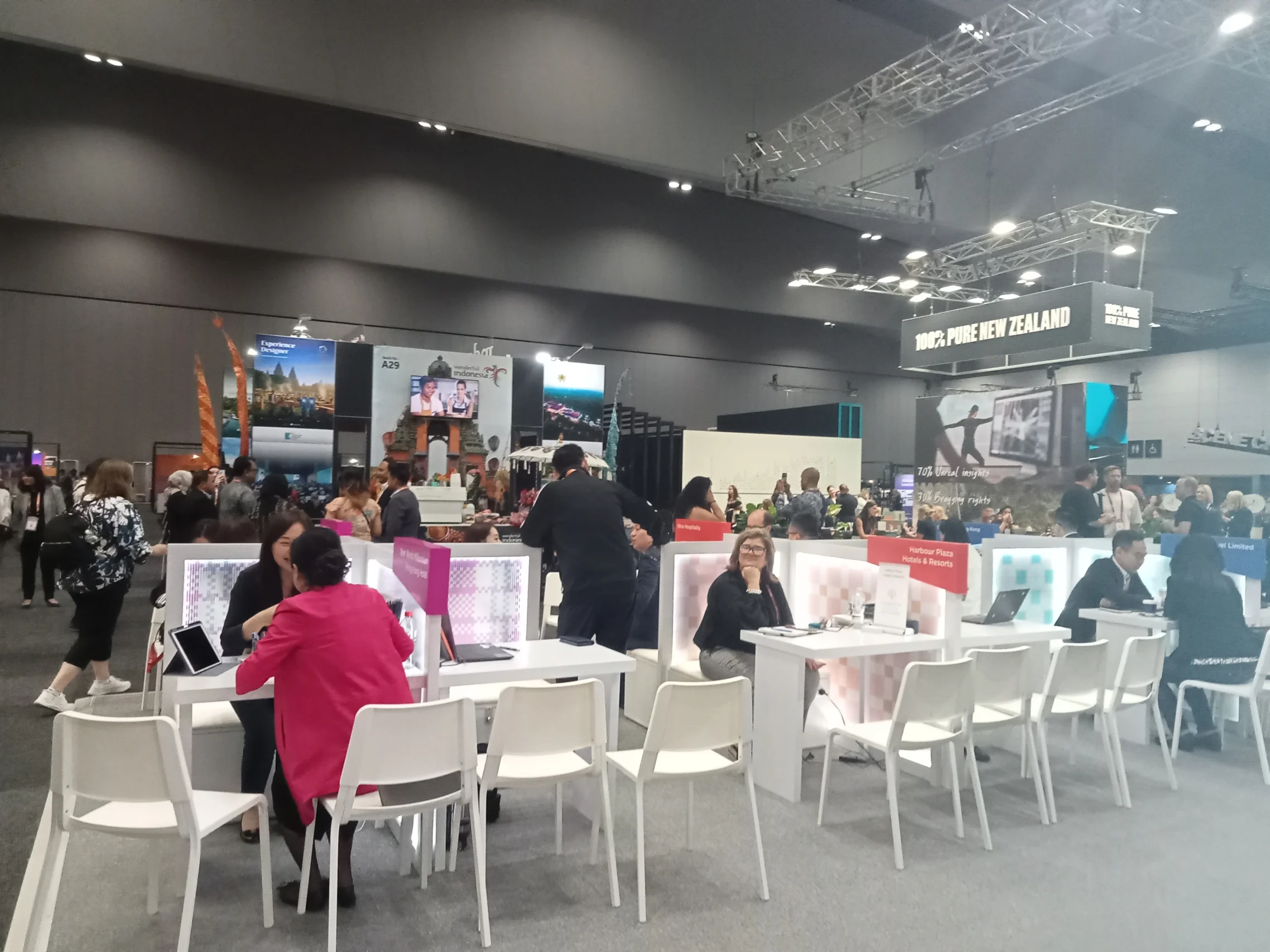
Speaking at AIME 2026 in Melbourne earlier this year, Silke Calder, event director of Talk2 Media & Events, highlighted a universal challenge: “The one problem that we all have across the industry is the rising cost [of everything]. We need to watch our budgets, as everyone is talking about the problem with cost.” Held before the US military action against Iran on 28 February, Calder’s remarks have only gained urgency as fuel prices remain elevated amid the ongoing stalemate.
As ITB China prepares to open in Shanghai on 26 May, the question for travel professionals is whether the MICE industry can build genuine resilience — even crisis-proofing — against such shocks. The answer lies in a multi-pronged strategy that combines premium market focus, local supply chains, digital investment, and sustainability.
Premium and Luxury Incentive Travel as a Buffer
The current boom in premium and luxury incentive travel offers a clear path. High-end segments — executive retreats, board meetings, and top-tier incentive programmes — have proven more resistant to economic turbulence. Companies like Marriott International and Hilton have expanded their luxury portfolios, while destinations such as the Maldives and Singapore are seeing increased demand from corporate groups. For event organisers, targeting these higher-spending clients can offset margin pressure from rising logistics costs.
Expanding into high-growth regions, particularly Asia Pacific, is critical. Localised partnerships with tourism boards — such as the Singapore Tourism Board or Tourism Malaysia — and collaboration with venues like the SPICE Arena in Penang, which emphasises eco-friendly design and sustainable operations, can help organisers access premium clients while reducing carbon footprint.
Localising Supply Chains for Speed and Cost Control
Localisation of supply chains is another key lever. By sourcing materials, catering, and services from nearby vendors, event organisers can cut transportation costs and lead times. This approach also supports host communities and aligns with sustainability goals. For example, the Hanoi's Vietnam Exposition Centre, backed by Vingroup, is positioning itself as a hub for international events by leveraging local suppliers and infrastructure.
Public-private collaboration is essential to make this work. Governments can offer sector-specific funding, tax incentives, or streamlined visa processes for MICE events. Destinations like Thailand, which has seen strong inbound MICE traffic from China, Europe, and Russia, are already benefiting from such partnerships, as noted by Dida's Frank Wöller.
Digital Transformation and Data Analytics
Investing in robust virtual event platforms and predictive data analytics allows organisers to reach broader audiences, personalise experiences, and anticipate market shifts. For instance, using AI to match attendees with relevant sessions or vendors can enhance engagement even during travel restrictions. However, this shift also demands stronger cybersecurity protocols to protect attendee data — a growing concern as events become more digitised.
Companies that adopt unified contingency plans across the supply chain gain a significant advantage. They can assure organisers and participants of better health, safety, and security measures, which is increasingly important in a volatile geopolitical environment.
Sustainability as a Competitive Differentiator
Sustainability certifications are no longer optional. Venues that demonstrate proper waste management, energy efficiency, and local sourcing are more attractive to organisers. The SPICE Arena in Penang is a prime example, drawing global conventions alongside local events. Similarly, boutique Maldives resorts are joining global loyalty programmes to appeal to luxury travellers seeking intimate, sustainable experiences.
Diversifying revenue streams — such as offering hybrid event packages, post-event content libraries, or consultancy services — can further stabilise income. As the MICE industry navigates rising costs, those who embrace premium markets, local supply chains, and digital innovation will be best positioned to weather future storms.