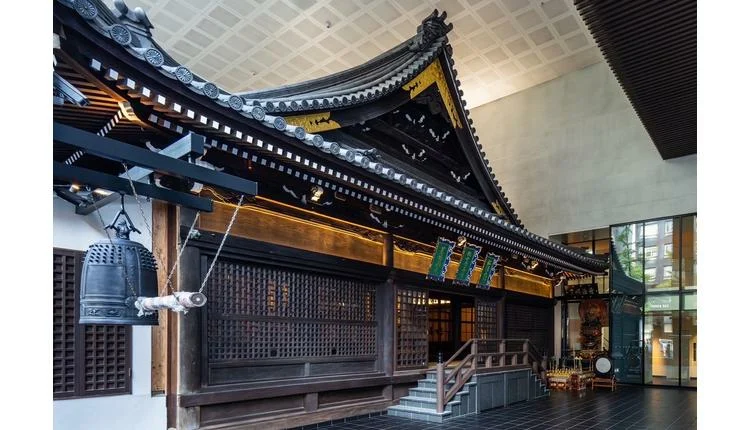
In Osaka's Shinsaibashi district, a striking example of adaptive reuse has emerged: the 200-year-old main hall of Mitsutera Temple now sits within a modern 15-storey hotel. The project, which began in 2019 and concluded in 2023, offers travel industry professionals a case study in balancing heritage preservation with commercial development.
The temple's main hall, originally rebuilt in 1808, survived the bombing of Osaka during World War II. To protect it, developers employed the traditional Japanese technique of hikiya, moving the structure intact from its foundations. This allowed construction of a mixed-use building around the hall, featuring a four-star hotel and retail space. The approach has been recognized by architecture publication ArchDaily for its innovation.
A new model for heritage hotels
For hoteliers and destination managers, Mitsutera represents a growing trend: integrating historic structures into new builds to create unique guest experiences. Unlike conventional renovations that may compromise authenticity, this method preserves the original fabric while adding modern amenities. The hotel's design juxtaposes the Edo-period hall with contemporary architecture, offering guests a tangible connection to Japan's past.
The project also reflects Osaka's commercial spirit, embodied in the local expression OKAGE-san, which conveys gratitude and mutual support. This philosophy underpins the temple's conservation effort, ensuring the past is preserved for future generations. For travel professionals, it underscores the value of community engagement in heritage projects.
Mitsutera offers mindfulness experiences rooted in its 1,300-year Buddhist tradition, including morning services and cultural activities. These programs provide visitors with a deeper understanding of Buddhist culture, appealing to the growing demand for experiential travel. The temple's location in a bustling entertainment district makes it a serene escape, blending history with the vibrancy of modern Osaka.
For those planning itineraries, the temple is a short walk from Shinsaibashi Station, making it an easy addition to any Osaka visit. The hotel itself offers convenient access to shopping and dining, while the temple provides a quiet counterpoint. This dual offering is a model for how religious sites can coexist with tourism infrastructure.
Industry observers note that such projects could inspire similar initiatives elsewhere in Asia, where historic buildings often face pressure from urban development. The success of Mitsutera may encourage more developers to consider hikiya and other traditional techniques as viable options for preservation.
For more on how heritage is shaping travel, see UK travellers' growing interest in ancient history tours and Thailand's promotion of a newly listed temple. Also relevant is Osaka's hotel performance amid shifting arrivals.
Mitsutera's blend of history and modernity offers a compelling narrative for travel professionals seeking to differentiate their offerings. As the industry evolves, such projects may become benchmarks for sustainable tourism development.