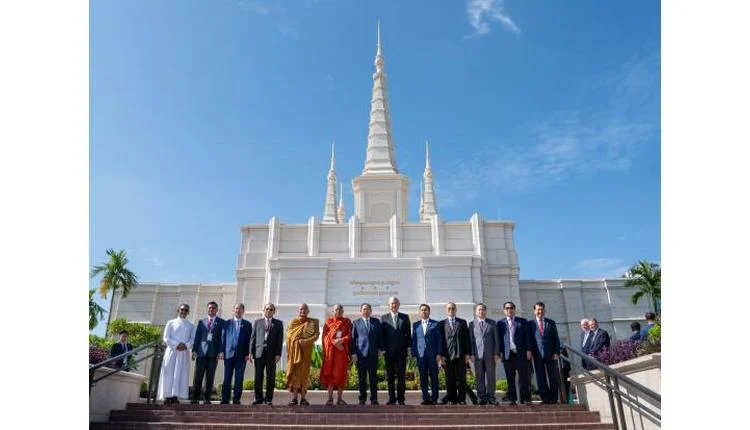
The Phnom Penh Cambodia Temple, the first temple of The Church of Jesus Christ of Latter-day Saints in the country, has opened its doors for a week-long public open house running from 15 to 22 August 2026, with Sundays excluded. The event follows a landmark ceremony attended by approximately 800 guests, including government officials, diplomats, and religious leaders from across the region.
Cambodia's Minister of Cult and Religion, Chay Borin, represented Prime Minister Hun Manet at the ceremony and described the temple as a symbol of peace, moral values, and religious freedom. The temple's location on Russian Confederation Street, a prominent thoroughfare in Phnom Penh, places it within easy reach of international visitors and the city's growing expatriate community.
A Milestone for Cambodia's Christian Community
Set on a 1.3-hectare site, the temple is a significant milestone for Cambodia's Christian community, which has seen steady growth over the past three decades. Elder Gerrit W. Gong of the Quorum of the Twelve Apostles, who traveled from Salt Lake City for the ceremony, highlighted the temple's role in strengthening faith and families. "For us, this temple is a holy and sacred place where heaven and earth come together in serenity and harmony," he said.
The temple's architecture and craftsmanship reflect Cambodia's religious growth and political stability, according to Minister Borin. He expressed confidence that the temple will become a place where love and peace are nurtured, contributing to morality and virtue among worshippers. The building's design incorporates local artistic elements, blending traditional Khmer motifs with the Church's distinctive temple style.
Following the open house, the temple will be formally dedicated on 30 August 2026. After dedication, the temple grounds will remain open to visitors, but entry into the temple itself will be reserved for faithful Church members. This development marks a new chapter in the Church's 30-year presence in Cambodia, which now boasts over 20,000 members nationwide.
Implications for Religious and Cultural Tourism
The opening of the temple adds a new dimension to Phnom Penh's religious tourism landscape, complementing the city's existing Buddhist heritage sites. Travel professionals may note the temple's potential to attract faith-based travelers and those interested in cultural architecture. The open house period offers a rare opportunity for non-members to view the interior, which is typically closed to the public.
Cambodia's tourism sector has been recovering steadily, and the temple's presence could bolster the country's appeal as a destination for religious and cultural tourism. The Church's investment in the country also signals confidence in Cambodia's stability and growth, which may resonate with international tour operators and MICE planners looking for new venues.
For agents and operators, the temple's open house and dedication could be integrated into broader itineraries that include Phnom Penh's other attractions, such as the Royal Palace and the National Museum. The temple's location on Russian Confederation Street also places it near several international hotels and business districts, making it accessible for corporate groups.
As Cambodia continues to develop its tourism infrastructure, the temple adds to the country's diverse religious and cultural offerings. The Church's presence in the country, now with a permanent temple, may also encourage further international investment and visitor interest. Travel professionals should monitor the temple's post-dedication access policies, as entry will be restricted to members, but the grounds will remain open for visitors.
The open house runs daily from 15 to 22 August, excluding Sunday, with guided tours available. The dedication ceremony on 30 August will be broadcast to meetinghouses worldwide, underscoring the global significance of this event. For those in the travel industry, the temple represents a new landmark in Phnom Penh's evolving cityscape, one that blends faith, culture, and community.