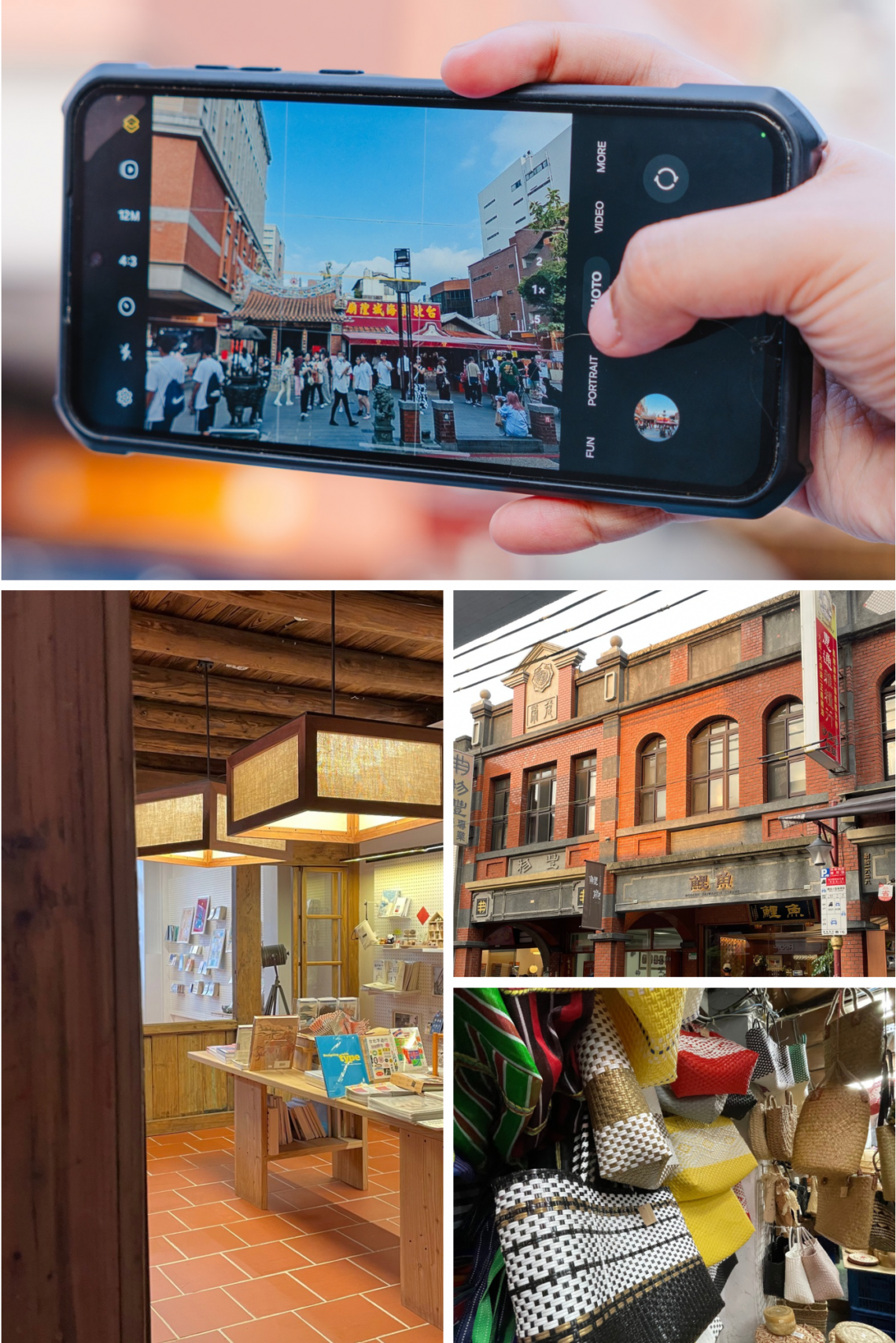
For decades, the success of a business event was measured by square meters of exhibition space, the number of breakout rooms, and the quality of the Wi-Fi. Taiwan is now arguing that the real differentiator lies outside the convention center walls. The 2026 MEET TAIWAN Tour, a five-day familiarization journey through Taipei, Taichung, and Taoyuan, made that case by starting not with a venue tour but with a walk through Dadaocheng, a 19th-century riverside district that predates Taipei's rise as a global city.
Dadaocheng, whose name is traditionally translated as “rice fields,” grew from a small settlement into a key trading hub after Tamsui opened to international commerce in 1860. Its narrow lanes are lined with restored shophouses, tea merchants, and craft studios. For MICE planners, the district offers a ready-made pre- or post-event program: a guided walk, a tea ceremony, or a workshop at a traditional Chinese herbal medicine shop. As one tour participant noted, “This is not something you can livestream.”
High-speed rail as a MICE asset
Taiwan’s High Speed Rail, operational since January 2007 and running at up to 300 km/h, is becoming a central pillar of the country’s MICE proposition. The tour used it to move between Taipei, Taichung, and Taoyuan, each leg taking under an hour. That connectivity allows planners to design multi-city itineraries without sacrificing delegate time.
In Taichung, Taiwan’s second-largest city with a population of about 2.85 million, the group visited the Taichung International Convention and Exhibition Center (TICEC). Located in the Shuinan Economic and Trade Park, TICEC has hosted more than a hundred events since its opening in early 2026. The venue is part of a larger mixed-use development that includes a museumbrary—a hybrid museum and library—and green spaces intended to soften the boundary between business and leisure.
The following day offered a contrast: a tea-tasting session at CHI CHA SAN CHEN, a concept store housed in a 40-year-old building in Taichung. The space, which preserves the original structure while adding contemporary design, is suitable for small meetings and craft activities. Participants sampled different roasts of Li Shan Oolong Tea, sourced from elevations of 2,000 to 2,200 meters in the Li Shan region. The experience underscored a broader trend: venues are no longer just rooms with tables and projectors.
From Taichung, the tour took the high-speed rail to Taoyuan, where Messe Taoyuan covers approximately 76,000 square meters and can host events for 100 to 2,000 attendees. Its Grand Hall and banquet facilities, which can accommodate up to 180 tables, position it as a serious player for large-scale conventions and corporate dinners. Nearby, the Hengshan Calligraphy Art Center—Taiwan’s first public museum dedicated to calligraphy—offers a cultural interlude that blends classical art with contemporary exhibition design.
The sequence of visits—exhibition hall, tea house, art museum—was deliberate. Taiwan’s MICE strategy is to weave cultural experiences into the delegate journey, not treat them as optional add-ons. As one organizer put it, “The future of business events is about what happens before the first session and after the final presentation.”
Back in Taipei, the itinerary shifted to creative reuse. The Nangang Bottle Cap Factory, now rebranded as POPOP Taipei, has transformed a former industrial site into a venue for exhibitions, meetings, and coworking. The Taipei Music Center and Huashan 1914 Creative Park—a former wine distillery turned arts complex—offer similar adaptive-reuse options. These spaces appeal to planners seeking a non-corporate atmosphere for breakout sessions or evening receptions.
Taiwan’s MICE pitch is not just about new venues; it’s about a new mindset. The country is betting that delegates will remember a tea ceremony in a restored shophouse more vividly than a ballroom keynote. For travel professionals, the takeaway is clear: Taiwan is positioning itself as a destination where business and culture are inseparable. As the in-person events strategy continues to evolve, Taiwan’s approach offers a template for other destinations looking to differentiate.
The 2026 MEET TAIWAN Tour also highlighted the importance of partnerships. The collaboration between the Taiwan Tourism Administration, local convention bureaus, and private venues mirrors the MICE growth beyond Kuala Lumpur seen in Malaysia, where secondary cities are stepping up. In Taiwan, Taichung and Taoyuan are no longer just stopovers; they are destinations in their own right.
For international planners, the logistics are straightforward. Taiwan Taoyuan International Airport, with its Taiwan-themed lounges, offers a welcoming first impression. From there, the high-speed rail network connects the island’s major cities efficiently. The message is simple: come for the convention, stay for the culture.