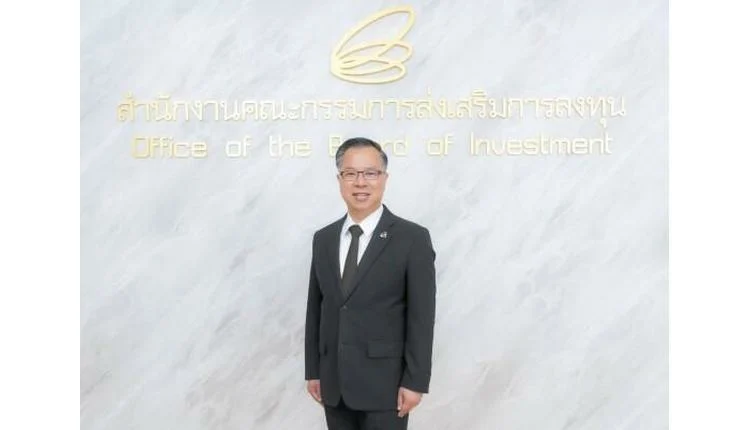
Thailand has posted a sharp increase in investment applications for the first half of 2026, reaching $43.6 billion — a 37% rise over the same period last year — according to the Thailand Board of Investment (BOI). The surge is being driven primarily by large-scale commitments in artificial intelligence (AI) infrastructure and digital technologies, positioning the kingdom as a growing hub for next-generation industries in Southeast Asia.
Digital and AI Lead the Charge
The digital sector alone accounted for $33 billion in applications, underscoring Thailand's appeal to global tech investors. The electrical appliances and electronics segment followed with $3.56 billion across 179 projects, while agriculture and food processing attracted $1.82 billion across 131 initiatives. These figures reflect a broader shift toward high-value manufacturing and services that align with the BOI's Smart and Sustainable Industry strategy.
Foreign direct investment (FDI) applications jumped 80% year-on-year to $40.5 billion, spread across 877 projects. Singapore emerged as the top source, contributing $33.2 billion, with the United Kingdom and China also among the leading investors. Capital is flowing primarily into digital technology, electronics, and high-value services — sectors that are reshaping Thailand's economic landscape and creating new opportunities for travel and business connectivity.
Job Creation and Export Capacity
BOI Secretary General Narit Therdsteerasukdi emphasized the broader impact: "Real success means quality jobs, higher skills, and better income for Thai workers." Approved projects are expected to generate over 82,000 jobs and significantly boost the country's export capacity. For travel industry professionals, this signals increased demand for business travel, MICE events, and premium hospitality services, particularly in Bangkok and emerging hubs like Krabi.
The investment wave also includes 198 renewable energy initiatives valued at $7.79 billion, supporting Thailand's growing energy needs and sustainability goals. The BOI's Smart and Sustainable Industry initiative encourages automation and digital integration, which could drive further efficiencies in logistics and tourism operations.
Implications for Travel and MICE
Thailand's investment boom has direct relevance for travel professionals. The influx of tech and manufacturing projects will likely boost corporate travel demand, especially on routes connecting Singapore, London, and Chinese cities to Bangkok and secondary destinations. Airlines such as AirAsia, Thai Airways, and Singapore Airlines may see increased traffic on these corridors. Hotel groups including IHG, Centara, and Marriott could benefit from extended-stay and business travel segments.
The MICE sector stands to gain as well. Thailand recently secured the bid to host IEEE ICRA 2030, and Bangkok is preparing to welcome 15,000 delegates for the IMF-World Bank meetings. These events align with the country's push to position itself as a technology and innovation hub, attracting high-spending business travelers and reinforcing its status as a leading MICE destination in Asia.
Domestic travel is also evolving. Krabi, in particular, is experiencing a staycation boom as Thai travelers explore local destinations. The upcoming Centara Reserve Krabi and the Holiday Inn Express Krabi Ao Nang — the first in Thailand with Gen 5 design — are examples of hospitality investments responding to this shift.
Outlook for Travel Industry Stakeholders
For airline executives, hoteliers, tour operators, and travel-tech vendors, Thailand's H1 2026 investment data signals a maturing market with strong fundamentals. The combination of AI infrastructure, renewable energy projects, and a supportive regulatory environment creates a fertile ground for business travel growth. Travel professionals should monitor route expansions, hotel development pipelines, and MICE calendar updates to capitalize on the opportunities emerging from this capital influx.
As the BOI continues to approve projects, the ripple effects will be felt across the travel ecosystem — from increased airlift and hotel occupancy to demand for travel management services and technology platforms that support corporate travel programs.