Tunisia is accelerating its outreach to Asian source markets, capitalizing on a post-pandemic travel rebound and shifting flight patterns caused by Middle East tensions. The Tunisian National Tourism Office (ONTT) is deploying a multi-pronged strategy—trade roadshows, influencer collaborations, and digital campaigns—to position the North African destination as a safe, culturally rich alternative for travelers from China, Japan, and South Korea.
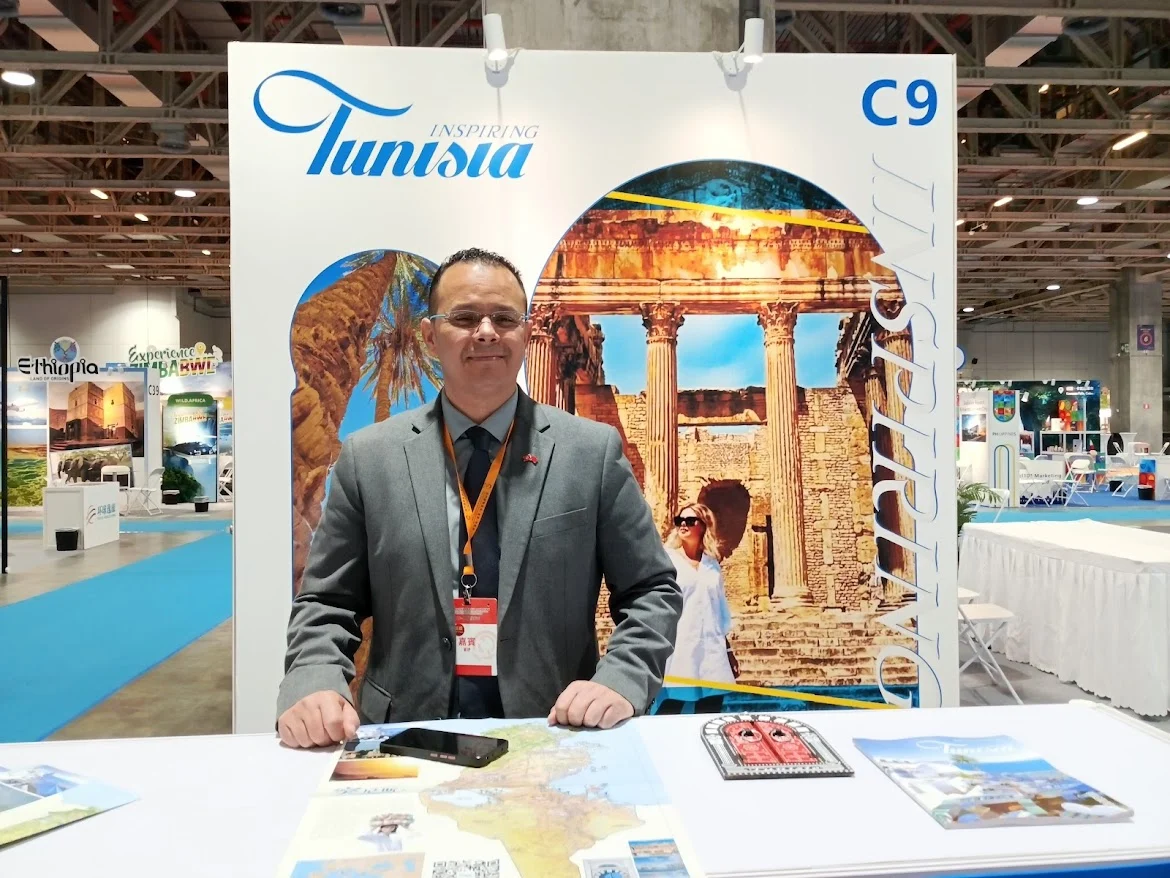
Anouar Chetoui, ONTT's chief representative in China, outlined the strategy in a recent interview. "Since our participation at ITB China in Shanghai, we intensified our work and our marketing plan," he said. "Our country saw an increased number of Asians, especially Chinese tourists, going to Tunisia." Official figures support that claim: Chinese arrivals climbed 19.3% in 2025 compared to 2024, and the first two months of 2026 saw a further 20% year-on-year surge.
Expanding trade presence across East Asia
The ONTT is backing this momentum with an ambitious calendar of B2B and B2C activations throughout 2026. Beyond ITB China, Tunisia has participated in the Macau International Travel Trade Expo (MITE), the Korea World Travel Fair (KOTFA) in June, the JATA Tourism EXPO Japan in September, and the China Outbound & Inbound Tourism Market (COITM) in Beijing. High-level delegations, including inbound tour operators, hoteliers, and ministry leaders, are being dispatched to these forums to forge partnerships.
Chetoui highlighted the significance of the JATA presence: "This was our fourth or fifth time at JATA, but this year we had a special booth, accompanied by a delegation from Tunisia, our travel agents, and leaders from our ministry." The strategy blends traditional trade diplomacy with digital reach. ONTT recently hosted a multi-destination familiarization trip across northern Tunisia for Chinese travel agents, media, and key opinion leaders (KOLs). "We are working heavily on online platforms with KOLs for live streaming and interactive Q&A sessions," Chetoui added. "Each live broadcast reaches more than 300,000 viewers. Following our recent ministerial meetings, we are preparing to roll out similar roadshows and digital campaigns into Japan and South Korea."
Navigating Middle East disruptions
The push into East Asia comes as ongoing tensions in West Asia disrupt traditional flight corridors. While Gulf hubs like Doha, Dubai, and Abu Dhabi remain key transit points, initial disruptions caused a manageable 20% dip in bookings—far less severe than cancellations seen in parts of Europe. Chetoui emphasized Tunisia's geographic insulation: "Our country is far from the crisis zones; we are roughly 3,000 kilometres away."
Tour operators have adapted by routing through alternative European hubs, including Istanbul, France, and Italy. Chetoui noted that flight resumptions from Gulf carriers like Qatar Airways and Emirates have restored essential seat capacity to and from Asian gateways. For travel professionals, this resilience is a selling point. As Middle East conflict reroutes European long-haul traffic, Tunisia offers a stable alternative for Asian outbound travelers.
Heritage, MICE, and the road ahead
Tunisia's appeal extends beyond safety. The country boasts nine UNESCO World Heritage sites, a rich intangible cultural heritage, and a range of accommodations from boutique guesthouses to five-star eco-resorts. "Tunisia is a country with 3,000 years of history," Chetoui said. "Tunisians are proud of their country and eager to welcome visitors. We have genuine warmth and hospitality; we care for our guests from the bottom of our hearts."
The MICE segment is a key growth area. Tunisia already hosts European multinationals for corporate retreats, and the ONTT is now targeting Asian business event planners. "During our latest familiarisation trip, we brought Chinese MICE specialists to connect directly with local partners," Chetoui explained. "There is immense potential here, and our Beijing office stands ready to assist the trade in organising bespoke itineraries, roadshows, and partnerships."
For travel agents and tour operators looking to diversify, Tunisia's combination of heritage, hospitality, and modern infrastructure—coupled with its strategic pivot toward Asia—makes it a compelling option. As Asia's luxury travelers prioritize experiences, Tunisia's authentic offerings align well with evolving preferences. The ONTT's proactive approach, from destination festivals to targeted trade engagement, signals a long-term commitment to capturing a larger share of the Asian outbound market.