Bangkok is positioning climate action as a core pillar of its urban development strategy, with a target to cut carbon emissions by 3% annually while making the Thai capital greener, more walkable, and more liveable. The initiative is set to take center stage at Bangkok Climate Action Week (BKKCAW) 2026, scheduled for October 3–11, in partnership with the Bangkok Metropolitan Administration (BMA) and other cross-sector stakeholders.
The week-long programme will convene government officials, business leaders, civil society, youth groups, media, and local communities to explore how a new economy can deliver better outcomes for both people and the planet. A preview event, “Climate Citizen – Economy We Shape, Climate We Share,” was held on August 22 at the Jim Thompson Art Center, drawing leaders and participants ahead of the main October gathering.
The preview featured an opening session titled “How Can a New Economy Help Create a Better Environment?” with Sanan Angubolkul, Chairman of the AFS Thailand Foundation; Bangkok Governor Chadchart Sittipunt; and Leo Horn-Pathnothai, Founder and Co-Chair of the BKKCAW Organising Committee.
Making Bangkok easier to navigate
For Bangkok, climate action is increasingly translating into tangible changes to the city’s physical landscape. Governor Chadchart emphasized the importance of making Bangkok more walkable and improving connections between neighbourhoods and the BTS Skytrain network. The goal is not only to reduce car dependency but to make everyday movement through the city more convenient.
“If we want people to help reduce carbon emissions, we have to make it easy for everyone to participate. Small actions, when we bring them together, can have a much bigger impact,” Chadchart said in translated remarks.
For the travel industry, better pedestrian connections could also transform how visitors experience Bangkok—making it easier to move between public transport, hotels, restaurants, cultural attractions, and local neighbourhoods. This aligns with broader efforts to enhance the city’s appeal as a destination, as seen in recent initiatives like the Visa and ASIATIQUE partnership to attract high-value travellers.
Expanding green spaces
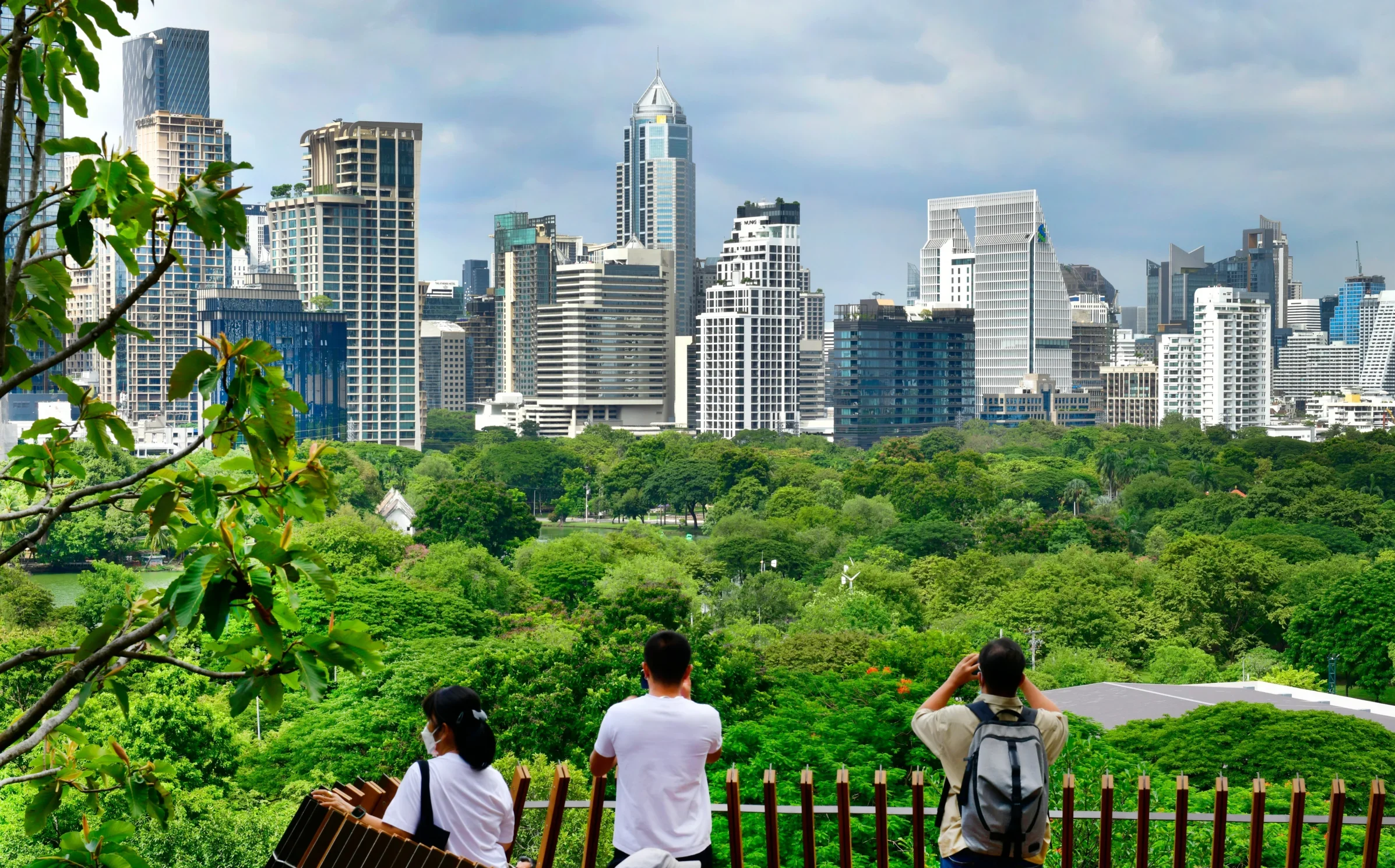
Greenery is another major component of Bangkok’s urban transformation. The city is working towards nine square metres of green space per person, alongside its 15-minute park initiative, which aims to bring smaller green spaces closer to residential communities. Around 2.5 million trees have been planted as Bangkok works to create more green “oases” throughout the city, according to Governor Chadchart.
This approach could also broaden the visitor experience beyond traditional attractions, offering more opportunities to discover neighbourhood parks, public spaces, and local communities. The Jim Thompson Art Center provided an appropriate setting for the August preview, combining climate discussions with art and culture, and showcasing local artists as a source of inspiration for younger generations.
Climate change and the economy
Sanan Angubolkul highlighted the close relationship between economic change and climate change, noting that environmental impacts can affect supply chains, production costs, and ultimately consumer prices. The message is particularly relevant to businesses across Bangkok’s economy, including smaller enterprises that form an important part of the city’s commercial and tourism landscape. The transition, he suggested, needs to be broad enough to involve businesses and communities rather than becoming an agenda driven only by large corporations.
This economic angle resonates with the travel sector, where climate resilience is becoming a key consideration. As the Philippines shifts its tourism strategy toward climate-proof infrastructure, Bangkok’s approach offers a complementary model for urban destinations.
Building what comes next
For Leo Horn-Pathnothai, BKKCAW is an opportunity to bring different sectors together to shape what is emerging. “How we gather matters for how we move forward. BKKCAW is an opportunity to build what is emerging,” he said. He described the transition as a long journey requiring collaboration and the energy of hope. “Bangkok is the most iconic stage in the world,” he added.
As Bangkok prepares for the October programme, climate action is being positioned not simply as an environmental responsibility, but as an opportunity to rethink how the capital works, how people move through it, and how communities participate in its future. For visitors, the result could be a Bangkok that is greener, easier to walk, better connected, and more rewarding to explore at neighbourhood level. The city’s climate transition, in other words, could become part of its next destination story.
With new hotel openings like the Fairmont’s debut in Bangkok and expanded air services such as Thai Airways’ increased Bangkok-Zurich frequency, the city is clearly investing in its tourism infrastructure. The climate agenda adds a forward-looking dimension that could appeal to both leisure and business travellers seeking sustainable urban experiences.