Europe's river cruise industry is facing one of its most challenging summers as the Danube and Rhine hit record or near-record low water levels. The drought has disrupted sailings, stranded vessels, and forced operators to redraw itineraries during the peak season, testing the flexibility of both cruise lines and their passengers.
Danube at historic lows
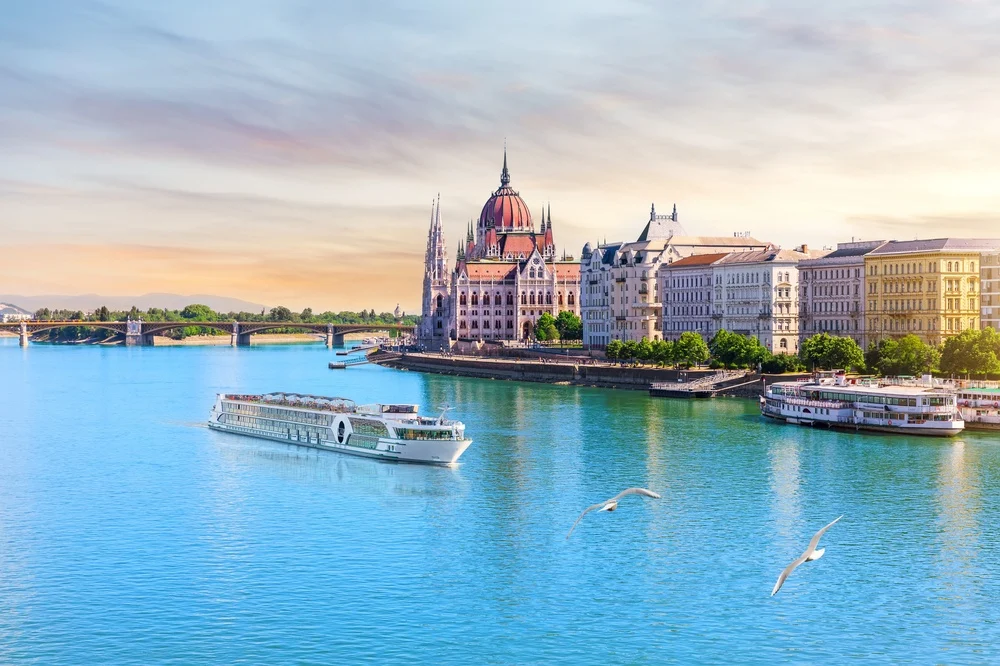
The Danube has become the most visible trouble spot. In July, the river at Budapest fell to within eight centimetres of its previous record low, according to Reuters. International cruise vessels were stranded north of the Hungarian capital, and some sightseeing services were suspended. The commercial impact was immediate: MAHART-PassNave, a Hungarian passenger shipping company, reported an 18% drop in July bookings as cancellations rose. International river cruises bring about 600,000 passengers through Hungary each year, making them a vital source of revenue for ports, guides, excursion companies, and local tourism operators.
Avalon Waterways confirmed that a small number of Danube and Rhine departures had been cancelled because of low water. The situation is forcing river cruise companies to reassess how much disruption their operating models—and their customers—can absorb.
Downstream severity
Conditions further downstream have been equally severe. The Danube's flow at its entry point into Romania fell to around 1,700 cubic metres per second in July, against a long-term July average of roughly 4,700 cubic metres per second, according to Reuters. Water levels there reached their lowest in three decades. Ferry services were suspended, commercial vessels were left waiting, and exposed sandbanks narrowed navigable channels. Passenger shipping has not escaped: cruise vessels heading towards the lower Danube have faced interruptions, with passengers moved overland when ships could not safely continue along planned routes.
Austria provided another indication of the drought's scale in August. At Greifenstein, upstream from Vienna, the Danube was carrying around 700 cubic metres of water per second, compared with roughly 2,000 in an average summer. The problem began well before the summer holiday season. A dry winter left little snow in the Alps, reducing the meltwater that would normally replenish the river during warmer months. Rainfall has not made up the deficit.
Unexpected sights and hazards
The falling Danube has produced some extraordinary sights. Near Prahovo in Serbia, German warships sunk during the Second World War have re-emerged as the water retreated. Some still contain ammunition and explosives, adding a navigation hazard to a river already struggling with exceptionally shallow conditions. For tourism businesses, however, the more important story is less spectacular: one of Europe's great travel corridors is becoming harder to navigate during prolonged dry spells.
When the river cruise becomes a road trip
River cruising has always been exposed to water levels. Too much water can prevent vessels from passing beneath bridges; too little can leave them unable to cross shallow stretches. What matters commercially is how often operators have to activate their contingency plans. A company with several similarly configured vessels can sometimes perform a ship swap. Passengers disembark on one side of an unnavigable section, travel by coach, and join another vessel further along the river. Excursions can also be operated from alternative ports, while hotel stays may replace nights aboard.
It keeps the holiday moving, but it does not necessarily preserve the holiday that was sold. That distinction matters to travel advisors and tour operators. River cruising is built around a simple proposition: unpack once and move through a succession of destinations without the logistics associated with a conventional multi-city tour. Repeated coach transfers, hotel stays, or ship changes weaken that proposition, particularly for premium customers paying for convenience as much as the destinations themselves.
There is a reputational calculation, too. Cancelling early carries a financial cost. Waiting for water levels to improve can preserve a departure, but it leaves operators with less time to communicate major itinerary changes to customers and distribution partners. For travel advisors, managing expectations before departure is becoming part of selling a European river cruise during the summer months.
Rhine hits its own breaking point
The problem is not confined to the Danube. Germany's Rhine, the commercial artery connecting some of Europe's largest industrial centres with North Sea ports, has also fallen sharply. At Kaub, a critical navigation point between Koblenz and Mainz, navigable water depth dropped to just 12 centimetres on August 12. The previous record low was 25 centimetres during the severe drought of 2018. Through-navigation effectively stopped.
Days earlier, German shipping representatives had warned that falling levels at Kaub could split Rhine traffic into separate northern and southern sections. Vessels could continue operating in deeper stretches, but would struggle to pass the shallowest section. Much of the immediate economic concern has centred on freight. The Rhine carries chemicals, steel, coal, agricultural commodities, and energy supplies, and reduced water levels mean barges must carry lighter loads or stop operating altogether.
For cruise operators selling journeys between Amsterdam, Cologne, Koblenz, Strasbourg, and Basel, the inability to pass a single critical stretch can undermine an entire itinerary. And when the Rhine and Danube are both affected, the entire European river cruise season is at risk. As operators like Uniworld plan new ships for future seasons, they must also invest in more robust contingency planning. The current disruptions are a stark reminder that climate variability is now a permanent factor in river cruise operations.