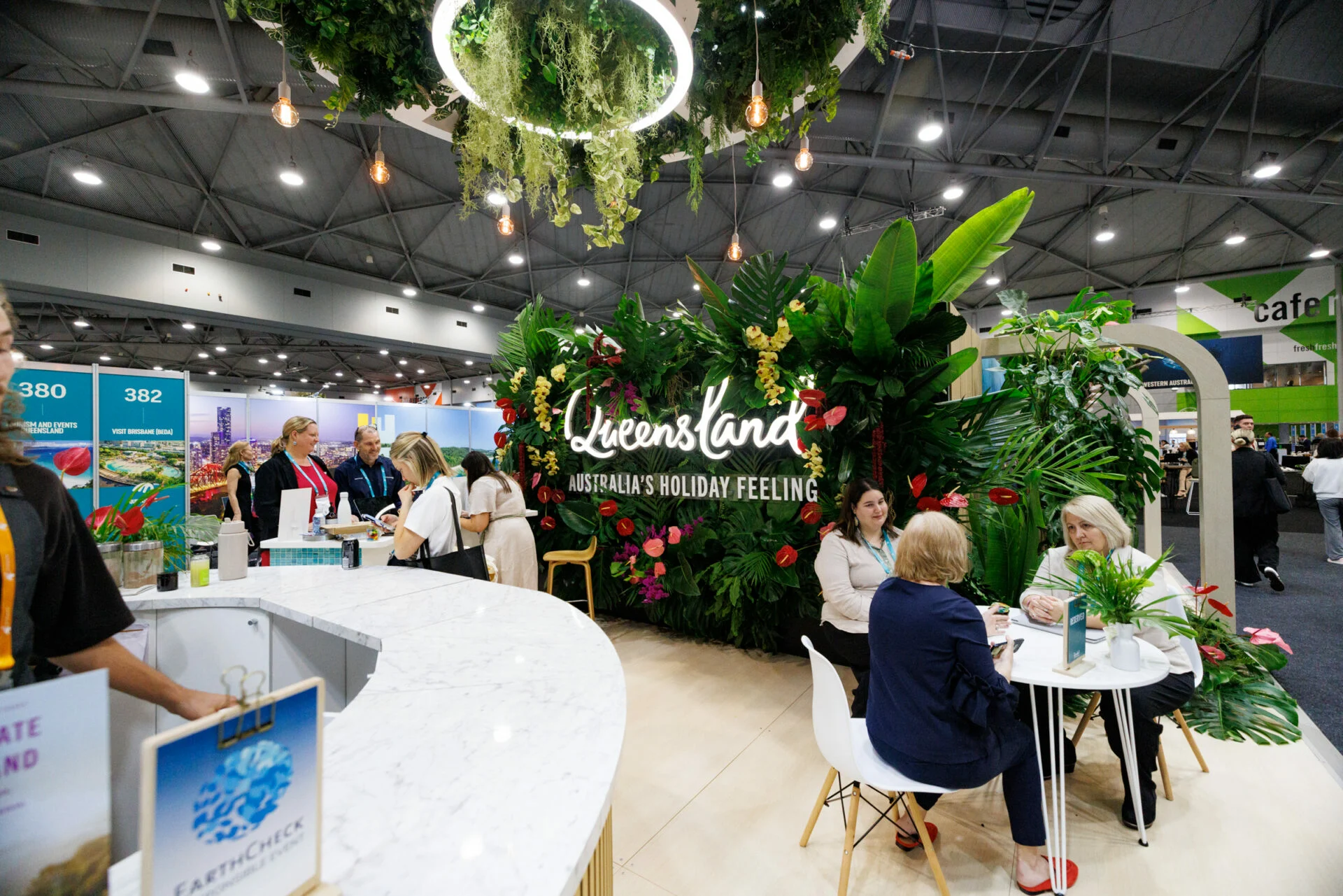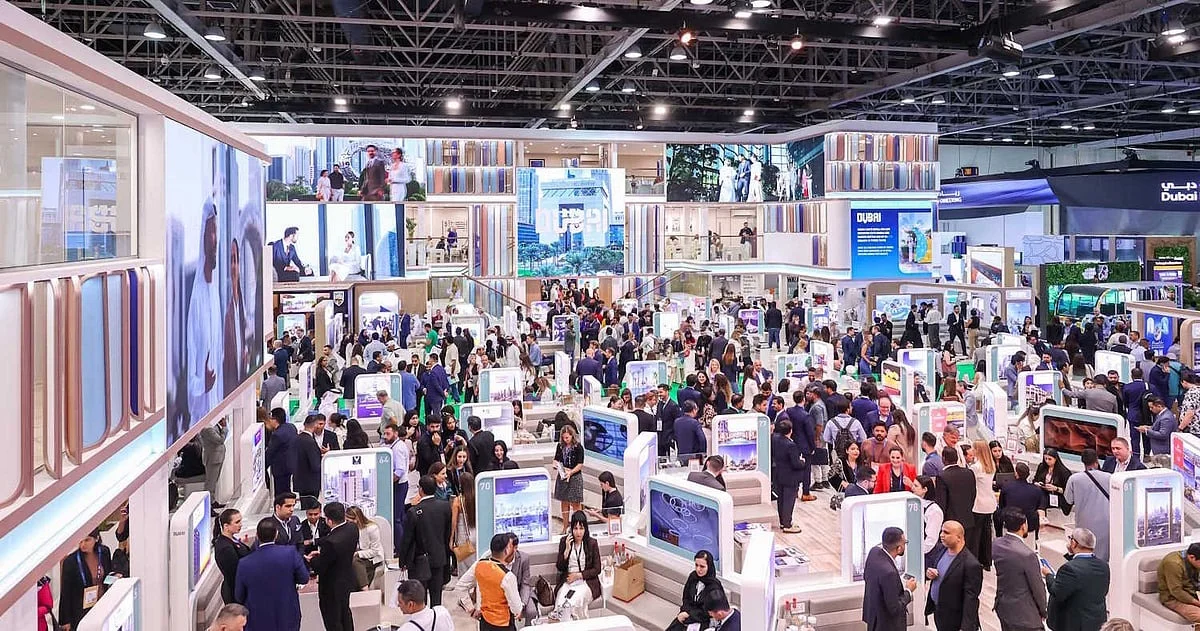
The 33rd edition of Arabian Travel Market (ATM) is underway at Dubai World Trade Centre, and the scale of this year's gathering offers a clear signal: the Middle East travel industry is regaining momentum. Organiser RX reports a 16% year-on-year increase in participation, with more than 55,000 travel professionals from 166 countries attending the four-day event, which runs from September 14-17.
The show was originally scheduled for May, but regional instability forced a postponement. RX rescheduled to September, citing participant safety and the need for greater certainty for international exhibitors. The fact that ATM is now taking place at full scale is itself a barometer of recovery.
Gulf carriers rebuild capacity
Aviation is at the heart of the rebound. Emirates told Reuters it is operating at about 93% of pre-disruption capacity, having carried more than 8.6 million passengers in July and August. Winter bookings on several routes are ahead of last year, with strong demand from India, South Africa, Brazil and Egypt. The carrier also notes a trend toward later bookings, a behaviour that has become more pronounced amid lingering uncertainty.
flydubai is further behind but progressing. CEO Ghaith Al Ghaith said the airline is at roughly 85% of network capacity and expects to reach full capacity by the end of 2026. Travel advisories affecting Gulf airspace remain a constraint. Etihad Airways, meanwhile, reports available seat kilometres running 15-17% above last year, with an August load factor of 92%.
For travel agents, tour operators and corporate travel managers, the picture is encouraging but not yet normal. Capacity is returning, but airspace risk, advisories and late booking patterns continue to complicate forecasting and contracting.
Dubai's recovery benchmark
Dubai's own performance provides a stronger backdrop than many expected. The emirate welcomed about 869,000 international overnight visitors in August, its highest monthly total since February. International visitation reached 6.97 million in the first eight months of 2026, according to the Dubai Department of Economy and Tourism.
Hotel occupancy recovered to 66% in August, up from just 36% in March, with room inventory approaching 149,000. Hotels recorded 21.61 million occupied room nights between January and August. Yet the comparison with 2025 shows how much ground remains: Dubai hotels averaged 80.7% occupancy last year, a record year for tourism.
Dubai International handled 31.5 million passengers in the first half of 2026, with monthly numbers rising from 3.5 million in April to 5 million by June. Dubai Airports now expects about 70 million passengers for the full year, a target revised down following the disruption.
Technology moves to the commercial core
Beyond resilience, ATM is looking ahead. ATM Travel Tech features more than 180 exhibitors from 30 countries across two halls, with an 850-square-metre Tech & Innovation Hub covering AI, virtual and augmented reality, robotics, fintech and green technology.
For the trade, the significance is less about technology as a showcase and more about where investment is moving. AI-driven distribution, automation, payments and personalisation are increasingly treated as operating tools rather than experimental additions. As influencer networks integrate with marketing platforms, the line between content and commerce continues to blur.
ATM 2026 arrives at a pivotal point in the Middle East's tourism cycle. Dubai's visitor numbers are climbing, Gulf airlines are restoring capacity, and international travel companies are again meeting face-to-face in large numbers. Yet the recovery remains uneven. Safety concerns have not disappeared, some travel advisories remain in place, and airline networks are still being rebuilt.
That tension is perhaps the most useful reading of ATM this year. The Middle East travel industry is not presenting a return to business as usual. It is showing how quickly business can return when connectivity and confidence begin to recover — and how much work remains before both are fully restored.