India's multi-year push to build world-class convention centres and host global summits has put the country on the MICE map. But the harder task now is converting that visibility into a steady stream of international congresses, exhibitions and incentive groups that generate business well beyond the event hall.
The government's ambition extends far beyond destination promotion. Its National Strategy and Roadmap for the MICE Industry calls for stronger institutional support, streamlined business processes, sharper destination marketing and a more competitive events ecosystem. The Ministry of Tourism has also outlined plans to develop at least 10 cities into internationally competitive MICE destinations.
For venue operators, professional conference organisers, hotel groups and destination management companies, the shift is significant. International association business is typically secured years in advance and depends on sustained bidding, local industry backing and coordination across the destination. ICCA notes that some association meetings have lead times of five years or more.
India now has the hardware. What it lacks is a robust pipeline of confirmed international events.
G20 as a live showcase
India's G20 presidency offered an unusually broad demonstration of its capabilities. More than 200 meetings were held across 56 cities, exposing international delegations to destinations well beyond Delhi and Mumbai and stress-testing hotels, transport networks, security systems and local event suppliers under demanding conditions.
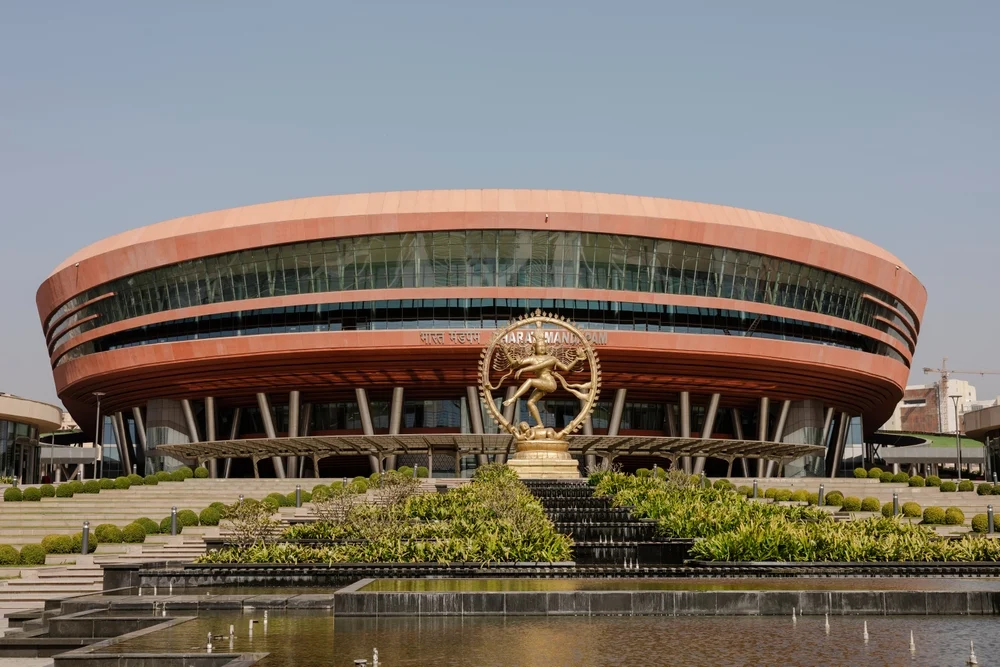
It also placed new convention infrastructure on the global stage. Bharat Mandapam in New Delhi hosted the G20 Leaders' Summit, while Yashobhoomi in Dwarka significantly expanded the capital's exhibition and congress inventory. The government has actively promoted both venues internationally as part of its business-events proposition.
That investment changes India's ability to bid for large meetings, but infrastructure alone does not win them. Singapore, Bangkok, Dubai and other established Asian MICE hubs combine venues with experienced convention bureaus, strong air connectivity, simplified event processes and long-standing relationships with international associations. India is now trying to close that organisational gap.
Convention bureaus move to the centre
One of the most consequential changes is the government's push for city-level MICE promotion bureaus. The Tourism Ministry has issued model guidelines for states and Union Territories, envisaging organisations that bring together government, venues, hotels and other private-sector stakeholders. For the industry, this could prove more impactful than another international advertising campaign.
A functioning convention bureau can identify congresses before bids open, work with Indian professional associations, assemble destination proposals and coordinate government support. It can also give overseas planners a single point of contact instead of requiring them to negotiate separately with venues, local authorities and suppliers.
That is particularly important in association business, where decisions can be influenced by the strength of the local scientific, medical, academic or professional community as much as by the convention centre itself.
The opportunity aligns with India's economic geography. Bengaluru can compete for technology and innovation events; Hyderabad has an established pharmaceuticals and life-sciences ecosystem; Mumbai brings finance and corporate business; Delhi offers access to government, universities and international institutions. Chennai, Goa and other destinations add their own sectoral or leisure strengths.
Selling those ecosystems — rather than simply selling square metres of meeting space — will be critical.
'Meet in India' becomes a commercial proposition
The government has sought to bring this capacity under its “Meet in India” brand, a specialised component of Incredible India. It has also developed a Digital MICE Catalogue covering facilities across more than 60 cities and taken Indian convention products to overseas trade events.
The potential market is substantial. ICCA's latest GlobeWatch analysis tracked 12,438 international association meetings held in 2025, underlining both the scale of the sector and the intensity of competition between destinations. For Indian suppliers, winning even a larger slice of this business has consequences far beyond convention-centre revenue. International delegates generate premium hotel nights, airline traffic, food and beverage spend, airport transfers and demand for local event production. Many extend their stay or travel elsewhere in the country, opening business for DMCs and leisure operators.
Incentive travel offers another route. India has the cultural and experiential range to combine corporate programmes with Rajasthan, Kerala, Goa, wildlife destinations or major cities, allowing operators to build higher-value itineraries around the meeting itself.
But the industry will have to work further upstream. International congresses cannot be treated like short-lead corporate groups. PCOs, hotel companies, venues and DMCs need to identify prospects years in advance, cultivate Indian association leaders who can champion bids and work collectively rather than competing only after an event has been secured.
Government investment has given India much of the hardware. The G20 supplied visibility, while the national strategy, “Meet in India” and proposed convention bureaus provide a clearer framework for selling it. The measure of success now is not how many convention centres India builds, but how many international events it wins — and how much business those events generate across the travel economy.
India's MICE push comes as regional competition intensifies. Vietnam has unveiled its own MICE strategy to rival established hubs, while destinations like Uzbekistan are courting Indian travellers with visa-free entry. Meanwhile, India's aviation sector is expanding, with new routes such as Centrum Air's Hyderabad link and streamlined airport processes supporting international travel growth.