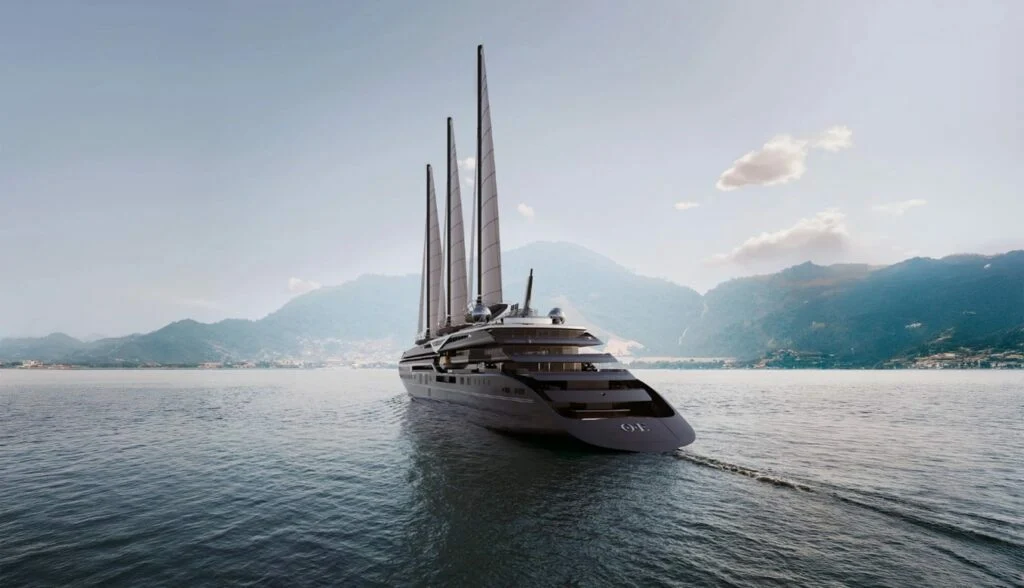
For travel professionals advising discerning clients, the choice between a mega-ship and a small luxury cruise increasingly comes down to a trade-off: spectacle versus substance. While large vessels from lines like Royal Caribbean or MSC Cruises pack thousands of passengers onto decks with water parks and Broadway-style shows, luxury operators such as Regent Seven Seas Cruises, Silversea, Ponant, and Hapag-Lloyd Cruises prioritize space, service, and simplicity.
Space and Scale: A Measurable Advantage
Small luxury ships typically carry 400 to 600 guests, a fraction of the 3,000–6,000 on mainstream vessels. This scale directly translates to higher space-per-guest ratios. Lead-in suites on luxury ships commonly start at around 365 square feet—comparable to a standard hotel room—versus interior cabins of roughly 150 square feet on mass-market ships. More room means quieter public areas, uncrowded lounges, and a sense of privacy that feels intentional.
Lines like Ponant and Silversea design their interiors with restrained elegance: warm woods, subtle lighting, and curated art replace neon LED strips and carnival attractions. Pools and spas are present but understated, emphasizing quality over volume.
Personalized Service That Anticipates Needs
With fewer guests, crew-to-guest ratios on luxury ships often approach 1:1 or better. This enables highly personalized service: guests are greeted at the pier and escorted directly to their suite, with check-in completed in private. Dedicated butler service is common on lines such as Regent Seven Seas and Silversea, turning small requests into bespoke experiences—a shore excursion timed to avoid crowds, a pillow menu waiting in-suite, or a sunset aperitif arranged on a quiet deck.
For travel agents, this level of service translates into higher client satisfaction and repeat bookings. The ability to customize every aspect of a voyage—from dining preferences to excursion timing—creates a product that sells itself to the right audience.
All-Inclusive Value: Fewer Surprises, Clearer Pricing
Luxury fares bundle what mainstream lines charge extra for: alcoholic beverages (including premium labels), gratuities, specialty dining, and curated shore excursions. Regent Seven Seas Cruises, for example, advertises comprehensive inclusions that simplify planning and often make the overall value competitive with upscale but less-all-inclusive options. For travelers who prefer one-price clarity and fewer add-ons, that matters.
This model also benefits travel advisors: it reduces the need to explain complex pricing tiers and onboard spending, making the booking process smoother. The Regent Seven Seas Cruises recent addition of 56 festive shore excursions for the 2026 winter Mediterranean season exemplifies how luxury lines continue to enhance included offerings.
Who These Cruises Suit Best
- Couples seeking privacy, romance, and elegant service.
- Multi-generational families wanting roomy suites and calm public areas.
- Solo travelers who value seamless service and quiet common spaces.
- Discerning guests who prefer experiences and authenticity over spectacle.
For travel professionals, the key is matching client expectations to the right product. Some upscale experiences—like ship-within-a-ship concepts on larger vessels—offer elevated perks within a bigger-ship playground. But true luxury lines prioritize small scale, full inclusions, and discreet service. Silversea’s 2028–29 Voyage Collection, with 278 itineraries, demonstrates how ultra-luxury expedition travel continues to expand into remote waters.
Quick Checklist for Booking
- Check square footage for lead-in suites and public space per guest.
- Confirm what’s included (drinks, gratuities, excursions, specialty dining).
- Look for crew-to-guest ratio and butler availability.
- Read cabin layout photos—space and storage matter on any ship.
- Decide if the client prefers an adult-focused line or one that welcomes families.
If big-ship energy feels like a theme park, small luxury cruises feel like staying with a stylish friend who knows the best local restaurants, plays the perfect playlist, and quietly takes care of everything before you even ask. For travelers who prize calm, substance, and an experience that’s tailored rather than televised, small luxury cruises are often the smarter—and more graceful—choice.