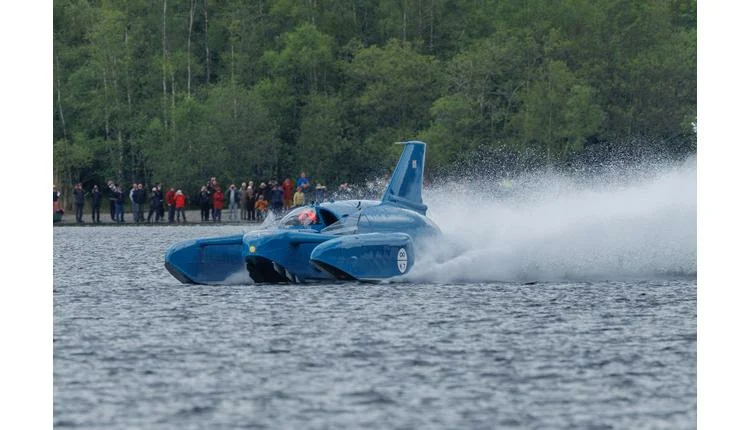
Starboard Hotels' Windermere Manor Hotel recently served as the host venue for the Bluebird K7 festival, a week-long event that marked the return of Donald Campbell's iconic hydroplane to Coniston Water for the first time in 59 years. The festival, held from 11 to 17 May in Coniston, Cumbria, commemorated Campbell's legacy, who tragically died in 1967 while attempting a world water speed record.
Event Highlights and Industry Relevance
The festival attracted two car groups: Classic Grand Touring's Bluebird Legacy tour and the Worshipful Company of Coachmakers. Both groups showcased classic and high-performance vehicles at the hotel, providing a unique experience for attendees. Nick Lyford, who organised the Coachmakers' trip, praised the venue, stating, “The Windermere Manor Hotel was the ideal location for our group to get to the festival.”
A highlight of the festival was a private dinner presentation by Don Wales, Campbell's nephew, who shared insights into his uncle's achievements and enduring legacy. The Ruskin Museum in Coniston orchestrated Bluebird K7's return, with Australian World Water Speed Record contender Dave Warby and Flt Lt David John Gibbs RAF piloting the hydroplane.
On 15 May, Bluebird K7, piloted by Warby, achieved a speed of 100mph, allowing it to 'plane'—a hydrodynamic feat enabling the craft to skim the water's surface at high speeds. Campbell had previously set the World Water Speed Record seven times between 1955 and 1964, with four records achieved on Coniston Water.
For travel professionals, this event underscores the growing trend of hotels leveraging unique local heritage and events to attract niche groups and enhance guest experiences. Starboard Hotels' Windermere Manor successfully positioned itself as a hub for automotive and speed enthusiasts, demonstrating how properties can differentiate themselves through curated programming. This approach aligns with broader industry shifts toward experiential travel, as seen in destinations like the Maldives, where near-airport resorts gain an edge by offering convenience without sacrificing luxury.
The festival also highlights the potential for MICE (Meetings, Incentives, Conferences, and Exhibitions) events to incorporate local cultural elements. The private dinner and presentation by Don Wales provided a compelling narrative for corporate groups, blending history with exclusivity. Similarly, Maldives luxury resorts are diversifying their guest mix to adapt to changing market dynamics, a strategy that resonates with Windermere Manor's approach to attracting diverse audiences.
Starboard Hotels' ability to host such an event speaks to the importance of destination marketing and collaboration with local institutions like the Ruskin Museum. For hoteliers and tour operators, this case study illustrates how partnerships can drive bookings and enhance brand reputation. As the travel industry continues to recover, properties that invest in distinctive experiences—whether through heritage festivals or luxury amenities—are better positioned to capture high-value travelers.
The Bluebird K7 festival also serves as a reminder of the enduring appeal of speed and engineering marvels, which can be leveraged for niche tourism. For cruise lines and tour operators, incorporating such events into itineraries could attract enthusiasts seeking unique experiences. Meanwhile, travel agents can use this story to inspire clients interested in British heritage and automotive history.
In summary, Windermere Manor's hosting of the Bluebird K7 festival exemplifies how hotels can use local events to create memorable guest experiences and drive business. This approach is increasingly relevant as the industry focuses on personalization and authenticity, much like the strategies employed by SO/ Maldives CEO Olivier Moies-Delval on bespoke luxury and conscious travel demand.