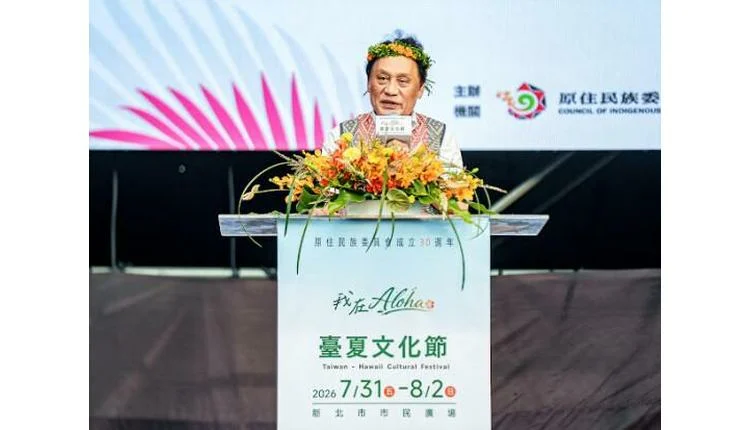
Taiwan's Council of Indigenous Peoples (CIP) and the State of Hawaii Office in Taipei have teamed up to launch the Formosa-Hawaii Cultural Festival, a three-day celebration of Austronesian heritage held from 31 July to 2 August at New Taipei City Citizen Plaza. The event, which coincides with the CIP's 30th anniversary, brings together music, dance, and a vibrant marketplace to showcase the shared cultural roots of Taiwan's indigenous communities and Hawaii's native traditions.
During the opening ceremony, CIP Chairperson Ljaucu Zingrur Tseng Chih-Yung underscored the festival's broader significance. "Cultural experiences often move people deeply, and sound policy can turn that emotion into lasting institutions," he said, highlighting the potential for cultural diplomacy to foster enduring partnerships between the two island regions.
Programming highlights
The festival's lineup features an array of international performers, including Golden Melody Award-winning artists. Ke Kai O Kahiki, a Hawaiian dance group, headlines the dance performances, while music and dance troupes from Palau and Tuvalu add a Pacific-wide dimension. The event also includes a marketplace offering Hawaiian Kona coffee, indigenous delicacies, and hands-on activities such as hula dancing and lei making, giving attendees a taste of both cultures.
Themed nights structure the festival's evenings: "The Call of Mountains and Sea" and "The Night of Island Sounds" lead into the grand finale, "Aloha Night," featuring performances by Biung and Abus. These sessions are designed to immerse visitors in the sonic and visual richness of Austronesian traditions.
Tourism and cultural diplomacy
Beyond its cultural appeal, the festival carries a strategic tourism angle. Taiwan has been actively courting visitors from the Pacific and beyond, and events like this serve as a platform to position the island as a hub for indigenous cultural tourism. The collaboration with Hawaii, a top-tier destination for cultural travelers, could pave the way for more joint promotions and exchange programs.
For travel professionals, the festival underscores a growing trend: culture-driven travel. Recent data from Skyscanner indicates that culture now drives most Indian holiday bookings, a signal that heritage experiences are becoming a primary motivator for travelers globally. Similarly, Oceania Cruises' 2026 Caribbean season puts culture and cuisine at the forefront, reflecting a broader industry shift toward authentic, immersive offerings.
The festival also aligns with efforts to boost inbound travel to Taiwan. The Taiwan Tourism Authority has been proactive in partnering with platforms like Agoda to launch multi-market campaigns to boost inbound travel, and cultural events like this one are integral to that strategy.
However, the rise of culture-driven tourism brings challenges. As Southeast Asia's heritage is at risk as influencer-led tourism strains infrastructure and culture, destinations must balance promotion with preservation. The Formosa-Hawaii festival, with its emphasis on community participation and traditional practices, offers a model for sustainable cultural tourism.
The CIP and the State of Hawaii Office in Taipei invite the public to experience this celebration, which showcases the rich heritage and contemporary vibrancy of indigenous cultures. For travel industry stakeholders, the event is a reminder that cultural exchange can be a powerful driver of tourism and mutual understanding.