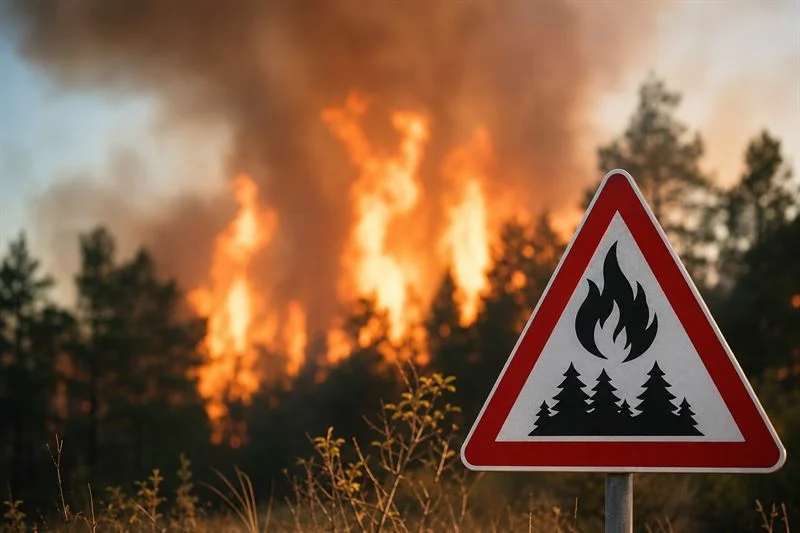
The global travel industry must prepare for an exceptionally severe wildfire season in 2026, according to the Wildfire Informer 2026 report released by Safeture and Riskline. The analysis reveals that the area affected by wildfires in the first half of 2026 exceeded the long-term average by more than 50%, nearly doubling the figures from the same period in 2024. Experts predict that the risk of large-scale fires will continue to rise throughout the year, impacting travel operations across multiple regions.
Europe Remains a Hotspot
Europe is particularly vulnerable, following one of its most severe wildfire seasons in 2025. Marcel Brandt, Chief Sales Officer at Safeture, emphasized the importance of early risk identification and reliable information for travellers. “Organizations need to continuously monitor changing conditions to respond quickly and appropriately,” Brandt said. This is especially critical for airlines operating routes into Mediterranean hubs, hotel chains with properties in southern Europe, and tour operators running summer packages to affected areas.
The report also warns of the potential development of a “Super El Niño,” which could exacerbate wildfire risks globally. Regions such as North America, the Amazon rainforest, and Australia face significant threats, while Indonesia and India in the Asia-Pacific region are also highly exposed. Parts of the Middle East and Africa are experiencing increased wildfire frequency and intensity, adding further complexity for travel managers and risk officers.
Implications for Travel Professionals
For airline executives, the report underscores the need for flexible scheduling and real-time monitoring of air quality and flight paths near fire zones. Hoteliers, particularly those with properties in wildfire-prone destinations like California, Portugal, or Greece, should review evacuation protocols and communication plans. Cruise lines operating in the Mediterranean or along the Australian coast must also assess port accessibility and passenger safety during peak fire seasons.
Travel technology vendors, including GDS systems like Sabre and Amadeus, can play a key role by integrating wildfire alerts into booking platforms and traveller tracking tools. As noted in a recent story on Sabre deploying agentic AI with Linex Travel, such innovations can help automate risk responses. Similarly, the shift in travel patterns due to wildfires and heatwaves is reshaping European tourism, as highlighted in our coverage of ecotourism growth.
Safeture and Riskline recommend that travellers adhere to official warnings and evacuation orders, remain indoors during heavy smoke, and seek immediate shelter if evacuation is not possible. For travel agents and tour operators, this means ensuring clients have up-to-date travel insurance and clear contingency plans. The Wildfire Informer 2026 is available for further guidance on managing these risks.
As the industry braces for a challenging year, proactive risk management will be essential. The report serves as a call to action for all stakeholders—from airline route planners to hotel general managers—to integrate wildfire preparedness into their operational strategies. With the potential for a Super El Niño, the stakes have never been higher for the global travel sector.